How Long Garage Door Battery Last: A Practical Lifespan Guide for Homeowners
Discover how long a garage door battery lasts, what factors shorten life, and proven steps to extend battery life for reliable openers. This guide from GarageDoorAdjust analyzes lifespans, replacement costs, and maintenance best practices for homeowners.


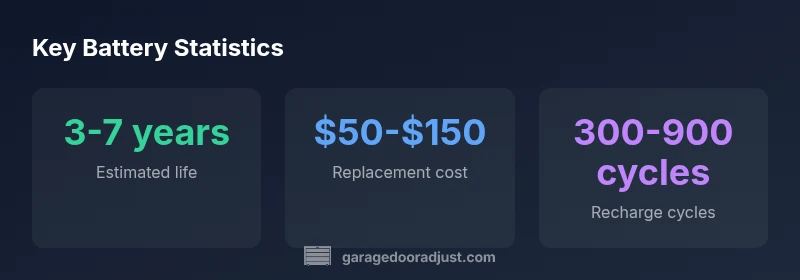
According to GarageDoorAdjust, when homeowners ask how long garage door battery last, the answer depends on battery type and usage. In practical terms, most common opener batteries provide several years of service under normal use, with lifespans typically landing in recognizable ranges depending on whether the unit uses lithium-ion, sealed lead-acid, or alkaline components. Understanding these factors helps you plan replacements before outages disrupt function.
Why battery life varies and why it matters
Understanding how long the garage door battery lasts is important for reliability and planning. When homeowners ask how long garage door battery last, the answer depends on battery type, opener model, and how often you use the door. A longer-lasting battery reduces service calls, prevents the door from failing during power outages, and keeps the opener functioning in smart-home setups. Various factors—from climate to charging patterns—shape the actual lifespan. In this section, we’ll outline the core variables and how you can estimate your own numbers. Tip: start by identifying your battery type and the typical door usage pattern so you can set a realistic expectation for replacement timing.
How to read your opener's battery status
Most modern openers include a battery health indicator, a status light, or a diagnostic message in the app. Start with the user manual to locate the indicator and compare it against the manufacturer’s guidance. If you see a dim indicator, frequent reset prompts, or a warning in the app, those are signals to test the battery and, if needed, replace it before a failure occurs. Best practice: schedule a routine battery health check at least once per year, especially before seasons with heavy usage (busy mornings, door-heavy households).
Battery types and their typical lifespans
There are several common battery chemistries used in garage door openers and remotes. Lithium-ion packs tend to offer longer life in compact form factors, while sealed lead-acid options are sturdy and cost-effective but may have shorter cycles in some environments. Alkaline batteries in remotes generally provide shorter lifespans than rechargeable options but can be easily swapped. The decisive factors are chemistry, ambient temperature, and how often the system engages the door. Rule of thumb: choose the battery type recommended by your opener’s manufacturer and consider the local climate when estimating life.
Practical maintenance to maximize life
Routine maintenance directly influences how long the battery will last. Keep the opener area clean, free of dust, and ensure connectors are tight. Store the opener in a climate-controlled space if possible, since extreme temperatures can accelerate battery degradation. Regularly test the backup battery using the built-in diagnostic feature or a manual test to confirm it delivers sufficient power. Replace batteries proactively when you notice reduced performance or shorter door travel distance. Pro tip: label batteries with replacement dates to simplify future swaps.
Common scenarios and expected ranges
In typical suburban homes with standard openers, you can expect the backup and remote batteries to deliver several years of service, with lithium-ion options often stretching toward the upper end of the lifespan. If the door is used frequently (multiple cycles per day) or resides in a harsh climate, expect lifespans toward the lower end of the range. Conversely, minimal use in a temperate environment can push lifespans toward the upper end. While exact figures vary, planning around a mid-cycle replacement window helps prevent outages.
When to replace vs. service
If the battery shows signs of weakness (longer travel times, slower response, or the door fails to open on backup power), it is usually time to replace. Servicing the unit—checking wiring, sensors, and the circuit board—may extend life slightly but will not restore battery capacity beyond its natural end. Establish a replacement threshold based on your opener type and usage, and consider a proactive replacement a small investment to avoid inconvenient outages.
Choosing the right battery and installer tips
Always use manufacturer-approved batteries for your specific opener. If you’re unsure, contact the installer or refer to the user manual for the exact battery model. When possible, select a rechargeable option that matches the device’s charging circuits to maximize longevity. If you hire a technician, request a full diagnostic check, including battery health, sensor alignment, and potential corrosion. A tiny upfront investment can avert costlier repairs later.
Troubleshooting quick checks you can do today
- Inspect battery compartments for corrosion or swelling.
- Verify terminal connections are clean and snug.
- Run a quick door cycle test and note any delays or abnormal sounds.
- Check that the backup battery is present and properly seated in its slot.
- Review the opener’s app or manual for diagnostic codes related to battery health.
The long-view plan: maintenance calendar
Create a simple annual maintenance plan that includes battery health checks, sensor alignment tests, and a reminder to replace backup batteries on a rotating schedule. Mark your calendar for a dedicated battery replacement window, ideally before peak usage seasons. This proactive approach minimizes downtime and preserves security features that rely on reliable power sources.
Battery types for garage door openers
| Battery Type | Typical Lifespan | Best Use |
|---|---|---|
| Sealed lead-acid | 3-7 years | Backup power on outages |
| Lithium-ion | 5-10 years | Slim, long-life openers |
| Alkaline (remotes) | 2-3 years | Handheld remotes and small controls |
Got Questions?
How long does a typical garage door battery last?
Most standard garage door batteries last several years under normal use. Lifespan varies by battery type, opener model, and climate. Regular testing helps you stay ahead of failures.
Most garage door batteries last several years under normal use. Test them yearly to stay ahead of failures.
Does the type of battery affect lifespan?
Yes. Lithium-ion packs generally offer longer life and higher energy density, while sealed lead-acid options are durable but may cycle sooner in hot or cold environments. Always follow manufacturer recommendations.
Yes. Different battery chemistries wear differently; follow manufacturer guidance for the best lifespan.
How can I extend battery life?
Keep the opener area clean, avoid extreme temperatures, and test the battery regularly. Replace weak batteries before outages to avoid stuck doors.
Keep it clean, avoid extreme temps, and test the battery regularly; replace weak batteries before outages.
What signals indicate battery failure?
Slower door movement, longer travel times, or warning indicators in the app usually signal a failing battery. If in doubt, replace and re-test.
Slow response or warning indicators often point to battery failure.
Can I replace the battery myself?
Yes, if you follow safety steps and use the right replacement. Disconnect power first and dispose of old batteries according to local guidelines.
Yes, you can replace it yourself if you follow safety steps and use the correct battery.
Should I replace after a blackout?
Test the backup battery after a blackout. If it performed poorly, consider replacement or servicing to restore full backup performance.
Test after a blackout, replace if performance is weak.
“Regular testing and scheduled battery replacements keep your garage door opener reliable and safe, even during power outages.”
Quick Summary
- Plan for battery replacement before outages
- Know your opener type to estimate life
- Use manufacturer-approved batteries
- Schedule annual battery health checks