Garage Door Repair and Maintenance in Zanesville, Ohio
Practical, step-by-step instructions for diagnosing, repairing, and maintaining garage doors in Zanesville, Ohio. Learn safety basics, tool usage, and when to call a pro to save time and avoid injuries.


Goal: diagnose common garage door issues and perform safe maintenance in garage door zanesville ohio areas, according to GarageDoorAdjust, and know when to call a pro in Zanesville, Ohio. This guide covers safety, required tools, basic inspections of tracks and springs, balance testing, opener adjustments, and routine lubrication. You’ll be equipped to fix simple issues and decide if professional service is needed.
Understanding Garage Doors in Zanesville, Ohio
Residents of Zanesville and surrounding areas operate a range of garage doors, from traditional raised-panel steel to modern aluminum and wood composite designs. The climate in Ohio, including winter temperature swings and humidity, affects door materials, insulation, and seal longevity. In garage door zanesville ohio applications, you’ll encounter common options: sectional doors with torsion springs, extension springs, and various track configurations. Understanding your door’s components—panel, tracks, rollers, springs, opener, and safety sensors—helps you diagnose issues quickly and avoid unnecessary parts swaps. The GarageDoorAdjust team emphasizes that a well-sealed, properly balanced door reduces energy loss and noise, while a correctly configured opener improves safety and reduces wear. For regular homeowners, starting with a safe, low-risk inspection can save time and money by catching misalignments, worn rollers, or dirty tracks before they cause bigger problems. As you read this guide, you’ll gain practical steps tailored for houses in Zanesville, Ohio, and learn how to tell when a pro should handle the tough tasks.
Local Codes and Safety Considerations in 2026
Garage doors are subject to general safety guidelines and local building codes. In 2026, many jurisdictions encourage regular inspection of door balance, proper spring tension, and safe opener operation. Always verify with your local building department for any Zanesville-specific requirements and wind-load considerations if you have a high-velocity door or strong Ohio winds. Safety first: disconnect power before any inspection, keep children away, and wear eye protection when working near moving parts. The OSHA and CPSC guidance on hand-tools, power-tools, and garage-door safety applies to DIY tasks, especially when handling tracks, rollers, and sensors. Following these guidelines reduces injury risk and helps you complete checks reliably.
Choosing Materials and Styles for Your Home
Your door’s material affects durability, insulation, and maintenance. Steel doors offer strength and low upkeep, while aluminum is lightweight and weather-resistant. Wood or wood-composite doors provide a traditional look but require more upkeep. Consider insulation R-values if you live in a climate with cold winters, as better insulation minimizes heat loss and reduces condensation. In Zanesville homes, wind resistance and weather sealing are important; look for doors with good edge seals, minimal gaps, and reinforced joints. Color and finish should complement your home’s exterior, while panel style can influence curb appeal and resale value. Budget and expected maintenance should guide material choice, ensuring you maximize longevity in the local climate.
Tools, Parts, and Where to Buy in Zanesville
Before you start, gather common tools and parts. A basic kit includes screwdrivers, a adjustable wrench, a socket set, pliers, a ladder, and safety gear like glasses and gloves. For parts, keep replacement rollers, tracks, weather seals, lubrication, and, if needed, spring-related components on hand (noting that springs require professional handling). Local hardware stores, big-box retailers, and reputable online suppliers serve Zanesville homeowners. When buying, verify compatibility with your door’s size, hinge spacing, and opener model. If you’re unsure about spring class or track type, consult a pro or bring a photo of your current setup to the store for accurate matching.
Step-by-Step: Inspecting Your Door System
Begin with a safety-first inspection. Start by disconnecting the opener and lowering the door manually to check balance. Look for sagging sections, misaligned tracks, bent rails, or worn rollers. Check door hinges for looseness and confirm that all rollers spin freely without grinding. Inspect weather seals and bottom weatherstripping for wear or gaps. If you notice grinding, unusual noises, or binding, these signs indicate components that may require replacement. Keep a log of findings to track what needs attention and to aid future service calls.
Step-by-Step: Replacing a Torsion Spring or Cable
Torsion springs and high-tension cables require specialized tools and professional handling. If you suspect a broken spring, stop immediately and call a licensed technician. If you’re trained and equipped to proceed, ensure you have winding bars, a stabilizing brace, and the correct replacement springs or cables for your door. Follow the manufacturer’s instructions and never attempt to unwind a spring under load without proper safety precautions. If any tension begins to feel unstable, stop and seek professional help. The risk of severe injury is high with spring work.
Step-by-Step: Replacing a Garage Door Opener
Replacing an opener involves removing the old unit, mounting the new motor and rail, attaching the carriage and trolley, and reconnecting sensors and remotes. Start by disconnecting power and removing the old opener from the ceiling bracket. Install the new rail and opener, ensuring proper alignment with the door’s track and ensuring the safety sensors are correctly positioned. Reconnect the door to the opener, program remotes, and test the response. Always follow the manufacturer’s torque and mounting specifications and verify that the door closes fully with the auto-reverse safety feature engaged.
Step-by-Step: Common Issues and Troubleshooting
Common problems include doors that won’t open or close fully, noisy operation, or doors that drift or bind. Start by inspecting the tracks for debris, checking for loose screws, and ensuring rollers rotate smoothly. If the door is unbalanced, adjust the springs only if you’re trained; otherwise call a pro. Verify electrical components such as the safety sensors and the opener’s limit settings. If the problem persists after basic maintenance, consult the manufacturer’s troubleshooting guide or a local tech in Zanesville. Documenting symptoms helps technicians diagnose quickly.
Maintenance and Long-Term Care for Windows and Seals
Windows and seals require periodic care to prevent air leaks and moisture intrusion. Clean the glass sections with a non-abrasive cleaner and inspect seals around the door and any windows for cracks or wear. Replace weatherstripping when gaps are visible, and consider re-painting or refinishing wooden sections to protect against moisture. Schedule seasonal lubrication for tracks and hinges to minimize friction and wear. Regular checks extend the life of the door and reduce energy loss, keeping your home comfortable year-round.
Tools & Materials
- Safety glasses(Impact-rated if possible)
- Work gloves(Grip and hand protection)
- Ladder(Stable, with a helper if needed)
- Screwdrivers (flat and Phillips)(Varied sizes)
- Wrench set / socket set(Metric and SAE as needed)
- Pliers and adjustable wrench(For grasping and turning)
- Trolley safety release tool(Optional but helpful)
- Lubricant (silicone spray or white lithium grease)(Use on tracks, hinges, rollers)
- Replacement rollers or weather seals as needed(Wait until inspection confirms need)
- Temporary stopping wedges or clamps(Hold door in place during checks)
- Spring gauge or professional-grade spring kit(Only for qualified personnel)
Steps
Estimated time: 2-3 hours
- 1
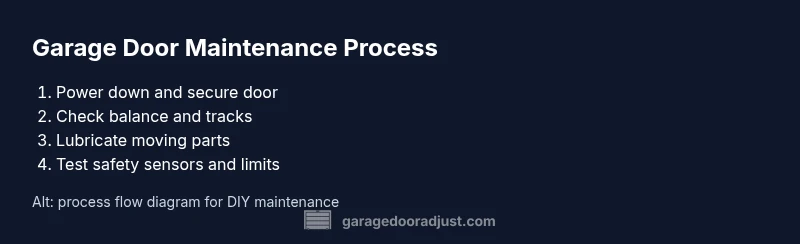
Power down and secure
Disconnect the opener from power at the outlet or breaker box. If the door is spring-loaded, ensure no sudden movement is possible by testing manually with the door in a half-open position. This prevents unexpected movement during inspection.
Tip: Always verify power is off before touching any electrical components. - 2
Check balance manually
With the door disconnected from the opener, lift it halfway and release. A balanced door should stay put; if it drifts up or down, note the direction and magnitude of the drift for service planning. Do not force the door to move.
Tip: If it moves more than a few inches, call a pro for safety reasons. - 3
Inspect tracks, hinges, and rollers
Look for dents, bends, or loose hardware on tracks and rails. Rollers should rotate freely without wobble or grinding. Tighten loose screws and replace damaged parts as needed.
Tip: Remove debris with a dry cloth and avoid using solvents that may degrade seals. - 4
Test safety sensors and open/close limits
Test the auto-reverse feature by placing an obstacle in the door’s path. Ensure soft-stop behavior works and that the door reverses properly. Confirm the remote and wall switch respond consistently.
Tip: Keep children and pets away during tests to prevent injury. - 5
Lubricate moving parts
Apply a light, non-petroleum lubricant to tracks, rollers, hinges, and the opener’s trolley mechanism as needed. Wipe away excess to prevent attracting dust and grime.
Tip: Lubricate annually or after a long period of inactivity. - 6
Re-test operation
Reconnect the opener, re-seat the door, and run several cycles to confirm smooth operation. Listen for abnormal sounds and watch for door drift during each cycle.
Tip: Record any persistent noises for reference when you consult a pro. - 7
Inspect weather seals and insulation
Check bottom seals and side weatherstrips for cracks or gaps. Replace worn seals to improve energy efficiency and reduce drafts. Consider insulating the panel if your door lacks insulation.
Tip: Ensure the door remains aligned after seal replacement. - 8
Document findings and plan next steps
Create a quick maintenance log noting what was inspected, what was replaced, and any upcoming service needs. Schedule professional inspection if you identified structural wear, broken springs, or persistent issues.
Tip: Keep a calendar reminder for seasonal checks. - 9
Know when to call a pro
If you encounter tensioned springs, misaligned tracks with visible damage, or parts that require special tools, contact a licensed garage door technician. DIY should be limited to safe, low-risk tasks.
Tip: When in doubt, prioritize safety and professional assistance.
Got Questions?
Do I need to call a pro for spring problems?
Springs are highly pressurized and dangerous to handle without proper training. If you suspect a broken or worn spring, contact a licensed technician in your area. DIY attempts can lead to serious injury.
Springs are dangerous; call a pro if you suspect a problem.
Can I fix a noisy garage door myself?
Many noises come from loose hardware, dirt on tracks, or dry rollers. Tighten screws, clean tracks, and lubricate moving parts. Avoid attempting spring adjustments unless you’re trained.
Usually you can fix it by tightening hardware and lubricating parts.
How long does a typical repair take?
Simple maintenance or part replacements can take a few hours, depending on parts availability. Complex issues may require scheduling a service visit with a technician.
Most fixes fit into a few hours, more complex issues take longer.
What about insulation for an older door in a cold climate?
Insulation improves energy efficiency and comfort. Assess door materials and consider upgrading to an insulated panel or adding weatherstripping where gaps exist.
Insulation helps with energy bills; weatherstripping reduces drafts.
How can I tell if the opener’s balance is off?
If the door sags or rises unevenly or requires excessive effort to lift manually, the balance may be off. Check tracks and springs first; if unsure, consult a pro.
Look for sagging or hard-to-lift symptoms and get a professional evaluation if unsure.
Watch Video
Quick Summary
- Disconnect power before inspection to stay safe.
- Balance and track alignment are critical for long life.
- Springs and cables require professional handling.
- Maintain weather seals to improve energy efficiency.
- Document issues and schedule regular maintenance.