Garage Door with Opener: Comprehensive How-To Guide
Master the diagnosis, repair, and safe installation of a garage door with opener. This guide covers safety, common issues, tool lists, step-by-step actions, maintenance, and authoritative sources for homeowners seeking reliable, DIY-friendly solutions.


This guide provides a clear, action-oriented plan to diagnose, repair, or replace a garage door with opener. You’ll isolate power and safety issues, inspect components, align tracks, test sensors, wire connections, and program remotes. Safety comes first—follow the steps carefully and know when to call a pro if you encounter torsion-spring dangers or complex wiring.
What a garage door with opener does and why reliability matters
A garage door with opener combines a motorized system with a balanced door to provide convenient, secure access to your garage. A reliable setup reduces manual effort, improves daily routines, and enhances security by ensuring the door fully closes and latches. From a homeowner's perspective, a well-maintained opener minimizes nuisance issues like unexpected reversals, slow operation, or sensor misreads. According to GarageDoorAdjust, prioritizing regular inspections and timely maintenance helps homeowners avoid costly repairs and downtime. This section explains how the opener components work, what typical failure modes look like, and how to spot signs that you should troubleshoot now rather than wait for a breakdown.
Key components include the motor unit, drive rail, trolley, door arm, torsion or extension springs, safety sensors, limit switches, and the power supply. Understanding how these parts interact makes diagnosing issues faster. If your door opens but stops halfway, noises change when the door moves, or the remote stops working, you’re likely dealing with misalignment, worn hardware, or sensor interference. Proper care starts with safety-first habits and a well-lit, organized workspace.
Safety-first prep: setting up a safe workspace and familiarizing with parts
Before you touch anything, turn off and unplug the opener to avoid accidental activation. Use a sturdy ladder, clear the area below the door, and clamp the door in place to prevent it from moving unexpectedly. Inspect the safety sensors at the bottom corners of the door track; they should be aligned and free of obstructions. Take time to note the model number and the wiring layout if you plan any replacement. If you’re unfamiliar with door springs or high-tension components, do not attempt spring work; call a licensed technician.
During inspection, verify the track alignment by checking for gaps where the wheel should seat, wobbly brackets, and loose screws. Use a level to check that the tracks are plumb and square. Gather the tools you’ll need and organize fasteners by hardware color and size to avoid rework. By starting with safe prep, you reduce the risk of injury and missteps later in the process.
Diagnosing common issues: how to verify performance and identify root causes
Begin with simple checks: confirm whether the door remains balanced when unassisted and whether the opener completes a full cycle. If the door rises with effort or stalls, the springs or balance system may be worn, or the tracks may be misaligned. Inspect the drive belt or chain for wear, and ensure the trolley is properly seated on the rail. Sensor misalignment is a frequent culprit for safety-reversal issues; verify both sensors face each other directly and have a clear path. If remotes aren’t responding, test the wall switch, re-pair remotes, or reset the opener’s memory.
Keep notes of what you observe during each test, as this improves your ability to decide between repair parts and a potential upgrade. For homeowners, many issues boil down to one of these core causes: misaligned tracks, worn springs, loose hardware, sensor misalignment, or a failing drive mechanism. A systematic approach reduces guesswork and speeds up repair.
When to repair vs replace: making a practical decision for long-term value
Garage doors and openers are designed for longevity, but components wear out at different rates. If the torsion or extension springs show visible wear, or if the opener motor fails repeatedly after maintenance, replacement becomes more cost-effective than ongoing fixes. Replacing an outdated opener with a model that includes safety sensors, soft-start features, and battery backup can improve reliability and energy efficiency. If the door itself remains structurally sound and properly balanced, an upgraded opener is often a smart choice.
Cost considerations matter: compare the price of parts and labor for repairs against a full replacement, while considering future maintenance costs. Upgrading to a modern smart opener can also add remote access and status monitoring, which may prevent future issues by providing early alerts. The decision should factor safety, reliability, cost, and convenience.
Upgrading or replacing: choosing the right opener and compatibility with your door
When upgrading, verify compatibility with your current door type (single vs. double, torsion vs. extension springs). Choose a model with essential safety features such as jam protection and auto-reverse; many modern openers also offer battery backup and smart connectivity for remote monitoring. If your door shows signs of misbalance or track wear, address those issues first to maximize the lifespan of any new opener. A professional installation guarantees correct mounting, precise limit settings, and safe sensor alignment. For DIY enthusiasts, follow the manufacturer’s instructions closely and adhere to local electrical codes.
Authority sources and further reading
To reinforce safe and reliable practice, consult authoritative sources on garage door safety and installation. For safety regulations and compliance guidelines, see the U.S. Occupational Safety and Health Administration (OSHA) resources at https://www.osha.gov. For energy efficiency and better insulation considerations, visit https://www.energy.gov. For consumer product safety and guidance on garage door use, refer to the Consumer Product Safety Commission at https://www.cpsc.gov. These sources provide guidelines that help homeowners plan, inspect, and maintain a safe garage door with opener.
Practical maintenance routine to extend life and prevent failures
Implement a simple quarterly maintenance plan that includes lubricating moving parts with the recommended lubricant, checking spring tension (without adjusting if you’re unsure), tightening hardware, and testing safety features. Keeping the tracks clean and aligned prevents friction and noise. Regularly inspect weatherstripping and replace worn seals to improve energy efficiency and door balance. A proactive maintenance mindset reduces the likelihood of unexpected breakdowns and keeps your garage door operating smoothly over time.
Tools & Materials
- Power drill with assorted bits(Phillips #2, 1/8 in drill bit; charged battery)
- Socket set and wrenches(Metric and SAE as needed)
- Screwdriver set (flat and Phillips)(Assorted sizes)
- Tape measure(Minimum 8 ft)
- Level (20-24 in)(Ensure tracks are plumb)
- Ladder (6-8 ft)(Stable and secure)
- Safety glasses(Protect eyes from debris)
- Pliers and adjustable pliers(Grips for wires and hardware)
- Hammer or mallet(Seat brackets and align tracks)
- Clamps or c-clamps(Hold door in place during adjustment)
- New garage door opener kit(Includes rail, motor, mounting hardware)
- Wire nuts and electrical tape(Secure wiring connections)
- Stud finder(Helpful for bracket mounting)
- Battery backup kit (optional)(For extended power outages)
Steps
Estimated time: 2-4 hours
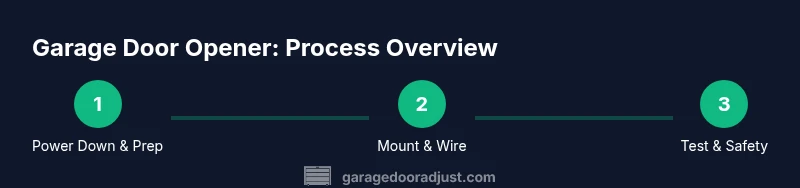
- 1
Power down and secure the door
Unplug the opener from the outlet or switch off the circuit. Use clamps to secure the door and prevent any movement while you work. This prevents injury and protects sensitive wiring during installation or repair.
Tip: Always verify the door is stationary before starting work. - 2
Remove or prepare the existing opener
If replacing, disconnect the drive mechanism and remove the unit from its mounting. Label wires and take photos to ensure accurate reconnection to the new opener. If not replacing, perform a thorough inspection of the drive belt/chain and trolley for wear.
Tip: Label wires with tape and a marker for easy reassembly. - 3
Mount the new bracket and rail
Position the wall/ceiling brackets, ensuring they are level and aligned with the door's torsion spring system. Secure brackets to structural members using the supplied screws, then slide the rail into position. Confirm the rail is square and true before proceeding.
Tip: Use a level to avoid binding the door’s movement later. - 4
Install the opener to the ceiling
Lift the motor unit, align with the ceiling brackets, and secure with bolts. Leave enough clearance for the door to travel without hitting the motor. Recheck level alignment and tighten all hardware.
Tip: Enlist a helper for lifting and positioning the heavy unit. - 5
Attach the door arm and connect the trolley
Attach the door arm to the trolley and connect it to the door. Ensure the arm is tight but not strained and that the trolley moves smoothly along the rail. Avoid overtightening which can limit movement.
Tip: Test the arm movement by hand before plugging the unit back in. - 6
Wiring and sensor setup
Connect power, secure all wiring with wire nuts, and install safety sensors facing each other. Align sensors so the beam is unobstructed. Use electrical tape to secure exposed conductors and keep wires clear of moving parts.
Tip: Double-check sensor alignment with the door closed and opened slightly. - 7
Program remotes and set limits
Program the remote controls and set the opener’s travel limits and force settings per the manufacturer’s instructions. Validate reverse-safe operation by gently meeting resistance at the door’s bottom edge. Adjust as needed for smooth cycling.
Tip: Limit settings affect door closing distance; start with conservative values. - 8
Test run and final safety checks
Perform several full cycles with the door both open and closed, verifying smooth operation and sensor responses. Confirm the door stops or reverses on contact and that the wall switch and remotes operate reliably. Recheck all fasteners and ensure clean, dry wiring.
Tip: Keep a written checklist for future maintenance.
Got Questions?
Do I need to hire a professional to install a new garage door opener?
If you’re not confident with electrical wiring, ceiling mounts, or door-spring interactions, it’s safest to hire a licensed installer. A pro can ensure proper mounting, sensor alignment, and block accidental injuries.
If you’re not confident with wiring or ceiling-mounted installations, hire a pro to ensure safety and correct setup.
How do I test safety sensors after installation?
Close the door and place a small object in the path of the door. The door should reverse on contact. If it does not, adjust the sensor alignment or replace a faulty sensor.
Make sure the door reverses when it touches an object in its path; adjust alignment if needed.
What maintenance should I perform regularly on a garage-door opener?
Lubricate moving parts, tighten hardware, check tracks for alignment, test safety features, and replace worn weather seals. Regular checks prevent many common issues.
Lubricate parts, check alignment, test safety features, and replace worn seals regularly.
Can I program multiple remotes for the same opener?
Yes. Most openers support pairing several remotes and keypad entries. Follow the manual’s steps to add or remove devices safely.
Yes, you can program multiple remotes; just follow the manufacturer’s pairing steps.
What should I do if the opener stops working after a power outage?
Reset the opener memory and reprogram remotes after power restoration. Check fuses and outlet circuit status before reprogramming.
Reset and reprogram after power returns, and verify the outlet is supplying power.
Is replacing the door itself necessary if the opener fails?
Only if the door frame, tracks, or springs are compromised. In most cases, upgrading the opener is sufficient to restore function.
Only replace the door if its frame or springs are unsafe or structurally damaged; often a new opener suffices.
Watch Video
Quick Summary
- Assess safety first and work methodically.
- Identify root causes before replacing parts.
- Keep spring work out of scope for DIY unless trained.
- Upgrade to safer, smarter openers when compatible.
- Maintain a regular maintenance routine for longevity.