Garage Door Sensor Wire: Troubleshooting and Repair Guide
Learn to inspect, test, and repair the garage door sensor wire to keep safety sensors aligned and functioning. A practical step-by-step guide from GarageDoorAdjust for homeowners.


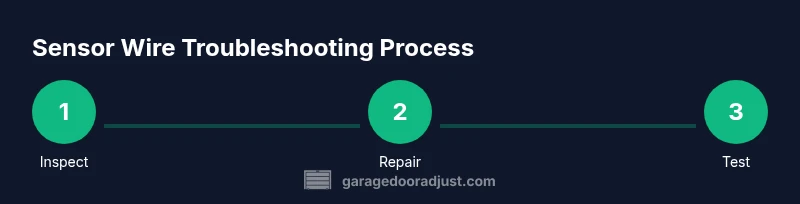
By the end of this guide, you will diagnose and repair the garage door sensor wire so safety sensors stay aligned and functional. Start by powering off the opener, then inspect the sensor wiring for damage, secure loose connections, and verify proper routing away from moving parts. This task reduces false triggers and helps your door operate reliably.
Why sensor wires matter for safety
The safety sensors on a garage door are designed to prevent the door from closing on people or objects. The wire that connects these sensors to the opener carries power and signaling information. If this wire is damaged, pinched, or misrouted, the sensors may fail to react to an obstruction, which can create dangerous conditions. According to GarageDoorAdjust, maintaining clean, intact sensor wiring is a foundational safety practice for any homeowner performing garage-door maintenance. A healthy sensor circuit reduces false closes and helps ensure your door reverses when it should. In practice, this means inspecting the wire path for twists, kinks, or exposed insulation, and ensuring the wire is secured away from the door’s motion path, springs, and fast-moving components. Regular checks also help you catch wear before it becomes a larger repair.
Key takeaways: expect the most common issues to be physical damage, loose connections, or routing that interferes with the sensor’s line of sight. A well-maintained wire reduces nuisance reversals and protects family members and pets.
Sensor wire routing: typical layouts
Most garage-door sensor wires originate at the bottom edge of the door, run along the door tracks, and connect to the opener’s safety terminal block or control board. Depending on the model, the wire may connect to a small mounting bracket on the door frame, then travel to the opener via a conduit or clip-on channel. The goal is a smooth, low-stress run with no sharp bends. When routing, avoid compressing the wire under weatherstripping, against metal edges, or where staples or zip ties could pinch it as the door moves. Neat routing also reduces wear at connection points and makes future maintenance easier. If you’re unsure about the path, take photos from multiple angles before you touch anything.
GarageDoorAdjust emphasizes planning your route first. A clean path helps you identify potential damage points and makes testing safer and more reliable.
Common sensor-wire problems and symptoms
Damaged insulation or frayed conductors are common and can be caused by repeated movement, pinching, or misrouting. You may notice intermittent sensor activity, false warnings, or the door failing to reverse when an obstruction is present. Loose connections at the sensor terminals or the opener’s control board can cause similar symptoms. In some cases, the problem isn’t the wire itself but how it’s fastened: overly tight clips or zip ties can stress the wire, leading to failure. If the door beeps repeatedly or the safety light on the sensor is dim, these can be signs to inspect wiring more closely. Addressing the issue early prevents bigger, costlier repairs later.
A practical tip from GarageDoorAdjust is to test each sensor independently: cover one sensor and observe how the opener responds to a blocked beam. If the door still closes on the obstacle, the wiring or sensor may require attention.
Safety-first steps before you touch wiring
Safety should be your first priority. Always disconnect power to the garage door opener at the circuit breaker before handling any wiring. Verify absence of voltage at sensor terminals with a non-contact voltage tester. Wear protective gloves to shield your hands from sharp edges and use insulated tools. Keep the work area dry and clear of obstructions. If you’re unsure about any step, pause and consult a professional. These precautions protect you from electric shock and prevent accidental door movement while you’re working.
GarageDoorAdjust recommends treating every sensor wire as a potential electrical hazard until confirmed safe to handle.
Diagnostics you can do without disassembly
Begin with a visual inspection from the sensor eyes to the opener, looking for obvious damage, loose connectors, or misrouted wires. Use a multimeter to check continuity on the sensor circuit if you’re comfortable handling electrical tests. A simple test: with the wire disconnected, test continuity from the sensor to the control board; if continuity is absent, you likely have a break in the wire or a bad connector. When in doubt, compare the sensor wire path to the factory routing diagram in your opener manual. Taking notes or photos of your findings helps you track what was checked and what needs replacement.
Keep a log of fixes and test results to guide future maintenance and help a technician if you hire one.
How to replace or repair the sensor wire (overview)
If insulation is broken or conductors are exposed, you’ll likely need to cut back to clean, intact wire and reattach a connector or splice in new wire. For minor fraying, trimming and re-striping the ends may suffice. In some cases, you may replace an entire short run of wire with a like-for-like low-voltage cable designed for door-sensor use. Whatever approach you take, ensure that the new section or splice is properly insulated and secured, with strain relief to prevent future stress at the ends. After any repair, re-test both sensors for alignment and responsiveness.
Always refer to the opener’s manual for compatible wire types and connector sizes. GarageDoorAdjust notes that using the right wire and connectors is critical for long-term reliability.
When to call a pro and what to expect
If you encounter damaged internal wiring, corroded connectors, or if the sensor readings remain inconsistent after a repair, it’s wise to call a professional. A qualified technician can safely re-route cables, replace damaged components, and verify that the sensor system meets safety standards. A pro may also check the door balance, track alignment, and opener’s safety features to ensure there are no other contributing issues. The goal is a safe, fully functional system that reliably stops the door for any obstruction.
Best practices and maintenance routine
Establish a regular check routine that includes inspecting the sensor wires during seasonal maintenance. Keep wires away from sharp edges, heat sources, and moving parts. Use protective conduit or clips to secure wires and protect against wear. Document any changes you make and re-test after any adjustment. A concise maintenance routine saves time and reduces the likelihood of sudden sensor failures. GarageDoorAdjust’s approach is to combine careful inspection, correct routing, and periodic testing for lasting performance.
Tools & Materials
- Digital multimeter(Measure continuity and verify sensor circuit integrity)
- Voltage tester(Confirm power is fully off before touching wires)
- Non-conductive screwdriver set(Use for mounting screws and terminals)
- Wire cutters/strippers(Trim and strip ends cleanly)
- Insulated electrical tape(Secure splices and insulate exposed conductors)
- Cable ties(Route and secure wires away from moving parts)
- Replacement sensor wire (low-voltage)(Only if the existing wire is damaged beyond repair)
- Safety gloves(Protect hands from sharp edges and connectors)
Steps
Estimated time: 45-75 minutes
- 1
Power down the system
Switch off the garage door opener at the circuit breaker and unplug if possible. Use the voltage tester to confirm there is no power at sensor terminals before touching any wiring.
Tip: Double-check by attempting a lights-on test on the opener after disconnecting power. - 2
Locate sensor wires and path
Identify the safety sensor wires from the bottom of the door to the opener. Note routing, clips, and any place where the wire could be pinched or bent.
Tip: Take photos from multiple angles before you move anything. - 3
Inspect for damage
Check insulation, conductor exposure, connector integrity, and mounting brackets. Look for frayed insulation, cracked housings, or loose connectors.
Tip: Do not attempt to bend exposed conductors; handle with gloves. - 4
Disconnect and prepare connections
Carefully unplug sensor connectors from the control board or bracket. Label wires if needed and set aside any detached components safely.
Tip: Keep track of which wire goes where with a photo or label kit. - 5
Repair or replace the wire ends
If ends are damaged, trim back to clean copper, re-strip, and reattach connectors or splice with approved low-voltage wire. Ensure a solid, secure connection.
Tip: Avoid loose or bulky splices; use heat shrink or electrical tape to seal. - 6
Route and secure the wire
Re-route the wire away from the door’s movement, springs, and hinges. Use clips or conduit to protect the run and prevent future wear.
Tip: Leave a gentle bend radius to avoid kinking. - 7
Reconnect power and test
Restore power and perform a sensor test: block one beam and watch for correct reversing behavior. Verify both sensors respond reliably.
Tip: Test at different times and door states (open/closed) to confirm consistency.
Got Questions?
What is the purpose of the sensor wire on a garage door?
The sensor wire powers and communicates with the safety sensors that detect obstructions. Proper wiring ensures reliable reversal when the beam is interrupted.
The sensor wire powers the safety sensors and makes sure the door stops and reverses if something blocks the beam.
How can I tell if the sensor wire is damaged?
Look for frayed insulation, exposed conductors, or loose connectors. A continuity test with a multimeter can confirm breaks in the circuit.
Look for frayed insulation or loose connectors. A simple continuity check can reveal a break in the wire.
Is it safe to replace the sensor wire myself?
Yes, if you follow safety steps: power off, test for zero voltage, and use proper low-voltage wire and connectors. Stop if you’re unsure.
Yes, with proper safety steps and the right parts; if you’re unsure, hire a pro.
Do I need to replace the entire wire or just the ends?
Mild end damage can often be fixed by trimming and re-stripping. Extensive damage or a long compromised run may require replacing a wire segment.
If only the ends are damaged, trim and re-strip; for longer damage, replace the section.
What are common mistakes when wiring sensors?
Routing wires through pinch points, neglecting strain relief, and using improper connectors are frequent errors. These cause wear and misreads.
Common mistakes include routing near moving parts and not providing strain relief.
When should I call a pro for sensor wiring?
If wiring is complex, connectors are corroded, or the door fails safety tests after a repair, a professional should assess and complete the work.
If you’re unsure or the problem persists after a fix, call a pro.
Watch Video
Quick Summary
- Inspect wires for damage and proper routing.
- Secure wires to prevent pinching by moving parts.
- Test sensor operation after any repair.
- Use the right tools and safety practices to avoid shocks or injuries.
- Call a pro if damage extends beyond simple ends or connectors.