Garage Door Entry: Safe Troubleshooting and Maintenance
Learn how to safely use a garage door to enter your house with a step-by-step guide, safety checks, and maintenance tips for homeowners.


Goal: safely use your garage door to enter the house by diagnosing common entry blockers, testing the opener, and maintaining safety features. You’ll need a clear access path, a charged opener, basic tools, and a working keypad or remote. This quick answer outlines the key steps homeowners can perform before calling a pro.
Why using the garage door to enter house requires a safety mindset
For many homeowners, the garage door provides a convenient way to enter the house, especially when hands are full or weather is harsh. The phrase garage door to enter house captures a common scenario that also highlights why safety and proper operation matter. According to GarageDoorAdjust, relying on a functioning garage door is not just about convenience; it is about routine maintenance and recognizing risks such as pinch points, sensor misalignment, and battery failures in remote devices. A thoughtful approach reduces the chance of injury, accidental door movement, or security gaps when you need access quickly.
The decision to use the garage door as an entry point should include a quick check of the area beyond the door—stairways, pets, and belongings—and a plan for how to secure the door once you’re inside. Garage doors are heavy and travel along moving parts that can pinch or shear if mishandled. Start with a clear path and a moment to confirm no one is near the door, then proceed with the appropriate checks and maintenance. This mindset aligns with best practices recommended by safety-focused home guides and reinforces that even routine entries deserve careful attention.
From a homeowner’s perspective, you’re balancing convenience with security. When the door operates smoothly, it can save time and reduce weather exposure. When it doesn’t, a small maintenance task or sensor adjustment can restore dependable access. If you notice persistent obstruction, misalignment, or unusual noises, treat it as a warning sign to pause and investigate further or call a professional. The GarageDoorAdjust team emphasizes consistent checks to keep your entry point reliable.
By framing the garage door as a legitimate access point rather than a temporary convenience, you’ll implement safer habits—like testing the opener, verifying safety features, and keeping the path to the interior door clear. With a thoughtful routine, you’ll be better prepared to enter your home quickly and safely, no matter the weather or time of day.
Tools & Materials
- Phillips-head screwdriver(For adjusting hardware and sensors on the opener and track supports)
- Adjustable wrench(Used on bolts and mounting hardware associated with the door and opener)
- Ladder(Access sensors, ceiling-mounted components, and high hardware safely)
- Silicone lubricant(For rollers, hinges, and track pivots to reduce friction)
- New batteries(For keypad, remote controls, and smart-home sensors)
- Safety glasses(Protect eyes during adjustments and testing)
- Soft cloth or alcohol-based cleaner(Clean sensor eyes and remove dust from tracks)
- Towel or wedge(Stabilize the door during manual tests or temporary fixes)
Steps
Estimated time: 60-90 minutes
- 1
Verify power and accessibility
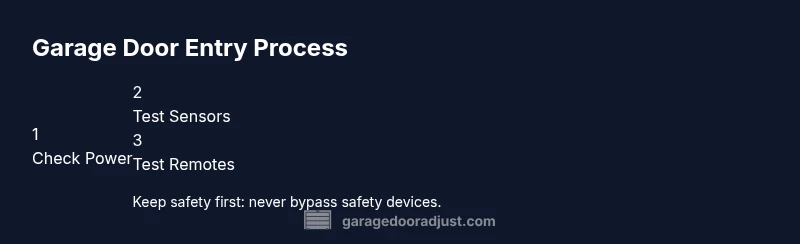
Ensure the opener is plugged in or battery-powered and that there are no cords or obstacles blocking the door’s path. Stand clear of the door while testing and verify the door is fully closed before attempting any operation. If the door does not respond to the remote or keypad, move to Step 2.
Tip: Keep a printed or digital list of codes and remotes in case one device fails. - 2
Inspect safety sensors and alignment
Look for misaligned sensor eyes on either side of the door track. Clean them gently with a soft cloth and ensure the optical path is unobstructed. Misalignment is a common reason doors won’t open or will stop mid-travel.
Tip: Do not bypass sensors; misalignment can cause injury or door damage. - 3
Test wall switch and remote
Test the wall-mounted switch and all remotes. Replace batteries if signals are weak, and reprogram remotes if needed. If one device works but another doesn’t, focus on battery health or code compatibility.
Tip: Ensure you’re testing from the same location you typically use to enter the house. - 4
Check keypad and entry codes
If you rely on a keypad, confirm the code is correct and active. Clear any old codes and set a new one if you suspect compromise. Program backups if you have more than one entry code.
Tip: Use a unique code and enable temporary codes only when needed. - 5
Manual release and safe operation
If the opener fails, learn the manual release procedure and perform a controlled lower of the door with a helper nearby. Never force the door during a failure; stop and reassess.
Tip: Practice the manual release in a safe, controlled area to avoid injury. - 6
Balance check and track alignment
With the door closed, disconnect power and gently lift the door halfway to test balance. If it lifts freely or sticks, there may be spring or track issues. Inspect tracks for dents and ensure they’re aligned.
Tip: Do not attempt spring adjustments unless you are trained. - 7
Lubricate moving parts and inspect hardware
Apply silicone lubricant to rollers, hinges, and moving joints. Check bolts and mounting screws for tightness and look for signs of wear on tracks and brackets.
Tip: Use light lubricant and wipe away excess to avoid attracting dirt. - 8
Retest and secure the path
Reconnect power, test all entry methods again, and confirm the interior door from the garage to the house is accessible. Record any persistent issues and plan a follow-up maintenance window.
Tip: Schedule periodic checks to maintain reliability.
Got Questions?
Can I manually open my garage door if the opener fails?
Yes, you can use the manual release to open the door if the opener is nonfunctional. Practice this safely with a helper, and only operate the door in controlled conditions. If the door is heavy or sticks, stop and seek professional assistance.
You can use the manual release to open the door when the opener fails, but do it safely with a helper and avoid forcing the door.
Is it safe to use the garage door as my main entry point?
Using the garage door as main entry is practical but requires reliable safety devices, codes, and secure access. Regular checks on batteries, sensors, and door balance help prevent injuries and unauthorized entry.
Using the garage door as your main entry can be safe if you maintain safety features and keep access credentials secure.
What should I do if the door reverses unexpectedly during closing?
If the door reverses, stop it and check for obstructions, sensor alignment, and force settings. Clear the path, test sensors, and reattempt with caution. If the problem persists, call a professional.
If the door reverses, stop it, inspect the path and sensors, then test again; seek a pro if it keeps happening.
How often should I service the door and opener?
Plan a professional inspection every 12-24 months, with monthly basic checks by the homeowner (sensor cleanliness, battery status, and door balance). Regular maintenance reduces the chance of sudden failures.
Every year or two for a professional check, plus simple monthly homeowner checks.
What signs indicate I should call a pro immediately?
If you notice frayed cables, bent tracks, grinding sounds, or persistent sensor misalignment that you cannot fix, contact a professional to avoid injury or further damage.
Call a pro if you see damaged parts or persistent, unresolved sensor issues.
Can weather conditions affect garage door entry?
Yes. Extreme cold, heat, or moisture can affect lubrication, track alignment, and opener performance. Keep tracks clean and dry and adjust lubrication seasonally as needed.
Weather can affect how smoothly your door operates; keep it well-lubricated and clean.
Watch Video
Quick Summary
- Test power and accessibility before attempting entry
- Do not bypass safety sensors—misalignment is a common hazard
- Keep remotes and keypad codes secure and up-to-date
- Regular maintenance reduces the risk of failed entry
- Know when to call a professional for worn components