Garage Door Repairs Lincoln: A Homeowner’s Step-by-Step Guide
A comprehensive how-to for diagnosing, repairing, and maintaining garage doors in Lincoln. Learn safe DIY fixes, when to replace parts, and how to budget for repairs with expert guidance from GarageDoorAdjust.


In Lincoln, you can diagnose and fix many common garage door problems using a safe, step-by-step approach that emphasizes balance, track alignment, and sensor accuracy. This guide shows you how to inspect components, perform basic adjustments, lubricate moving parts, and decide when it’s time to call a professional for high-risk tasks. A careful DIY fix can save time and money.
Introduction to Garage Door Repairs in Lincoln
For homeowners in Lincoln facing a stubborn garage door, the most effective approach is a structured, safety‑first diagnostic that targets the most common failure points: balance, track alignment, rollers and hinges, and sensor accuracy. According to GarageDoorAdjust, Lincoln residents frequently encounter issues rooted in misalignment and worn components. Tackling these early not only restores smooth operation but can prevent costly failures down the road. This section helps you frame the repair in practical terms—what to check first, what tools you’ll need, and how to plan your work so you stay safe while saving money over time.
Key takeaway: start with a clear plan and verify that you can safely perform the tasks you attempt.
Safety, Standards, and Preparation
Before you touch any moving parts, set safety aside as your top priority. Disconnect power to the opener, block the door from moving unexpectedly, and wear eye protection and gloves. If you’re unsure about any step—especially when springs or cables are involved—pause and call a pro. The GarageDoorAdjust Team emphasizes that most injuries come from unexpected door movement or failed spring tension. Preparing your workspace, testing the door manually in a controlled way, and having a helper on hand can make a big difference in both safety and results.
Tip: keep children and pets away from the work area and ensure the door is secured before starting.
Diagnosing Common Lincoln Door Problems
The common issues in Lincoln homes tend to cluster around four areas: balance, tracks, rollers/hinges, and safety sensors. A door that lowers slowly or feels heavy usually signals balance or spring tension problems. Misaligned or bent tracks produce rattling or binding, while worn rollers and hinges generate squeaks and rough travel. Sensor misalignment can cause the door not to reverse when faced with an obstacle. This diagnostic framework helps you prioritize tasks and allocate time effectively. GarageDoorAdjust Analysis, 2026 highlights misalignment and worn rollers as prevalent causes, reinforcing the value of an organized inspection.
What to check first: move the door manually (with the opener unplugged) to test balance, inspect tracks for gaps or dents, and verify sensor alignment with a simple test card.
Step-by-Step Diagnostic Process You Can Start Today
Follow a structured checklist to determine the root cause before you buy parts or apply fixes. This section provides a practical path you can adapt to your home in Lincoln, with attention to safety and cost efficiency.
Tip: take photos as you go so you can track changes and communicate issues if you later involve a pro.
Maintenance Habits That Prevent Future Breakdowns
A proactive maintenance routine reduces surprise failures and extends the life of your door. Simple, regular tasks—like lubricating moving parts, tightening hardware, and testing safety features—go a long way toward reliable operation. This section outlines a maintenance cadence that fits a typical homeowner schedule and local climate in Lincoln.
Note: small, consistent maintenance tasks beat large, unordered repairs to preserve performance and safety.
When to Hire a Professional in Lincoln
Not every garage door issue is a DIY job. If you encounter high‑tension springs, damaged cables, cracked panels, or a door that fails to stay in balance after adjustments, it’s time to call a licensed professional. The cost of error with torsion springs and primary cables can be high, and professionals have specialized tools and training to handle these elements safely. The GarageDoorAdjust Team consistently recommends professional intervention for high‑risk components to prevent injuries and further damage.
How to decide: weigh the door’s age, the complexity of the fix, and your comfort level with potentially dangerous tasks.
Budget-Friendly Maintenance Plan for Lincoln Homes
Budgeting for garage door repairs means planning for both routine maintenance and unexpected issues. A reasonable approach is to allocate funds for occasional parts replacement (such as rollers or weather seals) and to reserve a contingency for a pro visit if a major component needs repair. This section provides a practical budgeting framework tailored to Lincoln homes, with estimates that emphasize value without hinging on exact prices.
Pro tip: maintain a small reserve for parts and maintenance so you’re not forced into rushed, overpriced fixes.
Tools & Materials
- Screwdriver set (Phillips and flat-head)(Used for mounting hardware and small fasteners)
- Pliers (needle-nose)(Helpful for gripping and bending small parts during alignment)
- Adjustable wrench set(Tightens bolts on brackets and hardware)
- Level(Ensures tracks are plumb; prevents binding)
- Ladder(Access upper tracks and mounting points safely)
- Safety glasses(Eye protection during inspection and adjustment)
- Lubricant (silicone spray or light lithium grease)(Lubricates moving parts; avoid heavy heavies that attract dust)
- Rags or towels(Clean and wipe excess lubrication or debris)
- Flashlight(Illuminates tracks, springs, and rollers for inspection)
- Allen/hex keys(Some fasteners use hex sockets; keep an assortment handy)
- Rubber mallet(Gentle taps to realign track sections (optional))
Steps
Estimated time: 60-90 minutes
- 1
Inspect door balance and tracks
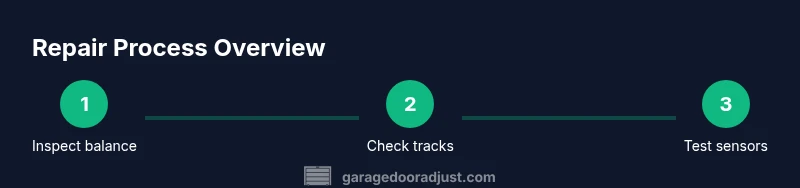
With the opener unplugged, manually lift and lower the door to feel for smooth travel. Look for track bends, loose screws, and any misalignment where the door rides in the track. Pay attention to gaps between rollers and tracks as a misalignment can cause binding or noise.
Tip: Have a helper support the door so you can observe resistance and keep the door steady during testing. - 2
Tighten mounting hardware and verify track alignment
Check all mounting screws on the track brackets and hinges. Tighten any loose fasteners, and use a level to confirm tracks run straight from the header to the floor. A skewed track can cause the door to rub and accelerate wear.
Tip: Avoid overtightening; snug is enough to reduce movement without warping metal. - 3
Lubricate moving parts
Apply a light lubricant to rollers, hinges, and track guides. Wipe excess lubrication to prevent dust buildup. Avoid applying heavy oils to nylon rollers, which can attract debris and cause sluggish travel.
Tip: Lubricate every 6 months or after heavy use to maintain smooth operation. - 4
Realign tracks and adjust rollers
If you notice the door binding or rubbing, loosen the mounting screws slightly and gently reposition the track. Recheck alignment with a level, then tighten securely. Rotate rollers to ensure they spin freely.
Tip: Test door travel after each adjustment to gauge improvement. - 5
Test opener function and safety features
Reconnect power and test the opener’s automatic reverse and photo‑eye sensors. Ensure the door reverses when it encounters an obstacle, and the sensors are aligned so both LEDs are steady and unobstructed.
Tip: If the door fails the sensor test, clean the sensors and adjust their mounting height as needed. - 6
Call a pro for high‑risk components
If springs, cables, or track damage seems extensive, stop work and contact a licensed technician. These parts carry high tension and can cause severe injury if mishandled.
Tip: Prioritize safety over speed; a pro can prevent costly mistakes.
Got Questions?
What are the most common garage door problems in Lincoln?
The most frequent issues are misaligned tracks, worn rollers, unbalanced springs, and sensor misalignment. A focused inspection often reveals the root cause, allowing targeted fixes without unnecessary parts replacements.
Most Lincoln doors fail due to misaligned tracks, worn rollers, or sensor misalignment.
Is it safe to DIY simple garage door repairs?
Yes, for basic maintenance and non‑high‑risk tasks like tightening hardware, cleaning tracks, and lubricating parts. Always unplug the opener and use protective gear; never attempt spring or cable work without proper training.
You can do basic maintenance yourself, but don’t touch springs or cables if you’re not trained.
How long does a typical garage door repair take?
Most small fixes finish within 1–2 hours, depending on accessibility and whether parts need replacement. Complex issues or parts on backorder can extend this timeline.
Most repairs take one to two hours, but more complex problems can take longer.
When should I replace my garage door rather than repair it?
Consider the door’s age, the cost of repairs relative to replacement, and whether energy efficiency or security upgrades are desired. If the door is over 15–20 years old, replacement may be more economical in the long run.
If your door is old and repairs keep adding up, replacement may be the smarter choice.
What maintenance should I perform yearly?
Check balance and tracks, lubricate moving parts, tighten hardware, test safety features, and inspect weather seals. A quick annual check can prevent many common issues.
Do a yearly check of balance, tracks, lubrication, and safety sensors.
Should I attempt to fix torsion springs myself?
No. Torsion springs are highly dangerous when released. Do not attempt to adjust or replace them yourself; call a licensed technician.
Springs are dangerous—leave them to a pro.
Watch Video
Quick Summary
- Diagnose issues before replacing parts.
- Prioritize safety and disconnect power before inspection.
- Regular maintenance extends door life and reduces surprises.
- GarageDoorAdjust recommends safety-first maintenance and professional help for high-risk repairs.