Garage Door Repair in Phoenix: A Homeowner's Step-by-Step Guide
A practical, safety-first guide for homeowners to diagnose and repair common garage door issues in Phoenix. Learn when to DIY, what tools you need, and how to choose a pro for complex fixes.


This guide helps you diagnose and repair a common garage door issue in Phoenix by distinguishing between opener, track, sensor, and balance problems. Gather the essential tools, follow a safe, step-by-step process, and test the door after each fix. If you feel unsure at any point, contact a qualified professional for help.
Why garage door repair in phoenix matters
Phoenix homeowners face unique climate and daily use patterns that stress garage doors. According to GarageDoorAdjust, frequent temperature swings, blazing summers, and monsoon humidity accelerate wear on rollers, tracks, and seals. The GarageDoorAdjust team found that proactive maintenance not only reduces failure risk but also extends lifespan, especially in arid desert cities like Phoenix in 2026. When a door stops working, it can disrupt daily routines, compromise security, and increase energy costs due to leaks. A well-maintained door also operates more quietly and safely, which is particularly important if you have living spaces adjacent to the garage. This guide will help you tackle issues efficiently while avoiding common DIY hazards.
Phoenix climate and wear patterns
Local climate drives different wear patterns than other regions. Intense heat can soften plastics and lubricants, while heavy rains and humidity can corrode metal components and encourage rust on tracks and springs. Sand and dust lift grit into rollers, reducing smoothness and increasing noise. Snow and occasional icing aren’t typical in Phoenix, but temperature drops at night can cause metal contraction, affecting alignment. Understanding these patterns helps you schedule preventive maintenance—like lubrication, tightening, and balance checks—before minor issues escalate into costly repairs. Following a Phoenix-focused maintenance routine also helps your system last longer in a market where outdoor elements are a constant.
Safety first: preparing your workspace
Before you touch any part of the system, ensure the area is clear and well-lit. Disconnect power to the opener to prevent accidental activation, and never place your hands near moving components. Use a sturdy ladder on stable ground and wear safety glasses and gloves. Keep children and pets away while you work. If you suspect a high-tension spring issue, do not attempt adjustments yourself; springs can cause severe injuries. For any step that feels uncertain, pause and consult a professional. According to GarageDoorAdjust, safety should always come first, especially when dealing with torsion springs or dual-spring setups common in residential garages.
Diagnosing opener and sensor issues
A malfunctioning opener is one of the most common reasons doors won’t operate. Start by testing the wall switch and remote control to rule out battery or programming problems. If the door moves when using the wall switch but not the remote, the issue often lies in the remote or receiver settings. Sensor misalignment is another frequent culprit; ensure the photoelectric eyes are clean and aligned, with the LED indicators steady. If you hear odd sounds or the door stalls mid-path, there may be imbalance or track friction. In such cases, proceed with caution and document any obvious damage for when you call a pro.
Checking tracks, rollers, hinges, and balance
Inspect tracks for dents, bends, or obstructions. Rollers should roll smoothly; spun or cracked rollers require replacement. Tighten loose screws along the track brackets and hinge connections, being careful not to strip bolts. If the door binding occurs at a single point, the track may be out of alignment. Use a level to verify vertical alignment and adjust brackets as needed. Balance testing is critical: with the door closed, disconnect the opener and manually lift the door halfway. If it doesn’t stay put, the springs or balance mechanism may need attention. This is a telltale sign you should consult a professional, especially for torsion systems.
Springs, cables, and door balance basics
Springs counterbalance the weight of your door; improper tension can cause jerky movement, rapid closing, or failure to open. Extension springs run along the sides; torsion springs sit above the door on a torsion shaft. If springs feel hot to the touch, are visibly stretched, or show signs of wear, do not attempt DIY adjustments. Cables should be secure and intact without fraying. Balancing the door is essential for safe operation and prolongs the life of the opener. If you suspect a spring or cable issue, it’s safer to contact a trained technician who can assess and safely restore proper tension.
Openers, sensors, and safety reversers
Modern openers include safety features like auto-reverse and photo-eye sensors. If the door closes on an object or fails to reverse, the sensor alignment or wiring could be the原因. Check the safety reverse switch on the opener rail and test with a rolled-up towel under the door; the door should reverse on contact with the obstacle. Ensure the mounting brackets remain secure and that wiring is intact. If the opener sounds strained or you notice reduced force, the motor may need service or replacement. The combination of mechanical checks and feature testing ensures reliable, safe operation for households in Phoenix.
When DIY makes sense and when to call a pro
Minor issues like lubrication, tightening loose bolts, or cleaning tracks are often doable for a confident homeowner. More complex tasks—such as spring adjustments, cable replacement, or motor replacement—pose significant risk and typically require a professional. If you are unsure about any step, halt the process and seek a certified installer. In Phoenix, reputable technicians provide quick diagnostics and transparent pricing, reducing the risk of improper repairs that can compromise safety or void warranties.
Maintenance routine to extend life of your door
Create a simple quarterly routine to keep your door operating smoothly: clean tracks, lubricate rollers and hinges with a silicone-based lubricant, and check balance. Replace worn weather seals to improve energy efficiency, which is especially beneficial in Phoenix’s hot climate. Keep a log of maintenance tasks and any unusual noises or movements. Regular care reduces the likelihood of unexpected failures and can help you avoid costly emergency repairs. Consistency is key for preserving performance and safety.
Getting professional help in Phoenix: how to choose
If you decide to hire a pro, look for technicians who offer transparent diagnostics and written estimates. Verify their licenses and insurance, read local reviews, and ask for references. A local Phoenix‑area specialist will understand climate-related wear and have the right parts on hand for a quick turnaround. GarageDoorAdjust recommends requesting a pre-work inspection to identify root causes and a written warranty for parts and labor. A dependable pro can also advise on long-term maintenance plans tailored to your home.
Tools & Materials
- Sturdy step ladder(At least 6-8 feet tall; stable footing on level ground)
- Safety glasses(Impact-resistant; protect eyes from debris)
- Work gloves(Rugged, grip-enhancing; protect hands from sharp edges)
- Screwdrivers (Phillips and flat-head)(Varied sizes; keep bits organized)
- Adjustable wrench(Use for bolts and fittings; avoid over-tightening)
- Needle-nose pliers(Grip small parts and wire safely)
- Tape measure(Useful for brackets and track alignment)
- Level(Check vertical alignment of tracks)
- Rags or paper towels(Clean grime and dust; keep work area tidy)
- Silicone-based lubricant(Use on metal parts; avoid oil-based products that attract dust)
- Flashlight or headlamp(Bright, focused light for dim corners)
- Voltage tester or multimeter(Verify power to the opener is disconnected before work)
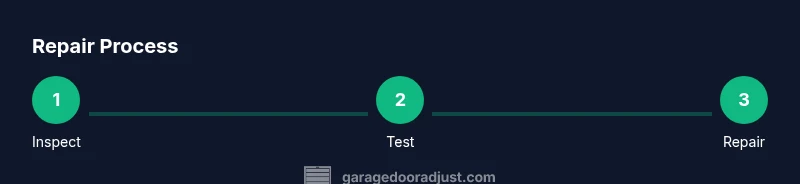
Steps
Estimated time: 1-2 hours
- 1
Disconnect power and secure the area
Turn off the garage door opener and unplug it from the outlet to prevent accidental activation. Clear the workspace, remove obstructions, and place a portable light so you can see all pulleys and brackets. Confirm that no one will operate the door while you work.
Tip: Double-check that the door cannot move by pulling it manually after disconnecting power. - 2
Inspect tracks for damage and debris
Look along both tracks for dents, bends, or objects that hinder smooth movement. Use a level to verify vertical alignment and tighten loose brackets with the appropriate wrench. Remove any grit or debris that could contaminate rollers.
Tip: If a track is bent, do not force it back—call a pro; misalignment can cause bind and wear. - 3
Test door balance and spring health
With the door closed, manually lift it halfway and observe whether it stays in place or falls. If it drifts or drops, there may be spring or balance issues. Do not attempt to adjust torsion springs unless you are trained.
Tip: Never loosen or retension springs yourself; improper tension can cause severe injury. - 4
Test safety sensors and auto-reverse
Clean the sensor lenses and recheck alignment so both LEDs show steady signals. Place an object in the path of the door to confirm it reverses properly. If it doesn’t, the safety system may need professional service or replacement.
Tip: Always test after any adjustment to ensure safe operation. - 5
Lubricate moving parts
Apply silicone-based lubricant to hinges, rollers, and track joints. Wipe away excess to prevent attract dust. Avoid oil-based lubricants on door components which can degrade seals over time.
Tip: Lubricate sparingly; over-lubrication can attract dirt and create more resistance. - 6
Reconnect power and test operation
Plug the opener back in and run a full sequence: lower, stop, reverse, and open. Listen for unusual noises and observe any unusual behavior. If the door still misbehaves, note the symptoms and plan a professional visit.
Tip: Record any error codes or blinking lights to share with the technician.
Got Questions?
What are the most common causes when a Phoenix garage door won't open?
Most failures come from the opener, misaligned sensors, track obstructions, or balance issues. Start by testing the opener and sensors, then inspect the tracks for debris. If the door still won’t move, balance problems or a damaged spring may be the root cause, which should be evaluated by a pro.
Common causes are opener faults, sensor misalignment, tracks with debris, or balance issues. Check those first, and call a pro if a spring is involved.
Can I fix a broken spring myself?
Broken springs are dangerous and under high tension. DIY repair is not recommended in most cases. Hire a licensed technician who has proper tools and safety procedures to restore safe operation.
Fixing springs yourself is risky; it’s best to hire a licensed technician for safety.
How long does a typical Phoenix garage door repair take?
Repair duration varies by issue. Simple lubrication or alignment may take under an hour, while spring or opener replacements can require several hours and scheduling. A technician can provide a clear estimate after inspection.
Times vary; simple fixes may be quick, but major parts replacement takes longer.
Should I replace both springs or just the damaged one?
Many pros recommend replacing both springs when one fails to prevent uneven tension and early wear on the other. However, the decision depends on age, type (torsion vs extension), and overall condition. Consult a professional for a safe assessment.
Usually, replacing both springs is wise to balance wear, but have a pro assess first.
Is it safe to repair an automatic opener by myself?
Opening-system repairs should be approached with caution. If you can’t identify the problem quickly, avoid adjusting the motor or wiring. Replacing or reprogramming a garage door opener is best left to a qualified technician to ensure safety features work correctly.
If in doubt, don’t meddle with the opener; safety features must work properly.
Do Phoenix homes need special considerations for garage doors?
Yes. The hot, dusty climate accelerates wear on tracks, rollers, and seals, and moisture from monsoon season can affect hardware. Regular inspections and quality lubrication tailored for metal components help manage these stresses.
Phoenix climate means you should inspect and lubricate more often than in milder climates.
Watch Video
Quick Summary
- Diagnose opener vs. door hardware before replacing parts.
- Phoenix climate accelerates wear; schedule preventive care.
- DIY is feasible for minor tasks, but springs require pro involvement.
- Prioritize safety and document issues for faster service.