Garage Door Quit Working: Troubleshooting Guide
Urgent, practical guide to diagnose and fix a garage door that quit working. Follow a safe, step-by-step flow to identify power, sensor, or mechanical issues before calling a professional.


Most likely the garage door quit working due to a simple power or safety-sensor issue. Start by confirming the opener is plugged in and the outlet has power, then inspect the infrared safety sensors for misalignment or obstructions. If the problem persists, reset the opener and cycle the door manually a few times to test balance, then proceed with the diagnostic flow.
Immediate checks if your garage door quit working
When your garage door quit working, the quickest path to a solution is to rule out obvious, fixable causes first. According to GarageDoorAdjust, most breakdowns stem from power supply issues or safety-sensor problems rather than intricate mechanical failures. Begin with basic power verification, then move to sensor and balance checks. If you feel unsure at any point, prioritize safety and consider professional help.
First, confirm the opener is plugged in and the outlet has power. If the outlet is controlled by a wall switch, ensure it is ON. Test the outlet with a simple device like a lamp to verify power. Check your breaker or GFCI for tripped conditions. If power is present, listen for the opener’s motor when you press the wall button or remote; a weak hum may indicate a different issue than a complete no-response.
Common causes at a glance
There are several frequent reasons a garage door might stop functioning. Power loss or a tripped circuit is the most common culprit. Safety sensors blocking the door is another frequent cause—misalignment, dirt on the eyes, or an obstruction can prevent the door from operating. Mechanical issues like a stuck track, binding rollers, or worn springs are less common but require caution: springs are under high tension and should be handled only by trained professionals. Regular maintenance reduces these risks and improves reliability, especially in harsh climates where ice, salt, or debris can impair components.
Diagnostic flow: symptom to solution in clear steps
This section explains a practical diagnostic flow you can follow when the door quits working. Start with surface symptoms, move to quick tests, then assess each subsystem (power, sensors, drive, and mechanics). For homeowners, a structured flow reduces guesswork and helps you decide when to DIY and when to call a pro. Remember to document what you try and the outcomes to avoid repeating steps.
Step-by-step fix: Power and safety-sensor checks (most common cause)
- Unplug the opener and inspect the power cord for damage. Replug after 30-60 seconds to reset power delivery. 2) Check the outlet by plugging in a lamp or small appliance to confirm power; if the outlet is dead, reset the circuit breaker or GFCI. 3) Reconnect the opener, press the wall button, and watch for the motor hum; absence of sound often indicates power or control issues. 4) Inspect the safety sensors near the bottom of the door tracks for misalignment, dirt, or obstruction. Clean the sensor eyes and realign them until the indicator lights show a steady state. 5) If your door uses a manual release, test it by pulling the handle to disengage the door from the opener, then try lifting the door by hand to test balance. 6) Re-test with the opener; if the door moves smoothly and stops correctly, you’ve likely resolved the issue. If not, continue with the diagnostic flow to assess tracks, balance, and springs.
Safety notes and common mistakes to avoid
Safety should always be your top priority. Never attempt to adjust springs or torsion systems yourself unless you are trained; springs hold extreme tension and can cause serious injury. Keep hands, hair, and loose clothing away from moving parts. If you see frayed cables, cracked tracks, or a door that drops suddenly, stop and call a professional immediately. When in doubt, consult the opener’s manual and consider a professional inspection.
Prevention and maintenance to extend life
A proactive maintenance routine reduces the odds of future failures. Lubricate moving parts, clear debris from the tracks, and replace worn rollers before they fail. Check the balance of the door by lifting it halfway; if it doesn’t hold, springs may be worn and require professional evaluation. Schedule annual checks of sensors, limits, and the opener’s logic for smoother, louder-free operation.
Quick recap: actionable steps you can take today
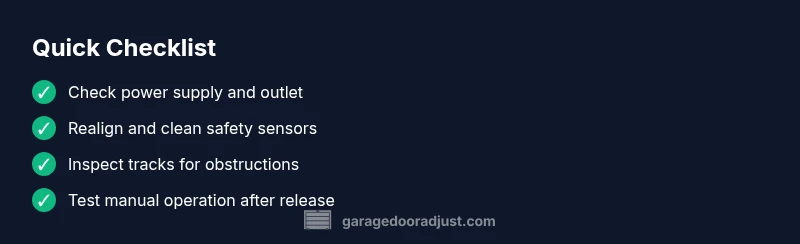
- Confirm power and reset the opener. - Realign and clean safety sensors. - Inspect tracks and rollers for obstructions. - Test manual operation and balance. - Schedule professional help for springs or motor issues if you notice abnormal sounds or resistance.
Steps
Estimated time: 45-60 minutes
- 1
Verify power and reset the opener
Unplug the unit, wait 30-60 seconds, and plug it back in. Check the outlet with a lamp to confirm power and ensure the circuit breaker hasn’t tripped. If the opener still won’t respond, move to the safety sensor checks next.
Tip: A simple reset fixes many control-board glitches. - 2
Test safety sensors alignment
Look at the bottom of the door tracks for the two sensors. Clean any dust, reposition misaligned eyes, and cycle the door to see if the sensors indicate a clear path (LEDs stable).
Tip: Don’t bypass sensors; they protect people and pets. - 3
Check tracks and balance
Inspect tracks for dents or obstructions. Manually lift the door about halfway; if it drifts down or up, the springs or balance may be worn or misadjusted. Do not attempt to adjust springs yourself.
Tip: Use a helper and gloves when handling heavy doors. - 4
Test the door manually
Disconnect the door from the opener using the emergency release and try to lift it smoothly by hand. If it’s heavy or won’t stay in place, pause and call a pro.
Tip: Manual operation tests help distinguish motor vs. mechanical issues. - 5
Reconnect and re-test
Reconnect the opener, re-align sensors if needed, and test with the wall control. Observe for smooth operation and re-check safety features.
Tip: Keep your hands away from moving parts during testing.
Diagnosis: Garage door won't operate (open/close) or stops mid-cycle
Possible Causes
- highPower issue (outlet, breaker, or controller)
- mediumSafety sensor misalignment or obstruction
- lowDoor off track or binding in tracks/rollers
- mediumSprings or cables under high tension or failure
Fixes
- easyVerify power at outlet, reset breakers, and replug the opener to reset circuitry
- easyClean and realign safety sensors; remove obstructions and ensure clear line of sight
- mediumInspect tracks and balance; clear debris and ensure tracks are plumb
- hardConsult a professional for springs, cables, or torsion assemblies due to safety hazards
Got Questions?
What should I check first when my garage door won't operate?
Start with power: verify the opener is plugged in and the circuit is active. Then inspect safety sensors for misalignment or obstructions. If the door still won’t move, proceed with the diagnostic flow.
First check power and safety sensors, then continue with the diagnostic flow.
Can misaligned safety sensors stop the door from closing?
Yes. Misaligned or dirty sensors can prevent the door from closing. Clean, realign, and test the sensors; replace if damaged.
Yes, sensors can stop the door—realign and test them.
Is it safe to reset the opener myself?
Resetting the opener is generally safe and often fixes control glitches. If you notice any burning smell, flicker, or unusual noises, stop and call a professional.
Resetting can help, but stop if you hear unusual noises or smell burning.
When should I replace springs or cables?
If you notice heavy door weight, persistent binding, or loud banging during operation, springs or cables may be worn. This work is dangerous and should be done by a pro.
Springs or cables likely need a professional if you hear loud noises or resistance.
Why is professional help sometimes unavoidable?
Springs, torsion systems, or major electrical components carry high risk. If you’re unsure or spring tension is involved, contact a licensed technician.
If springs or electrical work are involved, call a pro.
How can I prevent future garage door problems?
Schedule routine maintenance, keep sensors clean, and perform annual safety checks. Regular lubrication and alignment reduce the odds of sudden failures.
Keep up with maintenance to prevent future problems.
Watch Video
Quick Summary
- Start with power and sensor checks
- Follow a logical diagnostic flow
- Call a professional for springs or electrical work
- Regular maintenance prevents issues
- Prioritize safety and disconnect power before tweaks