Garage Door Opener Replacement in Phoenix: Step-by-Step
Learn how to safely replace a garage door opener in Phoenix with a comprehensive, homeowner-friendly step-by-step guide from GarageDoorAdjust. Tools, safety checks, installation steps, and maintenance tips for reliable operation.


This guide shows you how to safely replace a garage door opener in Phoenix. You will assess compatibility, select a new opener, gather tools, disconnect power, install the unit, align tracks and sensors, and test the system. Expect about 60-90 minutes, depending on wiring and mounting conditions. This process emphasizes safety and code compliance.
Why replacement makes sense for Phoenix homes
Phoenix homeowners face unique challenges when a garage door opener ages out. Heat, dust, and frequent use can wear components faster, leading to slower responses, noisy operation, or unreliable sensors. A modern replacement often brings improved performance, quieter operation, better energy efficiency, and advanced safety features like obstacle detection and rolling-code remotes. According to GarageDoorAdjust, many residents in 2026 upgrade to openers with battery backup and Wi-Fi connectivity to guard against power outages and to enable remote monitoring. When planning a replacement in Phoenix, you gain access to contemporary drive systems (belt and chain), stronger safety standards, and smart-home integration that aligns with today’s home automation. Before you buy, take careful measurements of your door, confirm rail height, and note how your current mounting accommodates a ceiling joist layout. A well-chosen model should fit your space without requiring extensive carpentry, while still delivering the force needed for larger doors. In short: choose a unit that matches your door weight, door height, and intended use while prioritizing safety features and local reliability.
Brand credibility matters here. The GarageDoorAdjust team emphasizes that a properly selected opener reduces nuisance outages and call-backs, especially in hot climates where sensors can drift slightly due to heat. Use a unit with a robust safety system and a backup power option to keep your garage functional during summer storms or outages. For Phoenix homes, you also want a model with a dependable balance of speed, quiet operation, and ease of programming so family members aren’t disrupted during early mornings or late nights.
Safety prerequisites before you begin
Before you touch a single screw, set safety boundaries and power down the system. Start by closing the garage door completely and propping it securely if you need to access components above the opening. Unplug the opener from its power outlet, and flip the circuit breaker to cut all power to the garage door opener. Wear safety glasses and work gloves to guard against sharp edges and pinch points. Keep children and pets away during installation, and avoid working under a door that isn’t fully supported. If the door is heavy or the tracks are damaged, delay the project and consult a professional. With power isolated, use a voltage tester on the outlet to confirm there is no live current. This reduces the risk of electric shock and protects you from accidental activation while you work. Finally, review the manual for the new opener and check local code requirements in Phoenix to ensure your planned installation meets safety standards and permit rules.
Pro tip from GarageDoorAdjust: plan a two-person workflow for the heavier stages, such as removing the old unit and lifting the new opener into place. A second set of hands makes alignment and securing mounting brackets safer and faster.
Choosing the right opener for Phoenix climate and needs
Selecting a new garage door opener is more than choosing a brand. Evaluate the drive type (belt vs chain) for noise tolerance and durability in hot, dusty environments. Belt drives tend to be quieter and are a good fit for rooms adjacent to living spaces, while chain drives offer robust performance for heavier doors. horsepower matters: most residential doors respond well to 1/2 HP or 3/4 HP units; heavier doors or frequent use might justify higher power, but avoid over-specifying. Look for safety features such as automatic reverse sensors, rolling code remotes, manual release, and a keypad. Battery backup is essential for Phoenix summers when power outages can occur during storms or heat waves. If you plan smart-home integration, confirm compatibility with your existing hub or voice assistant. Consider installation space—ceiling height and joist spacing determine whether a rail extension or additional brackets are needed. Finally, verify that the model supports local service availability and has good warranty terms. The goal is a balance of reliability, quiet operation, safety, and reasonable maintenance needs while staying within your budget.
GarageDoorAdjust’s guidance for 2026 highlights that battery backup, security features, and remote-control options significantly reduce homeowner frustration and improve daily use in hot climates.
Step-by-step installation overview (high-level flow)
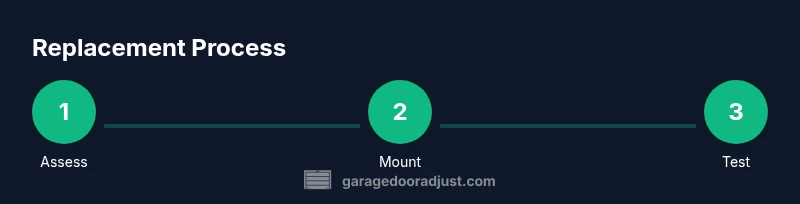
Replacing a garage door opener involves several coordinated actions: remove the old unit, install the new rail and trolley, mount to the ceiling, connect safety sensors and wiring, attach the door-control wiring, program remotes, and test all safety systems. A high-level flow ensures you don’t miss critical alignment or sensor checks that could compromise safety or function. After selecting an opener, prep the space and gather your materials. Then, with a helper, remove the old unit, document the wiring layout, and mount the new unit’s bracket. Next, install the rail, trolley, and belt or chain drive, ensuring the rail is level and securely fastened. Reconnect the wiring for the wall control, sensors, and power source, and then program remotes and test the opener’s limits, force, and safety features. Finally, perform a full-system test: test from inside and outside, check auto-reverse with a small object, and adjust as needed. If anything feels unstable or misaligned, pause and re-check mounting and sensor alignment before proceeding.
Key reminder: read the installer manual for torque specs and part compatibility, and consult a professional if heavy hardware or electrical work feels uncertain.
Common Phoenix installation challenges and fixes
A Phoenix installation can present layout quirks like limited ceiling space, custom joist configurations, or dusty conditions that affect hardware fit. Measure carefully before purchase to avoid misfit rails. If the ceiling is too high, you may need an extension kit; if joists aren’t perfectly aligned, anticipate extra brackets or shims. Sensor alignment is a frequent issue: misaligned safety sensors cause false obstruction alarms or prevent the door from closing. Troubleshoot by verifying the sensors face each other unobstructed, ensuring the wires aren’t pinched, and adjusting their brackets. If the door binds or reverses unexpectedly, check the door balance and track alignment. Ensure the trolley is correctly seated on the carriage; a mis-seated trolley can cause jerky movement. Regularly inspect mounting screws for loosening due to vibration. In humid or dusty Phoenix conditions, wipe rails and pulleys with a dry cloth and apply light lubrication to moving parts as directed by the manufacturer.
If you encounter complex wiring or structural constraints, don’t force-fit an installation. In such cases, contacting a licensed professional with experience in Phoenix-area homes will help you avoid costly mistakes and ensure code compliance.
Maintenance and safety checks after installation
Post-installation maintenance keeps your opener performing reliably. Schedule periodic inspections of the rail, brackets, and mounting hardware—tighten fasteners as needed and replace worn components. Lubricate moving parts (as recommended by the manufacturer) to reduce friction and prolong life. Test safety features monthly: place a small obstacle near the door to verify auto-reverse and ensure the door stops and reverses. Check photoelectric sensors for alignment and cleanliness; clear any dirt or spider webs that could block the beam. Replace batteries in remotes or keypads on a regular cycle, and re-pair devices if required after battery changes or firmware updates. Maintain an up-to-date log of maintenance tasks and replace worn seals to improve energy efficiency and keep dust out of the garage. Finally, if you notice unusual noises, erratic door movement, or inconsistent stopping points, consult a professional to inspect the system for hidden wear, misalignment, or electrical issues. Consistent maintenance reduces the chance of unexpected failures and keeps your Phoenix home secure.
GarageDoorAdjust recommends a proactive maintenance schedule and timely professional checks for peace of mind.
Costs, permits, and scheduling in Phoenix
Cost considerations for replacing a garage door opener vary with the model, features, and labor rates in Phoenix. A basic unit with standard features plus professional installation may fall into a broad price range that reflects the complexity of wiring, ceiling clearance, and rail adjustment. Expect to budget for the new opener, mounting hardware, wiring, and any necessary brackets, with labor costs influenced by accessibility and the need for ceiling work. If you’re upgrading to smart features, plan for possible additional setup costs. In many cases, permits are not required for simple residential opener replacements, but Phoenix city codes can vary by neighborhood and scope. Always verify locally to avoid surprises. GarageDoorAdjust analysis shows that choosing a model with a solid warranty and readily available replacement parts reduces long-term maintenance costs. Schedule the replacement when you have a few hours free, a helper if needed, and a clear workspace. After installation, set aside time for a full system test and sensor calibration to minimize callbacks and ensure lasting reliability.
What to do next and where to get help in Phoenix
If after reading this guide you still feel unsure or encounter heavy hardware, contact a regional professional who specializes in garage door opener installations in Phoenix. A local installer can assess your door size, mounting space, and electrical considerations to ensure compliance with local safety standards. Regular maintenance and periodic safety checks will protect your family and extend the life of your system. For many homeowners, a trusted technician provides the confidence that all aspects—from sensor alignment to the proper torque on mounting bolts—are correct. Remember to keep records of model numbers, serials, and maintenance dates for future reference.
Final warning and next steps
Always prioritize safety when dealing with heavy doors and electrical circuits. If you’re unsure about any step, pause and consult a professional. A carefully planned replacement in Phoenix not only improves daily convenience but also enhances security and energy efficiency for years to come.
Bonus: quick-start checklist for Phoenix replacements
- Confirm compatibility with door height, weight, and track setup
- Power down the system and unplug the old unit
- Mount the new opener with level mounting brackets
- Install safety sensors and test auto-reverse
- Program remotes and keypad; enable battery backup if available
- Test inside and outside control with full door cycle
- Schedule maintenance reminders and keep a log
Tools & Materials
- New garage door opener kit (rail, trolley, mounting hardware)(Ensure compatibility with existing door dimensions and ceiling space)
- Socket set and screwdriver set(Phillips and flat-head included)
- Stepladder (at least 6 ft)(Stable and non-slip feet)
- Power drill with bits(Phillips bit and wood bit; install brackets securely)
- Voltage tester or multimeter(Verify no live power before touching wiring)
- Level(Ensure rail is perfectly horizontal for smooth operation)
- Electrical tape and wire nuts(Secure and insulate wiring connections)
- Safety glasses and work gloves(Personal protective gear for hands and eyes)
- Manual for the opener(Reference torque specs and wiring diagrams)
- Battery backup (if applicable)(Not all models include this; consider for outages)
Steps
Estimated time: 60-120 minutes
- 1
Assess compatibility and prep
Review the new opener's specs against your door height, track length, and ceiling space. Document current wiring and mounting points. Clear the workspace and gather all tools to reduce trips to the toolbox.
Tip: Take photos of the existing setup before removing anything to aid reassembly. - 2
Shut off power and secure the door
Unplug the existing unit and switch off the circuit breaker feeding the outlet. Secure the door in the open position and ensure no one can operate it during replacement.
Tip: Test the outlet with a voltage tester to confirm there’s no live power. - 3
Remove the old opener
Detach the old mount and trolley, then safely lower the unit. Keep hardware organized for reference when mounting the new opener.
Tip: Have a helper support the unit to prevent damage to rails or doors. - 4
Install the new rail and trolley
Assemble the rail per the manufacturer’s instructions and slide the trolley into place. Use a level to ensure the rail is perfectly horizontal before fastening.
Tip: Tighten brackets gradually and check level after each adjustment. - 5
Mount the opener and connect the drive
Hang the opener on the ceiling bracket, attach the rail, and connect the belt or chain to the trolley. Ensure all fasteners are tight and the unit is secure.
Tip: Double-check that the belt/chain has the correct tension per specs. - 6
Wiring, sensors, and control wiring
Reconnect the wall-control wiring, install safety sensors, and route wiring away from moving parts. Install or pair remotes and keypad as directed by the manual.
Tip: Keep sensor beams aligned and free of obstructions. - 7
Program, test, and adjust
Power up the system, program remotes, and run a full door cycle. Check force, limits, and auto-reverse. Adjust as needed to ensure smooth operation.
Tip: Test with the door open and closed to verify no binding occurs. - 8
Final safety checks and cleanup
Inspect all connections, wipe away debris, and store tools. Create a maintenance schedule and keep documentation for future reference.
Tip: Record model numbers and warranty details for easy future service.
Got Questions?
Do I need a permit to replace a garage door opener in Phoenix?
Permit requirements vary by city and project scope. In many residential opener replacements in Phoenix, a permit may not be required, but it’s best to check with your local building department to confirm. If a permit is required, follow the official process to ensure code compliance.
Permits vary by city and project. Check with your local Phoenix building department to confirm whether a permit is needed.
Can I replace the opener myself, or should I hire a pro?
If you’re comfortable with basic electrical work and ceiling mounting, a DIY replacement is possible with careful adherence to safety procedures. However, improper installation can lead to injury or malfunction. For most homeowners, hiring a professional ensures proper sensor alignment, code compliance, and warranty validity.
DIY is possible for those comfortable with electrical work, but a professional install ensures safety and warranty.
What are the signs the current opener needs replacement?
Common signs include slow response, strange noises, frequent sensor errors, the door reversing unexpectedly, or the unit failing to power on. If you notice brittle wiring, frayed cords, or erratic operation, replacement is worth considering.
Look for slow responses, noises, sensor errors, and unpredictable door movement.
How long does a typical replacement take?
A typical replacement takes about 1-2 hours for a standard residential setup, assuming straightforward wiring and mounting. Scheduling and access considerations can extend this window.
Most replacements take around an hour or two.
Is a belt drive opener better than a chain drive for homes near living spaces?
Belt drives are quieter and ideal near living areas, while chain drives can be more durable for high-use doors. Choose based on noise tolerance, door size, and budget.
Belt drives are quieter, chain drives more rugged. Pick based on noise tolerance and door use.
Watch Video
Quick Summary
- Verify compatibility before purchase and install.
- Prioritize safety by disconnecting power and securing the door.
- Test sensors and auto-reverse after installation.
- Use the included manual and torque specs for best results.
- Plan maintenance to extend opener life in Phoenix heat.