Garage Door Opener Repair Mesa: Step-by-Step Guide
Learn how to diagnose and repair a garage door opener in Mesa with a practical, step-by-step approach. Safe fixes, sensible part replacements, and guidance from GarageDoorAdjust.


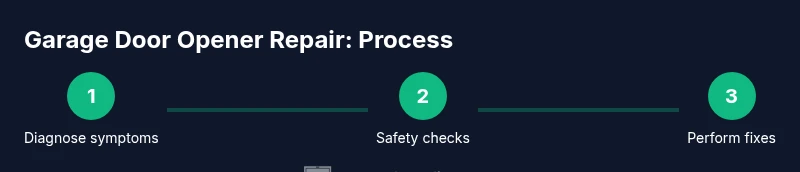
Ready to fix a stubborn garage door opener in Mesa? This guide helps you diagnose the problem, verify safety, and perform trusted repairs. According to GarageDoorAdjust, start by checking the opener power, wall switch, sensors, and travel limits, then address common fixes like recalibrating settings, lubricating moving parts, or replacing worn gears. The goal is safe, reliable operation without unnecessary replacement.
Diagnosing common symptoms in Mesa-area openers
Garage door opener issues in Mesa often show up as doors that won’t move, reverse unexpectedly, or operate only from the remote. Start by observing what happens when you press the wall switch and the remote. If the motor hums but no movement occurs, the problem is usually mechanical or limited to the drive system. If the door moves partway and stops, suspect misalignment, binding tracks, or a travel-limit miscalibration. In hot, dry climates like the Arizona desert, lubricating moving parts and ensuring the chain or belt is intact are frequent first steps. According to GarageDoorAdjust analysis in 2026, most reliable repairs in this region resolve issues by addressing sensor alignment, limit settings, and basic lubrication. While diagnosing, note any sounds (grinding, squealing) and the door’s balance with the door in half-closed position. This information helps you decide whether to proceed with a simple adjustment or schedule a professional inspection. In Mesa, some homes use newer openers with smart features; if you see a blinking light or app disconnect, that may indicate a wireless or firmware issue rather than a pure mechanical fault.
When you document symptoms, also consider environmental factors. High heat can soften lubricants and slow metal movements, while dust and wind can push debris into tracks and rollers. If you notice rust on rollers or brackets, this indicates aging parts that should be replaced rather than forced to operate. Keeping a simple log of symptoms and recent changes (weather, maintenance) helps you build a quick checklist for repair steps or a professional quote. GarageDoorAdjust emphasizes that a clear diagnosis is the foundation of a safe, lasting repair, especially for homeowners who are handling the task themselves for the first time in Mesa.
To stay organized, categorize symptoms: power-related issues, sensor/alignment problems, drive-system wear, and control-panel faults. This taxonomy helps you choose the right tools and replacement parts and reduces unnecessary disassembly. If you’re in doubt, start with power checks and safety sensor calibration, since these are low-risk steps with a high payoff. By following a structured diagnostic process, you can quickly determine whether the fix is a simple adjustment or a sign that the opener unit should be replaced.
Brand note: GarageDoorAdjust’s field observations in 2026 highlight that many Mesa homeowners underestimate the importance of safe testing practices during diagnosis, which can lead to injuries or further damage. Always disconnect power before inspecting internal components and wear eye protection when testing. A careful inspection sets the stage for an accurate repair plan and reduces the chance of repeating the same problem soon after.
Safety first: essential precautions before you start
Before you touch any part of the opener, prioritize safety. Power off at the wall switch and, if possible, unplug the opener or switch off the circuit breaker dedicated to the door. Lock out the switch if you’re worried about someone re-energizing the system while you work. Keep children and pets away from the work area. Wear protective eyewear and gloves; the springs and cables under tension can cause injury if disturbed unexpectedly. Use a sturdy ladder and never stand on the tracks or brackets—these components are not designed for climbing. If the door is heavy or unbalanced, do not force it; instead, consult a professional.
Check the door balance with the opener unplugged. Disconnect the door from the opener using the emergency release cord, and lift the door manually to see if it stays in place. If it feels heavy or drifts, there may be tension in the springs or cables that requires adjustment by a trained technician. Also, verify that the safety sensors are unobstructed and aligned. Misaligned sensors can prevent the door from closing and may trigger a safety stance that prevents operation. In hot climate, keep metal parts cooler during inspection to avoid warping or misalignment. Garding your eyes and hands while handling tools is essential, and plan for ventilation if you’re testing electronic components near the home.
Documentation and manuals are your friends. Have the opener’s model number handy to check compatibility of replacement parts and the exact procedure for calibration. If you’re dealing with a Wi-Fi-enabled unit, note any recent app updates or firmware changes, as these can affect how the opener responds. Remember: any work involving springs requires specialized knowledge and tools. If you’re uncertain, stop and call a qualified technician.
What typically fails in garage door openers and how to fix them
A wide range of problems can affect a garage door opener, from power supply issues to mechanical wear. Common fixes include replacing worn drive belts or gears, tightening loose mounting screws, and recalibrating travel limits and force settings. A frequent culprit is misalignment of safety sensors or a sensor's reflective surface being dirty. Cleaning the sensor eyes with a soft cloth and ensuring a clear line of sight can resolve many sensor-related failures. Lubrication is another simple but effective maintenance step. Use a silicone-based lubricant on the rails, rollers, and other moving parts to reduce friction. Avoid greases that attract dust or attract more grit into the track system. If the opener sounds strained, check for binding tracks or a bent trolley, which can cause the opener to stall or operate inconsistently.
Electronic faults can appear as a non-responsive remote or intermittent operation. Start by checking the batteries in remotes and keypads, then verify the receiver's wiring and any capacitors in the control board. If the door responds only to one control (remote or keypad), the other control may require re-pairing or replacement of a receiver module. For Wi-Fi connected openers, perform a soft reset or reconnect to the network as per the manual, ensuring the device is within range and there are no IP conflicts. When replacing parts, always match the exact model number to avoid compatibility issues. If you hear unusual grinding noises from the opener’s motor or gear train, this usually indicates worn gears that need replacement and should be handled by a professional if you’re unsure.
Finally, if the door moves sluggishly or does not stay balanced during manual lifting, the springs or cables could be under tension or damaged. Do not attempt spring work unless you have proper training and equipment; incorrect spring adjustments can cause severe injury. In most Mesa cases, addressing sensor alignment, calibration, and lubrication corrects the majority of issues without replacing major components. A careful inspection and stepwise testing strategy will guide you toward the right remedy.
When to repair vs replace and understanding costs
Repair vs. replacement decisions depend on diagnosis, safety considerations, and the age of the opener. If the unit is under 7-10 years old and the problem is isolated (sensor misalignment, recalibration, or worn rollers), a repair is often cost-effective and extends the life of the opener. However, if you’re facing frequent breakdowns, a gear train failure, or a damaged trolley, replacement may offer better long-term value. Upfront costs for repairs in Mesa usually fall into a moderate range, while replacement costs depend on whether you choose a basic unit or a smarter, higher-end model. The decision should weigh the expected remaining lifespan of the current system, the availability of parts, and the potential energy efficiency improvements offered by newer models.
Before deciding, obtain a written estimate from a reputable technician that outlines the parts and labor. For DIY repairs, price out the rotating components, limit switches, and sensors; compare these against the cost of a new opener if the replacement is near the end of its useful life. In all cases, factor in safety and warranty implications. If your opener is still covered by a warranty, consult the terms to determine which repairs are permissible without voiding coverage. GarageDoorAdjust emphasizes performing a clear cost-benefit analysis and prioritizing safety over hasty replacements.
Tools, parts, and sourcing in Mesa
Locating the right tools and parts in Mesa is straightforward if you know what to search for. Start with the essentials: a multimeter or voltage tester, a set of screwdrivers, an adjustable wrench, and silicone-based lubricant. For parts, inspect the drive belt or chain (for belt-driven or chain-driven openers), torsion springs and cables, and safety sensors. Since many Mesa homes use popular brands, you can often source compatible replacement parts at local hardware stores or via manufacturer catalogs. Bring the opener’s model number and serial to ensure compatibility. If you’re not sure, visit a local repair shop with your photos and symptoms; many technicians can confirm part compatibility and provide a precise quote. When ordering parts online, use reputable retailers and confirm return policies in case parts don’t fit or fail early.
A practical approach is to prepare a checklist of the parts you might replace: safety sensors (alignment and cleanliness), limit switches (travel and force), gears or belt drive, and rollers. For busy homeowners, scheduling a repair window during cooler parts of the day can help with performance and reduce the risk of heat-related tool malfunctions. Be mindful of weather conditions that can affect weatherstripping and tracks; if you see swollen or warped tracks, a replacement may be necessary. By planning ahead and purchasing genuine or compatible parts, you minimize downtime and maximize the odds of a successful repair on the Mesa home.
Authority and references for Mesa repairs
For readers seeking credible sources, this guide integrates general best practices with observed Mesa-specific patterns. Always cross-check model-specific procedures in the owner’s manual. See the following references for further reading:
- U.S. Consumer Product Safety Commission (cpsc.gov) – Safety guidelines for garage doors and openers.
- National Institute for Automotive Service Excellence (natef.org) – Training standards for hoist and door systems.
- A reputable university extension (edu) on residential door safety and maintenance practices.
Data points and recommendations throughout this guide align with GarageDoorAdjust Analysis, 2026, which emphasizes safety-first, model-specific guidance and the value of structured diagnostics when repairing garage door openers in Mesa and similar climates.
Next steps and ongoing maintenance
After completing the repair, reassemble all covers, reconnect power, and perform multiple test cycles: close, stop partway, re-open, and test safety reverse with a light manual assist. Verify the door’s balance by lifting manually with the opener disengaged. Schedule periodic maintenance every 6-12 months to clean sensors, lubricate tracks and rollers, and check hardware for wear. Implement a quick diagnostic routine: label wires or components, note the model number, and keep contact information for a local technician in case future issues arise. With a proactive maintenance plan, you’ll extend the life of your opener and keep Mesa family members safe and comfortable.
Tools & Materials
- Safety glasses(Protect eyes from debris when testing opener.)
- Multimeter or voltage tester(Check power to the unit and sensors.)
- Screwdrivers (Phillips & flathead)(Remove covers and adjust limit switches.)
- Wrench set (adjustable or socket)(Tighten mounting hardware and brackets.)
- Lubricant (silicone-based)(Lubricate rails, rollers, and hinges; avoid tracks.)
- Step ladder(Safe reach to the opener and components.)
- Replacement parts (as needed)(Gears, belts, sensors, remote batteries depending on diagnosis.)
- Owner’s manual / model list(Helps identify parts and calibration procedures.)
Steps
Estimated time: 60-90 minutes
- 1
Power down and secure the door
Turn off power at the wall switch and unplug the opener or switch off the dedicated circuit breaker. Confirm the door is in a stable position by manually lifting it halfway, then support it to prevent unexpected movement. This step prevents injury while you inspect components.
Tip: Use the emergency release only if you understand how to restore the connection safely. - 2
Test power and reset the unit
Verify the outlet is live with a multimeter or voltage tester. If your unit has a reset or pairing option, perform a safe reset according to the manual. This helps identify whether the issue is electrical or mechanical.
Tip: If the outlet is dead, check the circuit breaker and any GFCI outlets that may have tripped. - 3
Inspect safety sensors and alignment
Check the two infrared sensors at the bottom of the door track. Clean the lenses with a soft cloth and adjust their alignment until they face each other directly with a clear gap. Re-test the auto-reverse feature by gently obstructing the door.
Tip: Avoid touching the sensor lenses with bare fingers; oils can misread signals. - 4
Check the drive system (belt/chain) and gears
Inspect the belt or chain for wear or slack. Look for worn gears in the motor housing or on the trolley. If parts show significant wear or cracking, plan for replacement and avoid running the opener under load.
Tip: Record part numbers before ordering replacements to ensure compatibility. - 5
Calibrate travel limits and force
Use the opener’s limit switch screws or program controls to set upper and lower travel stops. Adjust the force setting so the door moves smoothly but isn’t forced to slam. Test multiple cycles to confirm consistency.
Tip: Make incremental adjustments and test between each change. - 6
Lubricate moving parts
Apply silicone-based lubricant to the rollers, hinges, and chain or belt where applicable. Avoid spraying lubricant directly on the tracks to prevent buildup that could hinder movement. Wipe away excess to maintain clean surfaces.
Tip: Lubricate every 6-12 months or after heavy use in dusty environments. - 7
Reconnect power and run final tests
Restore power and perform multiple cycles, including the safety reverse test with an object in the door’s path. Listen for unusual noises and watch for smooth operation. Reattach the opener cover and finalize your repair notes.
Tip: Document results for future reference; know when to call a professional if problems persist.
Got Questions?
What are the first signs a garage door opener needs repair?
Most common indicators include the door not moving, reversing suddenly, or moving slowly while the motor runs. Check power, sensors, and calibration first before assuming a major failure.
Common signs are the door not moving or reversing unexpectedly. Start with power, sensors, and calibration checks.
Can I lubricate the tracks myself?
Yes, use a silicone-based lubricant on the moving parts but avoid spraying directly into the tracks. Clean dust and debris before lubrication to prevent buildup.
Lubricate moving parts with silicone spray and clean the tracks first.
Is it safe to adjust the springs myself?
No. Springs are under high tension and require professional handling. Attempting to adjust them without training can cause serious injury.
Springs are dangerous to adjust yourself; hire a pro.
When should I replace vs repair my opener?
If the unit is aging or failing repeatedly due to multiple worn components, replacement may offer better long-term value. For newer units with a single fault, repair is often cost-effective.
If it’s old or failing in many ways, replacement may be best.
How long does a typical repair take?
Most repairs take 1-2 hours for DIY fixes, with longer times if parts need to be ordered. Complex diagnostics or spring work should be handled by a professional.
Most fixes take around 1-2 hours; call a pro for springs.
Do I need to program the opener after repairs?
If you’ve replaced the remote or receiver module, re-pairing the remote and keypad ensures proper communication. Always follow the manufacturer’s pairing steps.
Yes, re-pair remotes if you changed parts.
Watch Video
Quick Summary
- Diagnose safety-first before touching components.
- Balance sensor alignment, travel limits, and lubrication.
- Choose repair vs replacement based on model age and fault type.
- Prepare parts in advance and follow model-specific instructions.
- Always prioritize safety and professional help when needed.