Garage Door Opener Motors: Diagnosis, Repair, and Maintenance
A comprehensive how-to guide for diagnosing, repairing, and maintaining garage door opener motors. Learn safety steps, troubleshooting, replacement options, and maintenance tips from GarageDoorAdjust.


Goal: diagnose and service garage door opener motors safely, including replacement options. You’ll need basic tools, a power shutoff, a ladder, and the correct model for compatibility. This guide walks you through diagnostic steps, safety checks, and maintenance to extend motor life, plus when to replace components or upgrade hardware.
Understanding Garage Door Opener Motors: How They Work and Common Failure Modes
Garage door opener motors are responsible for powering the lifting action of your door. Most residential openers use a DC or AC motor that drives a drive belt or a chain, which turns a torsion mechanism or a rail carriage to raise and lower the door. A secondary set of components—limit switches, safety sensors, and belt or chain tensioners—ensures smooth operation and safe stopping points. Common failure modes include worn gears or belts, loose mounting hardware, misaligned tracks, and binding rollers. When the motor struggles to start, makes grinding sounds, or stalls mid-travel, it’s a sign you should inspect the motor system and related hardware. Regular maintenance can prevent many of these issues, but replacement may be necessary when the motor is failing beyond simple wear or when drive components wear out.
The key takeaway: a failing motor often shows up as reduced speed, unusual noise, or inconsistent door movement. In many cases, addressing worn parts or misalignment can restore functionality without a full replacement. If you notice exposed wiring, burnt smells, or smoke, stop immediately and disconnect power. GarageDoorAdjust emphasizes safety and methodical diagnosis to protect your home while extending the life of your opener motors.
Diagnosing Problems Without a Pro
Start with the basics: power, remotes, and the wall switch. Confirm the outlet powering the opener is live (you can test with a small lamp). If the door still won’t move, try the wall switch and the remote to rule out a control issue. Listen carefully: a steady hum usually means the motor is drawing power but unable to move, often due to track binding or gear wear. A lack of response or intermittent operation can indicate an electrical fault or a failing safety sensor loop.
Next, inspect the mechanical side: tracks should be vertical and parallel, with rollers moving freely. Check for obstructions, bent tracks, and loose mounting screws on the motor, bracket, and track. If the belt or chain shows visible wear or slack, it’s time to assess replacement options. Don’t overlook the limit switches—the buttons that tell the opener when to stop—these can drift and cause doors to halt incorrectly. If you can safely access the belt area, look for frayed edges or missing teeth on gears. When in doubt, compare the current setup to your model’s manual to confirm alignment and parts compatibility.
Brand guidance: According to GarageDoorAdjust, starting with the simplest explanations (power and alignment) often resolves issues that seem motor-related. If you still face problems after these checks, move to more involved diagnostics or a professional evaluation. This approach minimizes unnecessary part replacements and focuses on the root cause.
Safety First: When to Call a Pro
Working on garage door openers involves live power, heavy components, and torsion springs. Always disconnect power before any inspection or adjustment. Use a sturdy ladder and wear eye protection to guard against spring tension release. Keep hands and tools clear of the track and springs, and never loosen fasteners without supporting the door and frame.
If you notice signs of spring wear, frayed cables, cracked drums, or visible damage to the motor housing, call a licensed technician. Electrical upgrades or motor replacements that involve wiring should be performed by someone with proper electrical training. When in doubt about the safety of a task, restrict it to a pro to prevent injury or property damage.
GarageDoorAdjust’s guidance: for complex motor issues, pursuing a professional evaluation is the safest and most reliable route. A pro can ensure correct motor compatibility, proper wiring, and safe calibration of travel limits and sensors.
Replacing a Worn Motor: What to Expect
A worn motor or its drive components may necessitate replacement rather than repair. Before purchasing a new motor, verify model compatibility: shaft size, mounting pattern, belt/chain drive, and voltage or current type. Some units are designed as modular replacements, while others require compatible controllers and gear sets. Expect to reinstall mounting brackets, re-seat the drive belt or chain, and reprogram travel limits and safety sensors after installation.
The replacement process typically involves disconnecting wiring, removing the old motor, mounting the new unit, reconnecting wires, and performing a full system test. If wiring harnesses or safety circuits show age-related wear, replacing those components together often yields the best long-term results. If you’re unsure, consult the installation manual or contact the manufacturer for a list of compatible motors. This helps avoid incompatibilities that could damage the opener or void warranties.
From a cost and reliability perspective, many homeowners opt for a complete unit replacement when the motor is older or when key drive components show wear. The GarageDoorAdjust team notes that evaluating the full system—tracks, springs, and safety devices—ensures you don’t replace a motor only to encounter another issue shortly after.
Installing a New Motor: High-Level Overview
Installing a new motor requires careful attention to mounting alignment, drive compatibility, and electrical safety. Begin by confirming compatibility with your opener model and securing the work area. Disconnect power, remove the old motor, and inspect mounting brackets for wear. Align the new motor with the drive belt or chain, then secure all mounting screws. Reconnect wiring and test the unit without the door attached to the tracks to verify rotation and direction.
During installation, adjust belt tension according to the manufacturer’s specification and recalibrate travel limits. Reinstall safety sensors and perform a full open/close cycle to ensure proper reversal, stopping distance, and force settings. If your opener uses a belt, check for proper seating on pulleys to avoid slippage. Finally, re-bind any remotes and test manual release to confirm safe operation.
GarageDoorAdjust stresses the importance of following the official installation guide for your model to avoid misalignment, sensor misreads, or software conflicts. If you encounter unusual sounds or binding after installation, shut down power and re-check the connections and alignment before calling a pro.
Maintenance to Extend Motor Life
Regular maintenance is the best defense against early motor failure. Schedule periodic checks of the belt or chain tension, pulley alignment, and track cleanliness. Lubricate moving metal parts with a silicone-based spray or light lithium-based grease—avoid oil-based lubricants that can attract dust. Keep sensors clean of dust and spider webs to prevent misreads that cause abrupt reversals.
Inspect the gears for wear and check mounting bolts for tightness. If you notice excessive vibration, see if the motor is securely fastened and the mounting brackets are intact. Revisit safety features annually: test auto-reverse, hold resistance, and edge safety sensors. Reset limits if the door travels too far or stops short.
Based on GarageDoorAdjust analysis, consistent lubrication and alignment checks significantly reduce motor strain and prolong life. Routine maintenance also improves overall performance and reduces the likelihood of unexpected breakdowns that require emergency service.
Troubleshooting Quick Wins for Busy Homeowners
If you’re short on time, prioritize the quick checks that often resolve common issues without replacing parts. Start by ensuring power and battery backups for remotes are functioning. Confirm tracks are clear and aligned; tighten any loose screws on the motor housing and brackets. Exercise the door with the wall control to observe operation, listening for comparing noises that indicate a worn component.
Check safety sensors for proper alignment and clear line-of-sight. Wipe away dirt from the sensor lenses and ensure mounting brackets remain square. If the door moves slowly or hesitates at the midpoint, and the motor remains cool to the touch, the problem may be belt tension or track friction. In such cases, adjust tension and lubrication at the appropriate points.
Note: If you smell burning or notice smoke, immediately disconnect power and seek professional help. These indicators point to potential electrical issues or motor overload that is unsafe to troubleshoot alone.
Tools & Materials
- Safety glasses(Protect eyes from springs and debris)
- Work gloves(Grip and hand protection)
- Ladder(Access motor housing and ceiling components)
- Flathead and Phillips screwdrivers(For mounting brackets and drive components)
- Voltage tester or multimeter(Verify power is off before touching wiring)
- Wrench set (adjustable)(Loosen/tighten mounting bolts)
- Lubricant spray (silicone or white lithium)(Use on moving metal parts; avoid belt surfaces)
- Replacement motor or drive components (if applicable)(Only if you have verified model compatibility)
Steps
Estimated time: 60-90 minutes
- 1
Power down and secure the area
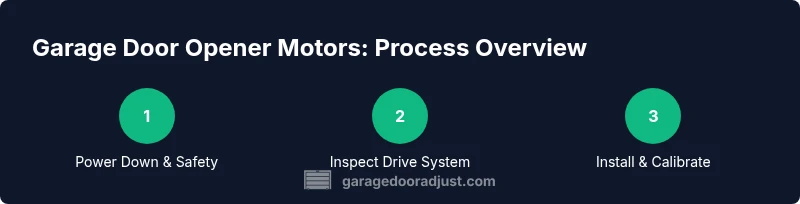
Begin by unplugging the opener or switching off the circuit breaker. Block the door from moving by securing it with clamps or wedges. This prevents accidental movement while you inspect the unit. Confirm there are no obstructions around the tracks or moving components.
Tip: Never work under a door supported by springs without secure stabilization. - 2
Check the basics and safety devices
Test the wall switch and remote to ensure control signals are functioning. Inspect the safety sensor alignment and lenses for dirt or obstructions. Make sure tracks are straight, rollers roll freely, and mounting screws are tight.
Tip: Clean sensor lenses with a soft cloth—dust can trigger false reversals. - 3
Inspect drive components
Look for belt wear, chain slack, or loose pulleys. Ensure the drive gear engages the motor shaft properly and that the sprockets are aligned with the track. Tighten any loose components according to manufacturer specs.
Tip: If you see frayed belts or teeth, replace the drive parts rather than improvising fixes. - 4
Disconnect and remove the old motor
Carefully disconnect wiring harnesses and remove mounting bolts. Support the motor as you lift it away from the housing to avoid dropping and damaging the track or ceiling anchors.
Tip: Label wires or take photos during disassembly to simplify reinstallation. - 5
Install the new motor and reconnect
Position the new motor, align mounting holes, and secure with bolts. Reattach belts or chains, verify tension, and reconnect electrical connections. Ensure the drive components move freely without binding.
Tip: Double-check ground connections and any safety interlocks before powering up. - 6
Test and calibrate
Restore power and run a full open/close cycle with the door detached from the tracks. Listen for smooth operation, verify the travel limits, and ensure the safety reversal is functioning. Reinstall the door on the tracks and test again.
Tip: Make small adjustments to limit switches if the door overshoots or stops short.
Got Questions?
What are common signs that a garage door opener motor is failing?
Look for slower door movement, unusual grinding or whining noises, door not responding to controls, or motor overheating. If the door stalls or reverses unexpectedly, inspect the drive system and safety features before assuming a motor fault.
Common signs include slow movement, grinding noises, and intermittent response from controls. If you notice the motor overheating or the door stalling, check drive components and safety features.
Can I replace a garage door opener motor myself?
Yes, for simple lift systems and when you have the right model and electrical safety know-how. Complex units with integrated controllers or torsion systems are better handled by a professional to avoid safety risks.
You can replace a motor yourself if you have the right model and feel comfortable with electrical work. If not, hiring a pro is the safer route.
How long should a garage door opener motor last?
A motor’s life varies with usage and maintenance. With regular lubrication, track alignment, and sensor checks, you can expect many years of service; aging or frequent failures may indicate other worn components.
Motor life varies, but with proper maintenance you can expect many years of reliable operation.
What safety steps are essential when working on a garage door opener motor?
Always disconnect power, secure the door, and wear protective gear. Avoid working under a clearly loaded spring, and never bypass safety sensors or limit switches.
Always cut power and secure the door; wear protective gear and never bypass safety sensors.
Should I replace the entire opener or just the motor?
If the track, springs, and sensors are in good condition and the motor is the primary failure, a motor replacement can be cost-effective. If many components show wear or compatibility is uncertain, replacing the entire unit may be preferable.
It depends on what’s failing and your unit’s condition. If only the motor is worn, a replacement may be enough; otherwise, a full unit replacement could be wiser.
Where can I find replacement motors compatible with my unit?
Start with your model number and manufacturer’s guidance. Reputable retailers or service centers that offer compatible motors are best, and avoid mismatched parts that could harm performance.
Check your model number and buy compatible motors from trusted retailers or the manufacturer.
Watch Video
Quick Summary
- Identify the root cause before buying parts.
- Prioritize safety and power shutdown in every step.
- Regular maintenance reduces sudden motor failures.
- Verify motor compatibility to prevent install errors.