Garage Door Not Working After Storm: Quick Troubleshooting Guide
Urgent, step-by-step troubleshooting for a garage door not working after a storm. Safe checks, diagnostic flow, fixes, and prevention tips for homeowners.


Storm-related power issues, sensor misalignment, or track damage are the most common reasons a garage door won’t move after a storm. Start with basic checks: ensure the opener has power, verify the wall switch, and inspect for obstructions on the door path. If you have a battery backup, test it and reset the unit before proceeding to the diagnostic flow. If these basics fail, call a pro to avoid injury and further damage.
Immediate Safety and Quick Checks
After a storm, a garage door may fail to move due to power outages, sensor misalignment, or track damage. According to GarageDoorAdjust, these issues are among the most common when weather events occur. Safety comes first: unplug the opener if you smell burning plastic, stay clear of the door frame, and never attempt to force a door that won’t move. Start with the basics: confirm the opener is receiving power, check the wall switch, and inspect for obvious obstructions on the door path. If you have a battery backup, test it by switching to battery mode and trying to operate the door. If the door still won’t move, proceed with the diagnostic flow rather than applying force.
- Always prioritize safety; never work under a door that could fall or shift unexpectedly.
- If you notice sparks, burning smells, or damaged wiring, stop and call a pro immediately.
- If you have a manual release, practice safe use only when you can do so without risk to yourself.
According to GarageDoorAdjust, storm-induced power outages or surges can reset safety features. This makes initial checks crucial before diving into more complex steps.
Common Storm-Related Causes
Storms can shake loose components and stress electrical systems. The most frequent culprits include:
- Power disruption or blown breakers: a surge or outage can disable the opener or reset safety features.
- Safety sensor misalignment or obstruction: wind-blown debris can tilt sensors or block their beams.
- Track and roller damage: hail, wind, or falling debris can bend tracks or jam rollers.
- Damaged protective devices: limit switches or safety eyes may be disturbed.
- Damaged springs or cables: while less common, a storm can strain or kink spring hardware—dangerous and not DIY-friendly.
If you notice the door reversing, making grinding noises, or stopping mid-travel, use the diagnostic flow to narrow down and avoid risky DIY fixes.
Diagnostic Flow: Symptom → diagnosis → solutions
Symptom: The door will not move after a storm. Diagnosis path: Start with the simplest explanations (power, sensors, obstruction) and progress to structural or mechanical issues only if the easy fixes don’t work. Solutions range from quick resets and sensor recalibration to professional inspection for damaged tracks or springs.
GarageDoorAdjust Analysis shows that most post-storm failures stem from electrical resets or sensor misalignment rather than abrupt structural failure. Following the flow helps you identify the correct, safe fix quickly.
Step-by-Step Fix for the Most Likely Cause
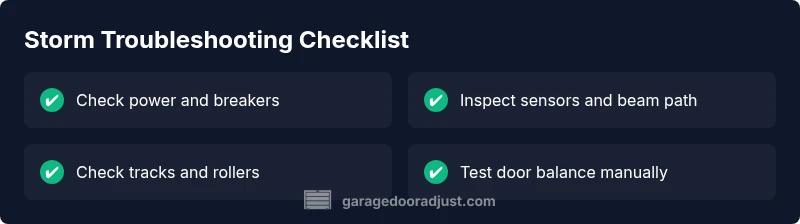
- Check power and reset the opener: verify the outlet is live, check the circuit breaker, and reset the opener by unplugging for 30 seconds and plugging back in.
- Re-pair remotes and keypads: remove and re-link the remote and wall control if the signal is inconsistent.
- Align safety sensors: confirm the sensor lenses are clean, aligned, and there’s no debris blocking the beam path.
- Test the door using the wall control at eye level: if the door moves, monitor for reversals or stops, noting positions and sounds.
- Inspect tracks and rollers: look for bends, obstructions, or corrosion; gently clean and lubricate with a silicone-based lubricant on the rollers if needed.
- Check weatherstripping and jamb clearances: ensure sealing does not catch the door and impede movement; trim if necessary.
- Test manual release and balance: disengage the door from the opener and attempt to lift it manually; if it feels heavy or unbalanced, stop and call a pro.
- Decide whether to call a professional: if you see damaged springs, cables, or motor components, professional help is essential.
Estimated time: 45–60 minutes.
Tip: Do not attempt to adjust torsion springs or cables yourself; these components are dangerous and require trained personnel for safety.
Steps
Estimated time: 45-60 minutes
- 1
Check power and reset the opener
Confirm the outlet is live by testing with a lamp. If the breaker tripped, reset it and test the opener. Unplug for 30 seconds, then plug back in and try the wall switch.
Tip: Keep a flashlight handy; a dark garage makes sensor alignment harder to verify. - 2
Re-pair remotes and keypad
If the remote or keypad seems unresponsive, remove the pairing and re-link it to the opener according to the制造 booklet or opener app prompts.
Tip: Make sure you’re using the correct remote for your model. - 3
Realign safety sensors
Check both sensor lenses for dirt, condensation, or misalignment. Loosen and realign until beams are parallel and uninterrupted across the door path.
Tip: Wipe lenses with a soft, dry cloth to remove dust or moisture. - 4
Test wall control at eye level
Operate the door using the wall control. Observe whether it moves smoothly, reverses, or stalls, noting the position and any sounds.
Tip: Do not stand in the doorway while testing. - 5
Inspect tracks and rollers
Look for bent tracks, loose mounting brackets, or debris in the track. Clean and lubricate rollers with silicone-based lubricant if needed.
Tip: Avoid oil-based lubricants on plastic rollers. - 6
Check weatherstripping and jamb clearance
Ensure weatherstripping isn’t caught in the door or jamb; trim tight spots and verify a clear path for full travel.
Tip: A snug seal improves energy efficiency but should not bind the door. - 7
Test manual release and balance
If you can safely disengage, try to lift the door manually. If it feels heavy or off-balance, stop and call a professional.
Tip: Never attempt to adjust torsion springs yourself. - 8
Decide on professional help
If the door still won’t operate or if you notice frayed cables, bent tracks, or broken springs, schedule a pro visit promptly.
Tip: A licensed tech can diagnose and repair safety-critical parts safely.
Diagnosis: Garage door won't move after storm
Possible Causes
- highPower disruption or blown breaker
- highSafety sensors misaligned or obstructed
- mediumTrack or roller damage from debris
- lowDamaged opener gears or limit switches
- lowDamaged springs/cables (dangerous)
Fixes
- easyReset circuit breaker and test outlet; test opener with wall control
- easyRe-pair remotes and keypad
- easyRealign sensors and remove debris; verify beam path
- easyManual release check and track inspection; do not force
- hardCall a pro for damaged springs or structural components
Got Questions?
What should I check first if my garage door stops after a storm?
Start with power and safety checks: verify power to the opener, check the circuit breaker, and inspect for obstructions on the door path. Then test sensors and the wall control. If the door still won’t move, follow the diagnostic flow.
First, make sure the opener has power, then check sensors and path obstructions before moving on to more steps.
Can a storm damage the springs or cables?
Yes, storms can strain springs and cables, but these parts are dangerous to adjust. If you suspect damage, stop, unplug, and call a professional for a safe inspection and repair.
Storms can damage springs or cables; don’t try to fix them yourself—call a pro for safety.
What does a blinking light on the opener mean after a storm?
A blinking light often indicates a sensor error or misalignment. Check the safety beams, clean the lenses, and reset the opener if needed.
Blinking lights usually point to sensor issues; realign, clean the lenses, and reset the unit if required.
Is it safe to manually open a stuck door?
Only if you can disengage the opener safely and the door is light enough to lift. If it feels heavy or unbalanced, do not attempt to lift it.
If you can disengage the opener safely and lift the door easily, you can test manually; otherwise call a pro.
When should I call a professional?
Call a professional if you notice damaged springs, cables, bent tracks, faulty motor components, or if you’re unsure about any step. Safety and proper function are paramount.
Call a pro if you see damaged parts or feel unsure about the repair; safety first.
How can I prevent storm damage in the future?
Regular maintenance, proper weatherstripping, sensor checks, and periodic professional tune-ups help prevent storm-related issues and extend the life of your system.
Do regular maintenance and check sensors and seals to keep storms from causing trouble again.
Watch Video
Quick Summary
- Check power first, then sensors and tracks
- Follow the diagnostic flow; avoid forcing a stuck door
- Call a pro for springs, cables, or damaged components
- Keep safety in mind and inspect weather seals after storms
- Document and plan maintenance to prevent future issues