Garage Door Not Working After Pulling Red Cord: A Step-by-Step Guide
If your garage door isn't operating after pulling the red emergency release, this urgent, step-by-step troubleshooting guide helps homeowners safely re-engage the mechanism, diagnose common failures, and prevent recurrence in 2026.


Most likely, the red emergency release has not been re-engaged, leaving the door disconnected from the opener. Re-seat the latch firmly and test with the wall switch or remote. If it still won't move, there could be track, spring, or sensor issues—follow the diagnostic flow to pinpoint the problem and fix it safely.
Understanding the red release cord and why it matters
When a homeowner pulls the red emergency release cord on a sectional garage door, the door disconnects from the garage door opener. This safety feature allows manual operation when the opener or power is unreliable. However, after pulling the cord, many people find themselves facing a door that won't move when they press the wall switch or grab the handle. This is a common situation and does not always indicate a failed opener. In fact, the most frequent cause of a door not working after pulling the red cord is that the release mechanism was not re-engaged properly. In this article, you will learn step-by-step how to verify the release, re-engage the system, and determine whether more extensive repairs are needed. The keyword garage door not working after pulling red cord should inform your approach as you work through safety checks and diagnostic steps. Remember: many causes are simple and safe fixes, but some involve heavy springs and risk of injury. Always prioritize safety and consider professional help if the door feels heavy or unbalanced.
Steps
Estimated time: 60-90 minutes
- 1
Re-engage the red release latch
Begin by locating the release latch near the door mechanism. Pull the cord or handle as needed to ensure the carriage is ready to re-engage with the rail. Do not pull harshly; aim for a smooth, complete engagement.
Tip: Ensure you can feel the latch snap into place before testing the door. - 2
Test manual operation with a helper
With power off and the door released, have a helper gently support the door while you try to move it along the tracks by hand. If it sticks or binds, stop and inspect the track, rollers, and hinges for a jam.
Tip: Never force a door that feels heavy; stop and recheck safety components. - 3
Inspect tracks, rollers, and rollers alignment
Look for obstructions, bent tracks, or worn rollers. Debris, rust, or misalignment can prevent smooth movement even after re-engagement. Clean and realign as needed.
Tip: Lubricate moving parts only with appropriate lubricants designed for garage doors. - 4
Reconnect the door to the opener carriage
If your system uses a trolley or carriage, reattach it per the manufacturer’s instructions. Ensure the carriage locks onto the door and sits evenly on the track.
Tip: Confirm the carriage is fully seated before testing with power. - 5
Restore power and test with the opener
Plug the opener back in or reconnect the wall switch. Test the door using both the wall control and a remote. Listen for motor sounds and watch for proper auto-reverse.
Tip: If the door hesitates or stops unexpectedly, shut off power and recheck wiring and safety sensors. - 6
Check safety sensors alignment
Obstructions or misalignment at the sensor eyes can halt operation. Clean the lenses, realign if needed, and ensure the indicator lights behave normally when the beam is complete.
Tip: Run a sensor test by placing an object in the door’s path and noting auto-reverse behavior. - 7
Test door balance and spring health
Carefully evaluate whether the door stays in place when raised manually and whether it lowers smoothly. If you notice excessive weight or sudden drops, the springs or cables may need service.
Tip: Do not attempt spring work yourself unless you are trained. - 8
Final safety check and lubrication
Lubricate tracks, hinges, and rollers as a final step. Perform a full function test to ensure the door operates crisply in both directions and that all safety features respond correctly.
Tip: Schedule regular maintenance to prevent recurrence.
Diagnosis: Garage door won't move after pulling the red cord
Possible Causes
- highManual release latch disengaged or mis-seated
- mediumDoor off track or obstruction in the track
- lowTorsion spring tension issue or damaged cable
- lowSafety sensors or opener wiring issue
Fixes
- easyRe-engage the manual release latch securely
- easyClear obstructions on tracks and ensure door rests evenly on the floor
- mediumInspect tracks for alignment and tighten hardware if needed
- easyTest opener wiring and safety sensors; reset the wall switch if necessary
Got Questions?
What does pulling the red cord do on a garage door?
The red emergency release disconnects the door from the opener to allow manual operation. It’s a safety feature that enables you to move the door by hand when power or the opener fails.
The red cord disconnects the door from the opener so you can move it manually.
Is it safe to re-engage the red cord by myself?
Re-engaging the red cord is safe if you follow the proper steps and feel comfortable with basic door mechanics. If the door feels heavy or uncertain, stop and call a professional.
You can re-engage it if you follow the steps and the door isn’t too heavy, otherwise get a pro.
Why won’t the door move after I re-engage the cord?
Possible causes include a misaligned track, an obstruction on the track, a misadjusted safety sensor, or a problem with the door’s balance or springs.
If it still won’t move, check the track, sensors, and balance.
Can a faulty sensor cause the door to stay still after release?
Yes. Misaligned or blocked safety sensors can prevent the opener from lowering or raising the door, causing it to stall after release.
Sensors can stop the door from moving if they’re blocked or out of alignment.
When should I replace rather than repair a garage door?
If springs are worn, cables are frayed, or the door is badly warped, replacement is often safer and more cost-effective than repeated repairs.
If major parts show wear, it’s usually better to replace the door or hardware.
What safety precautions should I follow when troubleshooting?
Turn off power to the opener, wear gloves, keep hands away from moving parts, and never stand under the door while testing.
Always kill power, wear protective gear, and don’t stand under the door when testing.
Watch Video
Quick Summary
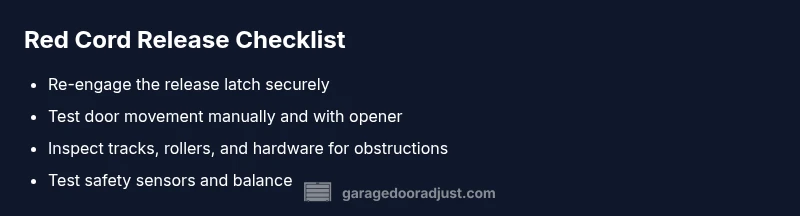
- Re-engage the red cord latch securely before testing.
- Inspect tracks and hardware for obstructions.
- Test safety sensors and auto-reverse after re-engaging.
- Do not attempt risky spring work—call a pro when needed.
- Perform regular maintenance to prevent future failures.