Garage Door Just Clicks: Quick Troubleshooting Guide
Urgent guide to diagnose and fix a garage door that just clicks. Step-by-step checks, common causes, safety tips, and when to call a pro.


If your garage door just clicks, the opener is likely not receiving power or is blocked by a jam. Start with power checks, reset the opener, and inspect tracks for obstructions. If it still won’t operate, stop and contact a professional for safe diagnosis.
Why a garage door just clicks: the core problem explained
When a garage door just clicks instead of lifting, it's not just a minor annoyance — it signals an interruption in the power or signal chain that moves the door. The GarageDoorAdjust team notes that most homeowners encounter this issue because one of several fail points is triggering the click without actual movement. Understanding the normal sequence helps you diagnose quickly: the opener receives power, verifies the remote command, and then drives the motor to lift the door. If any link in that chain fails, the result is a short, sharp click or a handful of rapid clicks and no movement. Common culprits include a dead outlet or tripped circuit, misaligned safety sensors, a jammed track, worn rollers, or a defective gear in the opener. By approaching the problem methodically, you can differentiate between a simple reset and a dangerous mechanical fault. Throughout this process, prioritize your safety and respect the limits of DIY work on heavy springs and high-torque systems. If the door is heavy or shows unusual resistance, stop and call a pro.
-
Power supply: A loose plug, tripped circuit, or dead outlet can stop the opener from delivering torque even if the remote seems to work.
-
Safety sensors: If the safety beam is misaligned or obstructed, most openers will refuse to move and emit a test click as a warning.
-
Mechanical jam: Debris in the track, worn rollers, or a bent track can create resistance that makes the system stall mid-travel.
-
Gear wear: Worn gears or a slipping motor can produce a decisive click without actual lifting.
-
Remote and wall-switch signals: A stale battery or mispaired remotes can cause the opener to receive inconsistent instructions.
Note: Do not attempt to force the door manually if you sense unusual resistance, as this can injure you or overwhelm the springs.
Safety first: essential precautions before you touch the door
Any troubleshooting should start with safety. Unplug the opener from the wall outlet or switch off the circuit to prevent unexpected movement. Keep hands, fingers, and clothing away from the track and springs; do not attempt to force a door that binds or hangs. Use a sturdy ladder only if necessary, and have a helper nearby. If you suspect a torsion spring or cable issue, do not try to adjust or replace components yourself; these parts store dangerous energy and often require licensed technicians. When in doubt, postpone repairs and rely on a professional. Good practice includes keeping children and pets away during inspections and labeling the controls so accidental activation doesn't occur. Finally, document any unusual noises, vibrations, or delays you notice—this information helps the technician diagnose the issue faster. GarageDoorAdjust emphasizes safety in every diagnostic step to prevent injuries and property damage.
Quick checks you can perform before tools come out
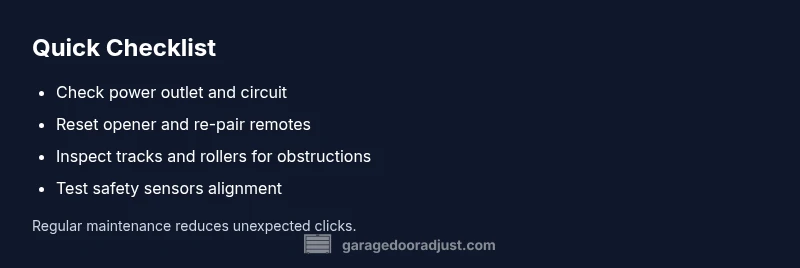
Start with the simplest checks, which often resolve the problem. Ensure the outlet powering the opener is live by plugging a lamp into it. If you use a battery backup, verify the battery is installed and fresh. Check the wall control and your remote batteries; replace as needed and re-pair the remotes. Inspect the garage door tracks for obvious obstructions or debris; clear them carefully. Manually test the door when the opener is disconnected: lift with your hands to feel for binding or heavy resistance; if it moves smoothly, the issue is likely electrical or sensor-related. Finally, confirm the safety sensors are aligned: a misaligned beam can cause the opener to click but not lift. These quick checks are designed to avoid unnecessary calls and keep you in control while staying safe.
Diagnostic flow: symptom to diagnosis to solution (high-level overview)
Symptoms: click but no lift. Diagnosis: list possible causes with rough likelihood; Solutions: match each cause with a safe, practical fix. Start with the highest likelihood easy fixes: power, reset, remote pairing, track clearance. If no fix works, escalate to sensor alignment and balance testing. The flow should guide you through if-then decisions: If no power, fix power; If power fixed but still clicking, inspect sensors; If sensors are fine but the door remains stuck, check track alignment; If you suspect a spring or gear issue, call a professional immediately. The goal is to identify the root cause without risking injury or further damage.
Step-by-step fix for the most common cause (power issue)
This section walks you through a safe, practical sequence to restore function when the root cause is a loss of power or signal. Begin by confirming the outlet is live, then resetting the opener, re-pairing remotes, and checking the circuit breaker. If the door remains unresponsive, inspect the tracks and sensors, and finally test manual operation with the opener unplugged to assess balance. Each step includes a concrete check and a safety note to prevent injury or damage. By following this workflow, you minimize the risk of further problems and gain a clear path to the right solution—and know when to seek professional help for complex repairs.
Prevention and maintenance to avoid future clicks
A proactive maintenance routine dramatically reduces the chances of future 'garage door just clicks' events. Regularly inspect tracks, clean away debris, and lubricate moving parts with manufacturer-recommended lubricants. Schedule annual safety sensor alignment checks and test the auto-reverse function monthly. Keep a log of any noises, delays, or inconsistent movements so you can spot trends over time. GarageDoorAdjust recommends integrating lubrication, balance testing, and sensor checks into a simple quarterly maintenance plan to extend the life of your opener and maintain safe operation.
When to call a pro and what to expect
If a basic power or sensor issue doesn’t restore function, or you notice frayed wiring, broken springs, or worn gears, stop DIY work and call a licensed technician. A pro will perform a controlled diagnostic, safely release stored energy, and replace worn components with proper torque settings. Expect a safety inspection, a quote for parts and labor, and a clear explanation of what failed and how to prevent recurrence. Early professional involvement can save time, reduce risk, and help you plan future maintenance.
Steps
Estimated time: 45-60 minutes
- 1
Verify power supply
Unplug the opener, check the outlet with a test device, and inspect the circuit breaker. If the outlet is dead, reset or replace the breaker and restore power to the door controller. Ensure the door can be manually moved when the opener is disconnected for balance testing.
Tip: Power first—it's the most common cause of the click. - 2
Reset and re-pair remotes
Re-program your remote and wall switch according to the manufacturer’s instructions. If you use a keypad, re-enter the code and test. A failed signal can produce a click without actual movement.
Tip: Keep batteries fresh and test after pairing. - 3
Inspect for track obstructions
Look along the entire length of the track for debris, loose screws, or bent sections. Remove material carefully and tighten hardware. Lubricate the rollers if they appear dry.
Tip: Never force a jammed door; misalignment can worsen damage. - 4
Test safety sensors
Check the eye beams on both sides of the door opening. Clear any obstructions and ensure the sensors are at the correct height and facing each other. A blocked beam will often cause a click but no lift.
Tip: Aim beams directly at one another for a clear signal. - 5
Manual operation and balance check
With the opener unplugged, manually lift the door to confirm it moves smoothly. If it sticks, there may be floor or spring issues; if it’s light, the problem is likely electrical or sensor-related.
Tip: If you feel heavy resistance, stop and call a pro. - 6
Test with power restored
Plug the opener back in and perform a full test: observe the door’s movement, listen for abnormal noises, and ensure auto-reverse works. Document any new symptoms for future reference.
Tip: Keep a maintenance log for quick diagnostics later.
Diagnosis: Garage door won’t lift, opener makes a single or repeated click
Possible Causes
- highPower issue (outlet, circuit, or receiver)
- mediumSafety sensor misalignment or obstruction
- highTrack jam or binding in rollers
- lowWorn gears or broken components in the opener
Fixes
- easyCheck outlet and circuit; reset the opener; re-pair remotes
- easyClear obstructions and inspect tracks/rollers for binding
- easyRealign safety sensors; clear line of sight between sensors
- hardIf springs, gears, or torsion components appear damaged, call a pro
Got Questions?
What does it mean if my garage door just clicks but won’t open?
A click without movement usually points to power, sensor, or track issues. Start with power checks and remote pairing, then inspect sensors and tracks before moving to more complex components.
A click without movement usually means a power, sensor, or track issue. Start with power checks and pairing, then inspect sensors and tracks.
Is it safe to inspect the safety sensors myself?
Yes, as long as you disconnect power first and avoid forcing components. Clear line of sight between sensors and adjust them gently. If you see frayed wiring or damaged sensors, contact a pro.
Yes, but disconnect power first and avoid forcing parts. Clear the sight lines, and if you see damage, call a professional.
What should I do first when the opener clicks?
First, check the power outlet, reset the opener, and verify the remotes are paired. If the door still won’t lift, inspect tracks and balance or call a pro for safety-critical parts.
First, check power, reset the opener, and re-pair remotes. If nothing changes, inspect tracks and balance or call a pro.
Can a faulty spring cause a click but no lift?
Yes. A stressed or broken torsion spring can cause a click and prevent lifting. Do not attempt to adjust springs yourself; contact a licensed technician for safe handling.
Yes. A faulty torsion spring can cause a click and stop lifting. Don’t try to fix springs yourself—call a licensed tech.
How can I prevent this issue in the future?
Establish a routine: quarterly sensor checks, track cleaning, and annual lubrication. Replace worn parts promptly and keep a maintenance log to spot trends early.
Do quarterly sensor checks, clean tracks, and lubricate moving parts yearly. Replace worn parts promptly and keep a maintenance log.
When should I call a professional for repair?
Call a professional if there are frayed wires, damaged springs, or if the door remains unbalanced after basic checks. A licensed tech can safely diagnose and replace high-torque components.
Call a professional if you see wiring damage or spring issues, or if the door is still unbalanced after basic checks.
Watch Video
Quick Summary
- Check power and reset first to restore function
- Don't bypass safety sensors or springs
- Inspect tracks, rollers, and balance regularly
- Call a pro for springs/gear issues
- Maintain a simple maintenance log