How to Fix a Garage Door Opening Too Far
Learn rapid, safe steps to diagnose and fix a garage door that opens too far. From travel-limit resets to track alignment, this guide helps homeowners troubleshoot with expert tips from GarageDoorAdjust.


Most likely, the opener’s travel limits are misadjusted or the door is unbalanced. Start by resetting the travel limit screws to restore correct opening distance, then test balance and safety sensors. If misalignment or damaged tracks are found, stop and inspect. If the door still opens too far after these steps, contact a pro.
Understanding Why Your Garage Door Is Opening Too Far
When a garage door is opening too far, the most common culprit is an misadjusted travel limit on the opener. The travel limits tell the system how far to lift the door before the opener stops. If those limits are set too high, the door will rise past the safe top stop and overshoot, potentially stressing cables, tracks, and springs. According to GarageDoorAdjust, many overshoot issues come down to limit settings rather than a missing sensor or a faulty motor. In addition, a door that is unbalanced or has worn springs can behave unpredictably when the opener can’t compensate for the imbalance. Visual checks for obvious signs—like a door that lifts unevenly or feels “heavy” when you lift it manually—can point you toward balance problems. Start with the simplest fix: verify you’re using the correct travel limit setting for your door and opener model, then re-test with the door open and closed a few times to observe the stopping point.
Quick Checks You Can Perform Safely
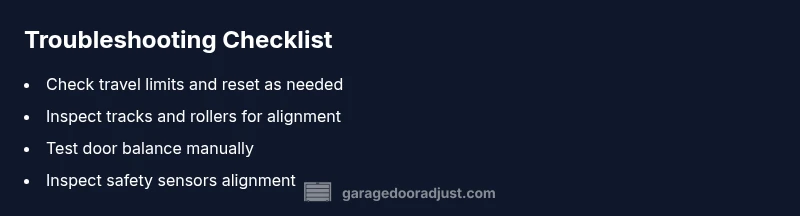
Before diving into major adjustments, perform a few quick, safe checks. First, unplug the garage door opener or switch it off at the wall, and detach the door from the opener using the emergency release to test manual balance. If the door lifts smoothly by hand and stays where you leave it, the problem is likely with the opener’s controls, not the door itself. Next, inspect the tracks for any obvious misalignment, kinks, or obstructions. A bent track or a loose mounting screw can cause the door to travel farther than intended. Finally, verify the safety sensors line up correctly: misaligned sensors may not reverse or stop properly, which can invite overshoot if the system is compensating for a misread.
Common Causes in Order of Likelihood
- Misadjusted travel limits on the opener (high likelihood)
- Track misalignment or sagging rollers
- Imbalanced door due to worn or damaged springs
- Obstruction or debris in the path of the door
- Failed safety sensors or misaligned brackets
Each of these issues can contribute to the door opening too far. Begin with the simplest fix—adjusting travel limits—and move toward more involved steps if the problem persists. If you’re unsure at any point, stop and call a professional to avoid injury or further damage.
How to Diagnose Safely: A Practical Approach
A systematic diagnosis helps you differentiate between a control issue and a physical defect. Start with the opener’s travel limit settings: locate the limit adjustment screws (usually near the motor on the opener’s housing) and reset them according to the manufacturer’s instructions. If your door remains overshoot after adjustment, disconnect the door from the opener and test balance manually. If it feels heavy or fights you when you lift it, the springs or cables may be worn and require professional service. Finally, inspect the tracks and rollers for signs of wear or damage, as misalignment can push the door beyond its intended stopping point. Remember, safety first: never attempt to adjust torsion springs yourself.
Step-by-Step Fixes for the Most Likely Cause: Travel-Limit Misadjustment
- Locate your opener’s limit screws and power off the unit. 2. Use the user manual or manufacturer’s online guide to identify the “open” travel limit setting. 3. Slightly reduce the open limit and run the door through a full cycle. 4. Repeat in small increments until the door stops at the top fully but safely without overshooting. 5. Reconnect the door to the opener and test multiple cycles. 6. If the door still opens too far, check the mounting screws for the track and ensure there’s no play. 7. Re-test with a safety test: place a piece of tape on the floor to verify where the door stops. Pro tip: take a photo of your settings before changing anything so you can revert if needed.
Safety, Warnings, and Prevention Tips
Safety matters when working around the garage door. Always unplug the opener before adjustments and keep hands clear of moving parts. Do not attempt to adjust torsion springs or cables yourself unless you’re trained, as stored energy can cause severe injury. Use proper lighting and stable footing, and never work beneath a door supported only by one side of the track. Regularly lubricate moving parts and inspect hardware for corrosion or wear to prevent overshoot in the future. Finally, document your settings and testing results so you can compare over time and identify drift early.
Safety, Maintenance, and Prevention
Routine maintenance reduces the chance of overshoot. Lubricate hinges and rollers per the manufacturer’s guidelines, tighten loose hardware, and ensure the door is balanced by manual testing at least twice a year. If your door tends to open too far after a long period of use, it’s a sign that limit settings or balance have shifted, and a focused inspection is needed. Use a checklist to track wear on tracks, rollers, and springs, and schedule professional service for springs or torsion components at the first sign of wear. Consistent maintenance helps keep the door opening to the correct distance and prevents costly repairs later.
Steps
Estimated time: 40-60 minutes
- 1
Power down and inspect visually
Turn off power to the opener and perform a visual inspection of all accessible components. Look for obvious misalignment, damaged tracks, or loose fasteners.
Tip: Take photos of any misalignment to aid reassembly. - 2
Test manual balance
Disconnect the door from the opener using the release mechanism and manually lift the door. It should rise smoothly and stay in place. If it feels heavy or drags, the springs may be worn.
Tip: Do not attempt to adjust springs without proper training. - 3
Reset travel limits
Locate the travel limit screws on the opener. With the door in the fully open position, adjust the open-limit screw downward in small increments, testing after each adjustment.
Tip: Make one small adjustment at a time and test. - 4
Check tracks and rollers
Inspect tracks for dents or misalignment; ensure rollers move freely without binding. Tighten mounting screws if any looseness is found.
Tip: Lubricate moving parts with manufacturer-approved lubricant. - 5
Reconnect and test cycles
Reconnect the door to the opener and run several opening/closing cycles to confirm the limit stops are correct.
Tip: Do multiple tests at different times of day to account for temperature or humidity effects. - 6
Consult a pro if needed
If the door still overshoots after limits are set and tracks are aligned, springs or torsion components may be at fault and require a licensed technician.
Tip: Pro tip: request a spring inspection during the same visit.
Diagnosis: Garage door is opening too far
Possible Causes
- highMisadjusted travel limits on the opener
- mediumTrack misalignment or sagging rollers
- lowInsufficient door balance due to worn springs
Fixes
- easyReset travel limit screws to restore correct opening distance
- easyRealign tracks and lubricate rollers; inspect for obstructions
- hardTest door balance; replace worn springs or seek professional service
Got Questions?
What does it mean if my garage door opens too far even after resetting the travel limits?
If resetting limits doesn’t help, the issue may be balance-related, track alignment, or a safety sensor misalignment. Inspect tracks, test balance manually, and verify sensors line up properly. If problems persist, a professional should assess springs or torsion components.
If the limit reset doesn’t fix it, check balance and tracks, then verify sensors. If it still overshoots, call a pro for springs inspection.
Can a misaligned track cause the door to open too far?
Yes. A bent or loose track can push or pull the door beyond the intended open position. Inspect for gaps, tighten mounting screws, and ensure rollers run freely along the track.
A bent track can push the door past the stop; check the track and adjust or replace as needed.
Is this dangerous to fix myself?
Basic checks like limits and balance testing can be done safely, but avoid adjusting springs or torsion components. If you’re unsure, contact a licensed technician for safety reasons.
Basic checks are okay, but leave springs and torsion work to a professional.
How often should I maintenance my garage door to prevent overshoot?
Perform a simple balance test and track inspection every 6-12 months, lubricate moving parts, and ensure hardware is tight. Regular checks help prevent issues that cause overshoot.
Do a balance check and track inspection every 6-12 months, plus lubrication.
What should I do if the safety sensors are misaligned?
Correctly align the photoelectric sensors so they face each other with an unobstructed path. Re-test the auto-reverse feature to ensure a safe, full cycle.
Align sensors so they face each other with a clear path and test the reversal.
Watch Video
Quick Summary
- Adjust travel limits first to fix overshoot
- Balance and track condition affect opening distance
- Do not work on springs unless trained
- Test multiple cycles to confirm accuracy
- When in doubt, call a pro for safety