Garage Door Bottom Seal Track: DIY Repair Guide
Learn to inspect, replace, and adjust the garage door bottom seal track to stop drafts, reduce wear, and extend door life. A practical, expert guide from GarageDoorAdjust with safe steps for homeowners.


You're going to inspect the bottom seal track, identify wear or gaps, and replace or reseat it so the door seals tightly against the floor. This reduces drafts, improves insulation, and extends door life. Gather basic tools, unplug power if working near the opener, and follow this step-by-step guide for a safe, lasting fix.
Assessing the Bottom Seal Track Condition
The bottom seal track forms the last barrier between your garage and the living space. A worn or misaligned track can create persistent drafts, dirt intrusion, and increased humidity near stored items. According to GarageDoorAdjust, the bottom seal track is typically the first line of defense against floor-level drafts and moisture. In many homes, small gaps under the door signal wear where the seal meets the floor, not just a faulty weather seal. GarageDoorAdjust Analysis, 2026 notes that seal failures often begin at the contact point where the seal rides in the track, so early inspection matters. Look for visible gaps, a loose mounting flange, corrosion, or a bent edge where the seal rides. If the track looks noticeably out of square or the sealing surface is damaged, plan replacement rather than a quick reseat.
- Check for gaps between the bottom of the door and the floor when the door is closed.
- Inspect the width and straightness of the track, paying attention to any bends near the lower mounting points.
- Examine the seal itself; a brittle or cracked gasket often signals a replacement is needed in addition to track work.
- Note any loosened screws or shifted brackets along the track; even small moves can throw alignment off and compromise sealing.
This assessment will guide your next steps and help you decide whether reseating, replacing the seal, or replacing the entire track is best. The GarageDoorAdjust team recommends taking clear photos before disassembly to document original positions for easier reassembly.
Common Problems with the Bottom Seal Track
Several recurring issues affect bottom seal tracks and their effectiveness:
- Bent or warped track edges that prevent a smooth seal glide.
- Loose mounting screws or brackets that allow subtle track shifts.
- Debris, dirt, or dried lubrication in the channel that obstructs smooth movement.
- Worn or cracked bottom seals that no longer make contact with the floor, even when the track is intact.
- Misalignment between the track and the door edge, creating gaps at the seal line.
Each problem has a different fix: a bent track requires careful straightening or replacement; loose hardware needs re-tightening; debris requires cleaning and re-lubrication; and a worn seal may require replacement of the seal itself and sometimes the track. In all cases, aim for smooth operation and a consistent seal along the entire length of the door. GarageDoorAdjust Analysis suggests that neglecting small misalignments can lead to larger energy losses over time.
Replacement Options: Repair vs Replace
If the track shows minor misalignment or a residual bend after realignment, reseating and re-tightening may suffice. When the track is visibly bent, cracked, or has lost its original channel shape, replacement is the safer, longer-lasting option. For a damaged track, you’ll typically replace the bottom track or the entire bottom rail assembly, depending on your door model. If the seal is still in decent shape but the track is sound, you can replace just the seal to restore a tight floor seal. The decision between repair and replacement hinges on damage severity, door weight, and overall alignment with the door’s wheels and hinges. GarageDoorAdjust’s team emphasizes evaluating the entire base rail and its mounting hardware instead of only the visible surface.
- Small, non-structural misalignments can be corrected with realignment and re-fastening.
- Bent, cracked, or severely corroded tracks should be replaced to avoid future binding.
- Replacing a bottom seal alone can improve sealing but may not fix a damaged track; consider both if issues persist.
Preventive Maintenance and Long-Term Care
Proactive maintenance reduces the frequency of major repairs and extends the life of the bottom seal track. Regularly clean the track channel to remove dust and debris, lubricate the contact surfaces with a silicone-based lubricant suitable for metal tracks, and check mounting hardware every few months. Keep the door balanced and the springs in good condition, as a poorly balanced door can place extra stress on the track. Use a soft cloth to wipe down the seal and the track’s edge to prevent grit from embedding in the seal. The GarageDoorAdjust team finds that a simple annual inspection combined with light lubrication goes a long way toward avoiding costly track replacements and rattling noises.
Safety Considerations and When to Call a Pro
Working near door springs, tracks, and openers involves risk. Always unplug the opener before inspecting or adjusting the track to avoid unexpected movement. Use proper eye protection and gloves to guard against sharp edges and pinch points. If the track is bent, if you notice the door pulling unevenly, or if you cannot safely reach the alignment points, it’s prudent to call a professional. For complex installations or if you must remove the door from its tracks, professional service is recommended to prevent injury and ensure proper alignment. The GarageDoorAdjust Team often advises homeowners to seek professional help for doors heavier than standard residential models or those with torsion springs.
Tools & Materials
- Tape measure(To verify gaps and alignment during reassembly)
- Screwdriver set (Phillips and flathead)(For mounting screws and fasteners)
- Pliers(For removing and positioning fasteners)
- Hammer or rubber mallet(Gentle taps to avoid bending the track)
- Silicone-based lubricant(Lubricate contact points, not the seal itself)
- Safety glasses(Protect eyes from debris and accidental slips)
- Work gloves(Protect hands during handling of metal parts)
- Step ladder(Access the bottom track safely)
Steps
Estimated time: 40-90 minutes
- 1
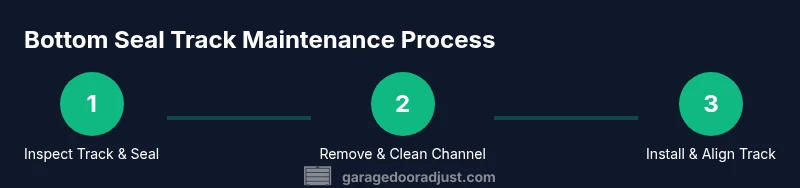
Inspect track and seal
Visually inspect the bottom track and seal for wear, cracks, or gaps. Note any misalignment with the door edge and floor. Take photos for reference before disassembly.
Tip: Document the initial positions to simplify reassembly and avoid guesswork. - 2
Disconnect power and secure door
Unplug the automatic opener and secure the door in the down position with clamps or a prop. This prevents sudden movement while you work.
Tip: Never work under a door that could move unexpectedly. - 3
Remove or loosen the bottom seal track
Loosen mounting screws and carefully detach the bottom seal track from its brackets if replacement is needed. If reseating, gently shift the track to correct alignment.
Tip: Support the track with one hand to prevent it from dropping. - 4
Clean channel and inspect hardware
Clear debris from the channel, check for damaged screws, and verify mounting brackets are straight. Replace any bent or corroded hardware.
Tip: A clean channel prevents binding and lets the seal glide smoothly. - 5
Install new track or reseat existing one
If replacing, install the new track and align it with the door edge. If reseating, reposition until the seal sits evenly across the floor.
Tip: Ensure track is square to the jamb and door.” - 6
Tighten fasteners and align
Reattach brackets and tighten all fasteners securely. Verify the track remains square when you visually align it with the door edge.
Tip: Over-tightening can warp the track; snug firmly, then test. - 7
Reinstall seal and lubricate
Replace the bottom seal (if needed) and apply a light silicone-based lubricant to the contact points. Do not lubricate the seal itself.
Tip: Lubrication reduces friction and prolongs track life. - 8
Test door operation
Reconnect power and perform several open/close cycles. Check for smooth movement and confirm the door seals evenly against the floor.
Tip: If you hear binding, stop and recheck alignment before operating further.
Got Questions?
What is a bottom seal track?
The bottom seal track is the channel where the bottom weather seal rides as the door opens and closes. It guides the seal along the door’s edge and keeps debris out.
The bottom seal track is the channel that guides the seal along the door edge and helps keep out drafts and debris.
How can I tell if it needs replacement?
Look for visible bends, cracks, loose brackets, or a seal that no longer contacts the floor evenly. If the track is damaged or the seal remains loose after adjustments, replacement is advisable.
Look for bends, cracks, loose brackets, or gaps between the seal and the floor that don’t go away after adjustments.
Can I replace the track myself?
Yes, for typical residential doors with basic tools. If the track is severely bent or the door is unbalanced, consider hiring a pro to avoid injury and ensure proper alignment.
Yes, you can do it yourself if you have the right tools, but severe bends or unbalanced doors are safer with a pro.
Will replacing the track improve energy efficiency?
Replacing a worn track or seal can reduce drafts and improve insulation, contributing to lower energy bills and a more comfortable garage.
Replacing a worn track can reduce drafts and help keep the garage more comfortable.
How long does installation take?
It varies by door type and skill level. A simple reseat may take under an hour, while full track replacement could take longer for newer or heavier doors.
It depends on your door and your level of experience.
Watch Video
Quick Summary
- Inspect track and seal for wear before disassembly
- Realign or replace the track to restore a full seal
- Test operation after reassembly and adjust as needed
- Regular maintenance prevents leaks and reduces noise