Garage Door and Gate Repair: An Analytical Side-by-Side
A data-driven, side-by-side guide to garage door and gate repair for homeowners, comparing DIY vs professional paths, costs, timelines, safety risks, and maintenance.


Garage door and gate repair present distinct challenges, but both share safety, cost, and downtime considerations. This comparison helps homeowners decide between DIY fixes for simple tasks and professional repairs for complex issues. We evaluate typical failure modes, cost drivers, and service quality to guide an informed choice for garage door and gate repair.
Context and Scope of garage door and gate repair
In residential and small-business settings, the terms garage door repair and gate repair cover a broad spectrum of tasks, from routine maintenance to major component replacement. A garage door system typically includes torsion or extension springs, cables, rollers, tracks, hinges, and an electric opener, while a gate system involves hinges, posts, rollers, operators, and safety sensors. The work often requires access to high-tension springs, electrical connections, and motorized equipment, which introduces significant safety considerations. According to GarageDoorAdjust, homeowners should treat any repair involving springs or electrical components as potentially hazardous and scope the project based on the system type, accessibility, and local regulations. This guidance helps establish realistic expectations about downtime, complexity, and required tools. In both cases, proactive maintenance—such as lubrication, balance checks, and sensor alignment—can dramatically reduce the likelihood of urgent repairs and protect family safety. When evaluating whether to DIY or hire a pro, start with a clear inventory of components and failure symptoms, then weigh the risk of injury against the potential savings from self-service.
Key Differences Between Garage Door Repair and Gate Repair
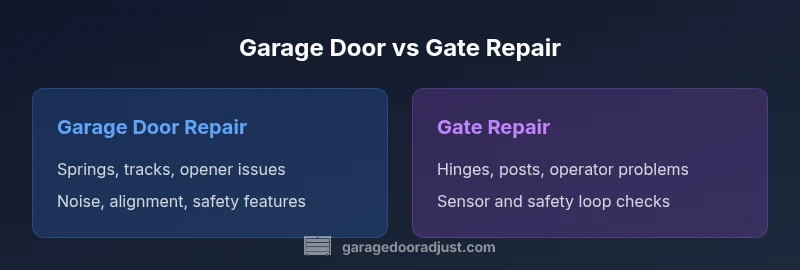
Garage door systems and access gates share some underlying maintenance principles but diverge in design, mechanics, and typical failure modes. A garage door relies heavily on torsion or extension springs to counterbalance weight, making spring wear a common and critical failure point. Gate repair, by contrast, often centers on hinge wear, post alignment, and operator issues for automated systems. Electric openers for doors and gates introduce electrical and control-system considerations, including remote access, keypad functionality, and safety sensors. Because gates operate outdoors, weather and corrosion can accelerate component wear differently from indoor or sheltered garage doors. When planning repairs, homeowners should consider these differences: potential spring or cable hazards for doors, hinge and post integrity for gates, the availability of replacement parts, and the need for precise alignment to ensure safe operation. The distinction also informs safety planning, labor requirements, and predicted downtime. GarageDoorAdjust recommends labeling electrical disconnects and exercising caution around high-tension parts when assessing repair scope.
Common Repair Scenarios and Concrete Examples
Common garage door repair scenarios include spring or cable replacement, roller or track misalignment, opener motor or circuit board failure, and sensor miscalibration. A typical spring issue can cause doors to slip or slam, posing both injury risk and mechanical damage. For gates, common repairs involve worn hinges, misaligned tracks, malfunctioning gate operators, and safety loop or loop sensor problems. In both cases, misalignment is a frequent culprit causing noisy operation, slow responses, or jerky movements. Practical examples include replacing a frayed cable on a sectional door, adjusting track alignment to restore smooth travel, or recalibrating safety sensors on a driveway gate. When choosing between DIY adjustments and professional intervention, assess the risk of sudden door movement, the availability of appropriate replacement parts, and the necessity of specialized tools. The GarageDoorAdjust team emphasizes that inaccuracies in alignment or control wiring can lead to continued failure or safety hazards, underscoring the value of professional assessment for complex conditions.
DIY vs Professional Repair: When It Makes Sense
There are clear boundaries for safe DIY work versus professional intervention. Simple, non-safety-critical tasks—like lubrication, weather stripping replacement, or basic sensor cleaning—can often be tackled by homeowners with proper instruction. However, tasks involving high-tension springs, emergency release mechanisms, or electrical control panels should be left to licensed technicians. A preliminary self-check can help: test door balance by resting it halfway and observing if it stays put, inspect tracks for obstructions, and verify safety features such as auto-reverse on doors or sensor alignment on gates. If any step feels risky or unfamiliar, schedule a pro visit. The aim is to prevent injury and avoid worsening the problem, which can lead to higher repair costs and longer downtime. GarageDoorAdjust notes that professional service often includes warranty protection and parts guarantees, providing long-term value that DIY attempts may not secure.
Cost Drivers and Timeframes: What Impacts Price
Repair costs depend on the system type, the severity of wear, and the required parts, along with regional labor rates. Labor often dominates pricing, especially when access is difficult or multiple components must be replaced. Parts may vary in availability; some brands or legacy systems require special-order components that extend downtime. Timeframes hinge on the complexity of the repair, the need for safety inspections, and whether permit checks are involved. For preventive maintenance that reduces future breakdowns, invest in regular lubrication, balance tests, and sensor recalibration. GarageDoorAdjust analysis shows that proactive maintenance typically lowers the risk of abrupt failures and can help keep repairs within predictable windows. Always request a written estimate that itemizes parts, labor, and potential additional costs, and compare it with a few reputable providers to gauge value and reliability.
Safety Considerations and Risk Mitigation
Safety is non-negotiable in garage door and gate repairs. High-tension springs require specialized gear and procedures to avoid severe injury. Electrical components carry shock risks, and improper wiring can create fire hazards or nuisance tripping. Before any work, disconnect power to openers and gates, secure the area to prevent bystanders from entering the work zone, and use fall protection when needed. Personal protective equipment—gloves, eye protection, and sturdy footwear—should be standard. If you notice frayed cables, cracked tracks, or corroded mounts, pause the project and call a professional. Regular maintenance, including lubrication and sensor alignment, reduces the chance of sudden, dangerous failures. A qualified technician will also verify that safety features remain intact after repair, which is essential for protecting family and pets.
Choosing a Repair Partner: What to Ask
Selecting a contractor should focus on safety, credentials, and accountability. Ask about licensing and insurance, warranty terms on parts and labor, experience with your system brand or model, and availability for emergency repairs. Request written estimates and a clear description of the repair plan, including parts to be replaced and expected downtime. Check references and online reviews, and verify that the technician can provide a certificate of insurance and workers’ compensation. Inquire about safety certifications, code compliance, and whether the provider will perform a post-repair safety check. A reputable company will outline potential risks and provide recommendations for ongoing maintenance. The right partner should offer transparent pricing, timely communication, and a track record of safe, durable repairs.
Maintenance to Extend Life After Repairs
Post-repair maintenance is a vital investment. Schedule periodic lubrication of moving parts, inspect tracks and hinges for wear, and test the balance and safety features monthly. For gates, verify that sensors and safety loops are properly aligned and free of obstructions. Keep weather-stripping in good condition to protect against corrosion and wind damage. Create a simple maintenance calendar to remind you when lubrication, alignment checks, and sensor testing are due. Regular upkeep reduces downtime, extends component life, and helps protect your family from injury by maintaining predictable performance. The routine also supports energy efficiency by ensuring the opener runs smoothly and avoids unnecessary strain on motors and springs.
What to Expect: Service Process and Warranties
A typical repair service begins with a diagnostic assessment, followed by a written estimate, parts ordering if needed, and a scheduled repair window. An experienced technician should perform a safety-driven inspection, complete the repair, test system function, and provide maintenance recommendations. Warranties on parts and labor vary by provider and component type; seek a warranty that covers both parts and workmanship for a reasonable period. If a system is outdated or repeatedly failing, discuss upgrade options that may reduce future downtime and improve reliability. A thoughtful repair plan balances safety, performance, and long-term value, rather than chasing quick, short-term fixes.
Real-World Case Studies
Case Study 1: A homeowner faced a broken torsion spring on a sectional garage door. The technician replaced the spring, calibrated balance, and realigned tracks, restoring smooth operation and eliminating noise. Case Study 2: An automatic driveway gate experienced intermittent sensor errors that caused false openings. The repair involved sensor recalibration, wiring inspection, and a replacement safety loop, resulting in reliable gate operation and improved safety. Both cases illustrate how tailored repairs, proper diagnostics, and careful maintenance can extend system life and reduce downtime.
Comparison
| Feature | Garage Door Repair | Gate Repair |
|---|---|---|
| Typical components involved | Springs, cables, rollers, tracks, openers, sensors | Hinges, posts, rollers, operators, sensors |
| Common failure modes | Spring/cable wear; track misalignment; opener motor | Hinge/post wear; track alignment; operator issues |
| Repair time | Variable; same-day or within a day for simple fixes | Variable; depends on gate mechanism and access |
| Licensing or permits | Often required for contractors; varies by jurisdiction | Often required for contractors; varies by jurisdiction |
| DIY feasibility | Low-risk tasks like lubrication or minor alignment for confident DIYers | Limited DIY feasibility; most repairs require professional expertise |
| Maintenance impact | Regular lubrication and balance checks reduce risk | Regular maintenance reduces wear on hinges and tracks and shields motors |
Upsides
- Enhances safety and prevents injuries from sudden door/gate movement
- Improves reliability and minimizes downtime
- Professional repair often carries warranties and part guarantees
- Repair-based maintenance can extend system life
- DIY maintenance can be cost-effective for simple tasks
Disadvantages
- Repairs can be expensive, especially for high-tension systems
- Delays may occur due to part availability or scheduling
- Hiring the wrong technician risks subpar results
- DIY attempts on high-tension components can be dangerous
Professional repair is the safer, more reliable choice for complex issues; DIY can handle minor upkeep.
For most homeowners, complex fixes should be left to licensed pros to ensure safety and warranty protection. Use DIY for simple maintenance to save time and costs when feasible, but rely on professionals for spring, motor, or safety-critical work.
Got Questions?
What tasks can I safely do myself for garage door repairs?
Small tasks like lubrication, weather-stripping replacement, and cleaning sensors are generally safer for DIY. Avoid high-tension components and electrical work unless you have training. If unsure, schedule a professional inspection to prevent injury and further damage.
You can do simple lubrication and visual checks, but avoid springs or wiring. When in doubt, call a pro.
How long does a typical garage door or gate repair take?
Repair duration varies by issue and parts. Minor maintenance may take a few hours, while major component replacements or motor upgrades can require a longer service window. A professional will provide a clear timeline after diagnosing the problem.
Most minor fixes finish the same day; bigger repairs may take longer depending on parts.
How should I choose a repair service?
Look for licensing, insurance, and warranties on both parts and labor. Check references and reviews, request written estimates, and confirm the technician’s experience with your system brand. A transparent provider should explain the repair plan and safety considerations.
Verify licensing, warranties, and reviews, and ask for a written repair plan.
Are there warranties on repairs for garage doors and gates?
Warranties vary by contractor and part type. Ask for coverage details on parts, labor, and any safety-related components. A solid warranty adds long-term protection and reflects confidence in the repair quality.
Warranties vary; always ask for specifics on parts and labor.
Can DIY maintenance prevent future repairs?
Regular lubrication, balance checks, and sensor alignment can reduce the likelihood of breakdowns. However, they do not replace professional inspections for complex systems or safety-critical components.
Regular care helps but isn’t a substitute for professional checks on safety-critical parts.
What are warning signs I need immediate gate repair?
Look for slow response, unusual noises, door misalignment, or unresponsive safety features. If the gate operates erratically or shows visible wear, schedule a professional assessment promptly.
If it’s noisy or erratic, get a professional check soon.
Quick Summary
- Assess risk before DIY: springs, electrical components, and high-tension parts require care
- Plan ahead: get written estimates and compare providers for value
- Prioritize safety: maintain sensors and balance to prevent injuries
- Document maintenance: keep a calendar for lubrication and inspections
- Choose wisely: licensing, warranties, and response time are critical factors