Garage Door and Gate: A Practical Comparison Guide
A detailed, analytical side-by-side look at garage doors and gates, covering installation, maintenance, safety, energy efficiency, automation, and long-term value for homeowners.


Garage doors and gates serve different but complementary roles in securing and organizing a property. A garage door primarily protects a vehicle and interior storage, while a gate provides perimeter access control for driveways and walkways. This comparison highlights key differences in installation, maintenance, safety, and automation to help homeowners decide which system best fits their space and security needs. According to GarageDoorAdjust, evaluating space, desired access, and long-term maintenance requirements yields the clearest path to a practical choice.
Context and Scope: Why Compare Garage Door and Gate Systems
When homeowners look at securing a property, two major barrier solutions often come into play: the garage door and the driveway gate. Although they share a goal—control of access and protection of assets—their functions, installation contexts, and maintenance needs differ significantly. The GarageDoorAdjust team emphasizes that the most effective choice aligns with how you use your space, the quality of pedestrian and vehicle flow, and the level of security you require. In this article we analyze the core distinctions and provide a structured framework to help you decide which system fits your home’s layout and lifestyle. Throughout, we refer to real-world scenarios and practical steps to avoid common missteps during assessment and planning.
Core System Variations and Installation Realities
Garage doors come in several common configurations—overhead sectional, rolling steel, and tilt-up models—each with particular installation needs and footprint implications. Gates similarly vary: swing gates for shorter driveways and sliding or cantilever gates for longer approaches. The installation process for both involves structural considerations, mounting hardware, and space planning. To set expectations, prepare for the fact that gates may require longer driveways for safe operation and that certain garage door types demand solid structural reinforcement and precise alignment. A professional assessment, ideally informed by a local contractor, helps confirm compatibility with existing structures and local permitting requirements. In practice, a skilled installer will evaluate headroom, jamb clearance, track alignment, and hinge fit—elements that influence reliability and safety over time.
Performance, Durability, and Maintenance Demands
Durability varies by material (steel, aluminum, wood, or composite for doors; steel, aluminum, and sometimes wrought iron for gates) and by usage patterns. Regular maintenance is essential for both systems: lubricating moving parts, inspecting rollers and tracks, checking seals or weatherstripping, and testing safety features. For garage doors, emphasis often falls on spring health and balance, because misbalanced doors can cause wear and pose safety hazards. Gates demand occasional adjustment of moving components, lubrication of hinges or rollers, and periodic alignment checks to prevent sagging or gate misalignment. A proactive maintenance plan—scheduled inspections, part replacements, and sensor testing—can extend life expectancy and reduce unexpected downtime.
Safety, Codes, and Compliance
Safety is the cornerstone of any barrier installation. Both garage doors and gates must address pinch points, auto-reverse sensors, obstacle detection, and secure locking mechanisms. Local codes and national safety standards guide installation and operation, including requirements for emergency stops and backup power considerations. For homeowners, staying current with recommended safety practices reduces risk to family members and pets. GarageDoorAdjust highlights the importance of documented maintenance records and routine sensor checks to verify that safety features function as intended. While digital controls and remote access add convenience, they also introduce security considerations that require strong authentication and regular software updates.
Energy Efficiency and Insulation Options
Insulation and weather sealing influence energy efficiency in both systems. A well-insulated garage door helps regulate interior temperatures, reduce drafts, and improve winter comfort. Weatherstripping, seal gaps around the door, and selecting materials with high thermal performance can yield noticeable comfort benefits. Gates are typically less focused on insulation, but you can still optimize energy performance by selecting weather-resistant materials and incorporating proper drainage and shading to limit heat transfer near the entrance. From a practical perspective, energy efficiency often correlates with overall home comfort and can impact heating and cooling loads.
Automation, Security, and Access Control
Automation raises convenience but also introduces new security considerations. Garage doors commonly use openers with rolling codes, and modern systems support smartphone integration, scheduling, and alert notifications. Gates can be equipped with intercoms, remote controls, or biometric access, enabling granular control for family members and service personnel. Strongly consider encryption, event logging, and the ability to revoke access promptly when needed. Integrations with home security ecosystems enhance protection, but they require careful configuration to avoid vulnerabilities. In all cases, keep safety sensors and backup options tested and up to date.
Space, Footprint, and Aesthetics
The physical footprint of a garage door is defined largely by the garage interior and ceiling height, whereas gates depend on driveway length and street-side clearance. Aesthetics matter—doors and gates should complement architectural style, landscaping, and overall curb appeal. Materials, colors, and textures influence perceived value and can affect property resale. Thoughtful design choices can improve functionality (for example, better weather resistance or reduced wind load) while maintaining visual harmony with the home exterior. Always balance practicality with style to ensure the choice remains appealing for years to come.
DIY Potential vs Professional Service
DIY work on garage doors and gates is not universally appropriate. Minor maintenance tasks—lubrication, visual inspections, and weatherstripping replacement—are accessible for many homeowners with proper safety precautions. More complex tasks—spring replacement, structural reinforcement, or motor and sensor programming—usually require a licensed professional to ensure safety and code compliance. For DIY attempts, follow manufacturer guidelines, wear protective gear, and avoid high-risk components such as springs and live electrical connections. When in doubt, prioritize professional service to minimize risk and expedite a proper resolution.
Brand Reliability, Maintenance Planning, and Long-Term Value
Reliability hinges on material quality, installation skill, and ongoing maintenance. Establish a maintenance calendar that covers seasonal inspections, lubrication schedules, and sensor testing, and budget for routine part replacements (seals, rollers, hinges). The long-term value of either option depends on how well it integrates with your lifestyle and local climate. As part of a proactive strategy, document service histories, manufacturer recommendations, and any warranty terms. The GarageDoorAdjust team recommends pairing a robust initial installation with a clear maintenance roadmap to maximize lifespan and performance.
Practical Decision Framework: A Step-by-Step Approach
To start your decision, map out your primary goals: security level, access needs, space constraints, and energy considerations. Create a simple matrix comparing garage door vs gate across factors such as footprint, cost of installation, maintenance frequency, and potential impact on property value. If your driveway is short and you require strong perimeter control, a gate may win; if you need vehicle storage with interior access, a garage door is typically more practical. Use the framework to identify trade-offs and to guide conversations with contractors. Remember to factor in local climate, as weather resistance and wind load requirements influence both choices.
Authority Sources and Further Reading
For those seeking formal guidance and standards, consult authoritative sources. The U.S. Consumer Product Safety Commission emphasizes safety features and pinch point prevention for residential barriers. The U.S. Department of Energy discusses energy efficiency strategies relevant to insulated doors and weather sealing. Occupational Safety and Health Administration resources provide general safety practices for home construction and maintenance work. Always verify information against trusted sources and tailor recommendations to your local codes and climate. GarageDoorAdjust Analysis, 2026 offers synthesis and practical considerations drawn from field experience.
Comparison
| Feature | Garage Door | Automatic Gate |
|---|---|---|
| Installation footprint | Overhead clear space inside garage | Driveway space along perimeter |
| Maintenance focus | Track alignment, springs, rollers, lubrication | Hinges, rollers, motor/drive alignment, sensor tests |
| Safety considerations | Auto-reverse sensors and pinch point protection | Perimeter safety, lock integrity, intrusion alarms |
| Security capabilities | Locking mechanisms, remote open/close, alerting | Perimeter access control, remote or biometric access |
| Energy impact | Insulation quality and weather seals affect interior climate | Material choice and shading influence exterior heat transfer |
| Automation and smart home | Garage door openers with app integration | Gate controllers with remote/app access |
Upsides
- Clarifies space usage and security implications quickly
- Highlights maintenance demands for planning
- Assists budgeting by clarifying cost drivers
- Offers a framework for comparing two major barrier options
Disadvantages
- May simplify highly customized configurations
- Does not capture niche or hybrid installations
- Some local factors (permitting, climate) are not universal
- Long-term value depends on maintenance adherence
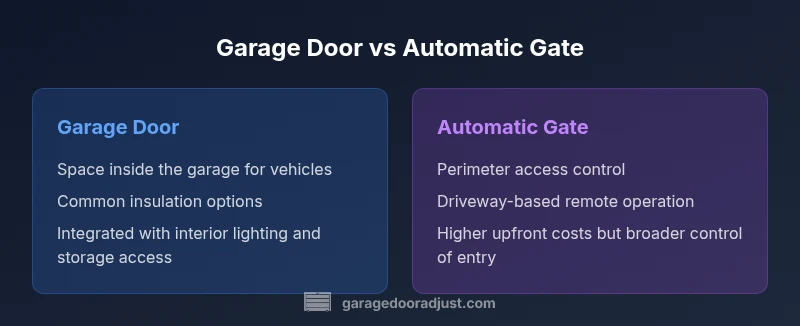
Garage doors generally suit vehicle access and interior climate control; perimeter gates excel in external access and property boundary control
Choose a garage door if you prioritize interior protection and insulation. Opt for a gate if perimeter access and external security are the primary concerns. The GarageDoorAdjust team recommends a detailed site assessment to quantify space, security, and maintenance implications.
Got Questions?
What is the key difference between a garage door and a gate?
A garage door primarily protects an enclosed space for vehicles and storage, while a gate controls access to the property perimeter. The decision hinges on whether your priority is interior protection or external boundary security. Both require safety features and regular maintenance to perform reliably.
The main difference is function: a garage door protects the interior space; a gate controls perimeter access. Both need safety features and upkeep.
Can I install a garage door or gate myself?
Simple maintenance or weatherstripping can often be DIY, but installation and major components (springs, hinges, motors, and structural work) should be performed by licensed professionals. This reduces safety risks and ensures compliance with local codes.
Basic upkeep you can do yourself, but major installs need a pro for safety and code reasons.
What maintenance tasks are common for both?
Regular lubrication, visual inspection of tracks or hinges, sensor testing, and weather sealing checks are common tasks. Keeping a simple maintenance log helps you anticipate part replacements and maintain safe operation over time.
Lubricate moving parts, check sensors, and inspect seals regularly.
Is automation essential for garage doors or gates?
Automation is not strictly essential, but it adds convenience and control. Evaluate security needs, connectivity, and the reliability of your local internet or wireless network before investing in advanced automation.
Automation isn’t required, but it adds convenience. Consider your security and connectivity first.
How should I decide between a garage door and a gate for security?
If your priority is protecting interior space and vehicle storage, a robust garage door with good weather sealing and sensors is often best. If boundary control and perimeter access are paramount, a reliable gate with strong locking mechanisms and monitoring is typically preferable.
Interior protection points to a strong door; perimeter protection points to a reliable gate.
What are common signs I need maintenance or replacement?
Unusual noises, uneven movement, slow response to commands, or repeated sensor faults suggest maintenance or possible component replacement. Addressing issues early can prevent further damage and preserve safety features.
Watch for unusual noises, jerky movement, or sensor faults. Fix early.
Quick Summary
- Assess space constraints and driveway layout before deciding
- Prioritize safety features and regular maintenance checks
- Evaluate insulation and weather sealing for energy efficiency
- Consider automation needs and cyber-security implications
- Consult qualified professionals for installation and code compliance