Patio Doors vs Garage Door: An Objective Side-by-Side Guide
Explore a data-driven comparison of patio doors versus a traditional garage door, focusing on installation, energy, security, maintenance, and daily use to guide homeowners toward the best balance of function and style.


For homeowners weighing patio doors instead of a garage door, a careful balance of light, access, and security matters. Patio doors excel for living space connection, daylight, and modern aesthetics, but garage doors win for vehicle protection and wide openings. GarageDoorAdjust analysis shows the choice is context-dependent and shaped by installation complexity and costs.
Why patio doors could replace a garage door
Patio doors instead of a garage door can transform how a home connects with outdoor living. The decision hinges on how you use the space, how much daylight you want, and how you balance aesthetics with practicality. According to GarageDoorAdjust, homeowners often pursue this path to create a brighter interior, easier access to a backyard, or a design-forward facade. The primary benefits are the expansive views, larger glazed areas, and the sense of openness that patio doors offer. However, this option also introduces new considerations: different framing, potential energy trade-offs, and alternate maintenance requirements. When evaluating this choice, start with the door’s opening style (sliding, hinged French, or lift-and-slide) and how it fits your footprint. The cost story is also important: while some patio door configurations can be surprisingly affordable, premium glass and multi-point locking systems can raise upfront expenses. Energy performance depends on glazing, frame material, and weather sealing; for homes in extreme climates, these details matter more than aesthetics. The GarageDoorAdjust team emphasizes that the long-term value comes from matching the door to daily habits and climate realities.
Key Differences at a Glance
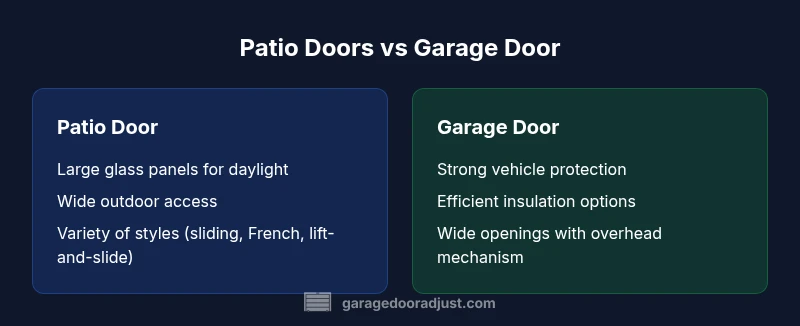
- Light, view, and access: Patio doors provide expansive sightlines and easy outdoor access, creating a strong indoor-outdoor connection. A traditional garage door prioritizes vehicle clearance, insulation, and security for stored items.
- Opening style and footprint: Patio doors come in sliding, hinged, or lift-and-slide configurations that tailor access to your space; garage doors rely on overhead mechanisms that require vertical clearance and tracks.
- Energy and weather sealing: Modern, well-installed patio doors can match or exceed some garage-door energy performance with insulated frames and glazing; subpar installations can lead to drafts and higher heating/cooling costs. Garage doors with high R-values and proper weather stripping can perform exceptionally in many climates.
- Maintenance and longevity: Patio doors demand frequent seal checks, hardware lubrication, and glass cleaning. Garage doors need track/roller maintenance and spring checks; both benefit from regular inspections.
In short, the choice hinges on how you intend to use the opening, the climate you live in, and long-term maintenance tolerance. GarageDoorAdjust’s perspective is to weigh practical daily use against design goals to determine which option delivers lasting value.
Energy, Light, and Insulation Considerations
Energy efficiency and natural light are central to the patio doors versus garage door decision. Patio doors with triple-glazed, low-emissivity glass and well-insulated frames can dramatically reduce heat transfer, improving comfort and energy bills in both winter and summer. The density of glazing, low-conductivity frames (such as vinyl, fiberglass, or aluminum with thermal breaks), and advanced weather seals play pivotal roles. By contrast, garage doors, especially older or poorly insulated steel sections, can introduce significant heat loss or gain during seasonal extremes unless upgraded with insulation kits or replacement panels. Beyond pure insulation, daylighting from large glass panels can lower artificial lighting needs during the day, but it may also increase solar gain. Protecting against glare and UV fading requires tinted or spectrally selective glass. For homeowners pursuing patio doors instead of a garage door, a careful balance of glazing type, family routines, and climate data will determine net energy impact. GarageDoorAdjust emphasizes that performance should be validated with local climate considerations and warranty coverage.
Installation, Costs, and Maintenance
Installation cost dynamics are central to the patio doors vs garage door comparison. Patio doors often involve more complex framing, threshold considerations, and potential structural modifications, especially for retrofit projects. In many cases, you’ll encounter higher upfront costs for premium glass, multi-point locking systems, and custom framing; however, long-term energy savings and enhanced aesthetics can offset those costs over time. Garage doors typically have lower upfront price points for standard sizes and can be quicker to install when replacing an existing door with a compatible track system. Maintenance needs differ: patio doors require regular inspection of seals, bottom sweeps, and hardware lubrication; garage doors demand track and spring tension checks, roller lubrication, and annual balance assessments. The cost narrative is nuanced by material choices—vinyl, fiberglass, or aluminum for patio doors; steel, wood, or composites for garage doors. Per GarageDoorAdjust Analysis, 2026, the best choice balances upfront investment with projected maintenance and energy savings, tailored to your climate and home design.
Security and Privacy Trade-offs
Security is a common concern when considering patio doors versus a garage door. Modern patio doors can incorporate laminated or tempered glass, multi-point locking, and reinforced frames to approach traditional security levels. However, some sliding or large-panel systems may present more entry points than a solid sectional garage door, especially if hardware or seals degrade. Privacy considerations also differ: expansive glass improves visibility and daylight, but homeowners may want frosted or tinted glazing for street-facing panels. An effective approach combines robust locking hardware, quality glazing, and proper installation to maintain security without sacrificing openness. If you prioritize maximum break-in resistance, a well-installed insulated garage door with smart locking tech can be a stronger baseline; with patio doors, you’ll rely more on the overall system integrity of the frame, threshold, and glass.
Space, Access, and Daily Use
Daily use scenarios strongly influence the patio doors vs garage door decision. Patio doors excel in homes where the backyard or patio is a living extension, enabling easy indoor-outdoor flow, hosting, and seasonal entertaining. They can be particularly appealing in homes with panoramic views, sunrooms, or extended dining areas. The trade-off is the potential reduction in vehicle storage or workshop space if you replace a garage door with an entry doorway. For households that park inside, a traditional garage door preserves interior space and insulation advantages. When space is at a premium, consider a hybrid approach: a smaller entry door integrated with a larger over-opening or a multi-panel system that preserves some interior vehicle access while maximizing outdoor connection. The goal is to align daily habits with the opening’s footprint and operation mode (sliding, swinging, or pivoting).
Design, Aesthetics, and Home Value
Aesthetics drive many homeowners toward patio doors, especially when seeking a modern, seamless look that blends interior and exterior environments. Large glass expanses, slim frame profiles, and color-coordinated hardware can elevate curb appeal and even boost perceived value. That said, potential buyers may weigh the practicality of a garage door’s space efficiency and security features. The decision to install patio doors instead of a garage door often hinges on optimizing interior flow, natural light, and architectural harmony. For truly design-forward homes, a high-end patio door can become a centerpiece; for houses where weatherproofing and vehicle storage dominate priorities, a traditional garage door may preserve value through proven performance and universal appeal.
Weather, Climate, and Seasonal Performance
Weather performance is a decisive factor in the patio doors vs garage door conversation. Areas with harsh winters, heavy snow, or high wind can stress door seals and glass durability. Modern patio doors with laminated glass and reinforced frames offer strong resilience if properly installed, but cold-weather drafts can occur if seals degrade. Proper installation remains critical, including correct threshold height, weatherstripping, and sill drainage. In milder climates, patio doors can shine with extended outdoor living and lower HVAC load, especially when paired with energy-efficient glazing. A robust maintenance routine—checking seals, lubricating hardware, and ensuring smooth operation—helps maintain weather performance across seasons. Garage doors can perform exceptionally in extreme climates when well maintained, thanks to continuous insulation and tough panel construction.
Real-World Scenarios: When It Makes Sense
Consider patio doors instead of a garage door when your main priorities include daylight, views, and outdoor access that tips the balance toward daily use. If your home’s layout features a Patio-to-Deck flow, or you host frequent gatherings with outdoor seating, a door system that opens wide can enhance living space. On the other hand, if your priority is vehicle storage, workshop space, and strong security against break-ins, a traditional, insulated garage door may be the safer long-term choice. In newer homes with expansive glass walls, replacing a garage door can yield a cohesive, contemporary aesthetic. In older or climate-critical homes, a retrofit must address structural considerations, building code compliance, and moisture control. The key is to map your lifestyle to the door’s opening dynamics, ensuring you don’t sacrifice function for form.
How to Decide: A Step-by-Step Checklist
- Define daily use: Are you using the opening primarily for access to an outdoor living area or for parking and storage?
- Assess climate and energy goals: Do you need superior insulation and weather sealing?
- Compare installation complexity: Are structural modifications required, and can the footprint accommodate your chosen opening style?
- Evaluate security needs: Do you require multi-point locking and reinforced frames?
- Review maintenance tolerance: Are you prepared for seal checks and hardware lubrication on a frequent schedule?
- Consider aesthetics and resale: Will a modern patio door enhance curb appeal or would a traditional garage door better serve long-term value?
- Budget realistically: Balance upfront costs with potential energy savings and reduced maintenance over time.
This step-by-step checklist is designed to help homeowners reach a rational, climate-aware decision that aligns with daily habits and property characteristics.
Comparison
| Feature | Patio Door Setup | Garage Door Setup |
|---|---|---|
| Cost of installation | Variable; can be higher upfront with premium glass and custom framing | Often lower upfront for standard sizes; costs vary by size and mechanism |
| Energy efficiency | Can be highly efficient with insulated glazing and frames | Modern insulated sectional doors offer strong performance; depends on model |
| Maintenance | Seals, hardware, and glass care; periodic cleaning | Tracks, rollers, and springs require regular checks; annual maintenance advised |
| Security | Multi-point locking and laminated glass improve security | Robust locking systems and reinforced panels are common |
| Aesthetics/light | Maximizes daylight; unobstructed outdoor views | Solid, enclosed look with strong interior insulation and privacy |
| Space impact | Expands interior connection to outdoors; does not store vehicles indoors | Overhead door design preserves interior space for parking |
| Weather sealing | Proper installation with quality seals; frame matters | Seals and insulation crucial; can be excellent with the right upgrade |
| Lifespan/warranty | Glass and frame warranties vary; maintenance affects longevity | Panel durability and spring system warranties influence longevity |
Upsides
- Increased natural light and outdoor connection
- Enhanced curb appeal and modern look
- Improved accessibility to outdoor spaces
- Flexible design options and easy customization
Disadvantages
- Potentially higher upfront costs
- Security considerations may require upgrades
- Maintenance complexity for large glass panels
- Weather sealing challenges in extreme climates
Patio doors offer design-forward living with enhanced daylight; garage doors excel for vehicle storage and proven security.
Choose patio doors when daily outdoor access and aesthetics matter most. If you need reliable vehicle storage and maximum security, a traditional garage door may be the better long-term choice.
Got Questions?
What are the main differences between patio doors and garage doors for a home?
Patio doors maximize daylight and outdoor access with large glass panels, while garage doors prioritize vehicle storage, insulation, and security. The decision depends on daily use, weather, and architectural goals. Consider how you live in the space and what you value most.
Patio doors boost natural light and outdoor flow; garage doors emphasize vehicle storage and insulation. Your daily routines should guide the choice.
Are patio doors worse for security than garage doors?
Security can be strong for both when modern locking systems and quality glazing are used. Patio doors rely on robust hardware and frame design, while garage doors rely on reinforced panels and track integrity. Regular maintenance reduces vulnerability.
Security is strong for both with proper hardware and maintenance; upgrade where needed.
Can patio doors be used to replace a garage door for a two-car setup?
Yes, but it requires careful planning. A patio-door-like solution may reduce vehicle storage or require a hybrid layout. Evaluate access, footprint, and climate impacts before replacing a full two-car opening.
It can work, but assess space and climate before removing a large vehicle opening.
Do patio doors provide the same weather sealing as a garage door?
Weather sealing depends on installation quality and product spec. High-performance patio doors can rival garage doors with the right glazing, frames, and seals, but poor installation can lead to drafts and leaks.
Good installation and quality seals make patio doors weather-tight; poor install = leaks.
What maintenance is required for patio doors compared to a garage door?
Patio doors require seal checks, hardware lubrication, and glass cleaning. Garage doors need track alignment, spring tension checks, and roller lubrication. Both benefit from annual inspections.
Both require regular checks, but the exact tasks differ: seals and glass for patio doors; tracks and springs for garage doors.
How do installation costs compare for patio doors vs garage doors?
Costs vary by size, material, and complexity. Premium patio doors with advanced glazing may exceed basic garage-door replacements, but long-term energy savings can offset upfront investment.
Costs depend on size and materials; premium options may be higher upfront but save energy over time.
Quick Summary
- Prioritize daily use when choosing between patio doors and a garage door
- Energy performance hinges on glazing and framing; install correctly to maximize savings
- Security varies; upgrade hardware and glazing as needed
- Budget should reflect both upfront costs and long-term maintenance
- Consider climate and home style to preserve resale value