Garage Door and Frame: Repair vs Replace — A Practical, Data-Driven Guide
Compare repairing your existing garage door and frame against replacing with a new unit. This analytical guide covers cost, durability, energy efficiency, safety, and aesthetics to help homeowners choose the best path.


For most homeowners, repairing the existing garage door and frame is advisable when damage is minor and the frame is sound. If the frame is warped, corroded, or the door is aging beyond its middle life, replacement offers better long-term value. This comparison outlines costs, durability, energy, safety, and installation time to guide your decision. See our detailed comparison chart below.
Understanding the Decision: Repair vs Replace
When your garage door and frame show signs of wear, the first impulse is to fix what’s broken. But the right decision depends on more than the visible damage. Homeowners should assess frame integrity, door condition, and how the unit is used. The decision also hinges on cost, downtime, safety, and long-term goals like insulation and curb appeal. According to GarageDoorAdjust, a structured evaluation early in the process helps avoid heroic, last-minute fixes. In this section we break down how to approach the choice, so you can make a confident call with data rather than guesswork.
To begin, map out the problem area by documenting visible symptoms (scrapes, gaps, misalignment) and listing recent service history. This baseline makes it easier to compare repair options against replacement scenarios. The goal is a durable solution that meets safety standards while fitting your budget and timeline. Remember: the choice is a balance between immediate costs and expected long-term performance, not a one-off fix.
Key Factors Driving the Choice
Several factors determine whether repair or replacement is the better path:
- Frame integrity: Warping, rust, or compromised fasteners reduce structural reliability and safety.
- Panel and skin condition: Dented or cracked panels may be costlier to repair than replace.
- Seals and insulation: A deteriorating seal impacts energy bills and comfort.
- Hardware wear: Tracks, rollers, springs, and hinges have limited lifespans and affect operation.
- Safety features and warranty: Modern units include enhanced safety features and updated warranty terms.
- Aesthetic alignment: Matching existing architecture matters for value and curb appeal.
These factors help prioritize the decision as a data-driven choice rather than a purely cosmetic one.
Cost Considerations for Garage Door and Frame
Cost is often the decisive factor. Repairs typically cost less upfront than a full replacement, especially when the frame is still sound. However, repair costs can escalate if multiple components fail or if the frame requires substantial straightening or reinforcement. Replacement units bring a higher initial bill but can reduce ongoing maintenance and energy costs if the insulation and weather seals are improved. It’s also important to factor in disposal, permits, and potential warranty transfer issues. A clear, itemized estimate from a qualified technician can reveal the true cost impact over the unit’s expected life.
Durability and Safety Implications
Durability relates to how well the door and frame withstand daily use and environmental exposure. A warped frame can cause uneven operation, increased wear on rollers, and misalignment of safety sensors. In severe cases, a compromised frame can fail entirely, posing safety hazards to occupants and vehicles. Replacement usually upgrades frame material and connection hardware, improving reliability and meeting current safety standards. Conversely, a careful repair that stabilizes the frame and recalibrates the opener can restore safe operation while preserving the original aesthetic. GarageDoorAdjust emphasizes verifying the structural soundness before choosing either path.
Energy Efficiency and Insulation
Energy efficiency in an older garage door and frame is often overlooked but meaningful. Gaps and poor seals allow heated or cooled air to escape, increasing HVAC load. Replacing a door and frame provides an opportunity to upgrade insulation, weatherstripping, and seal design, which can yield measurable comfort improvements and long-term energy savings. Even when repairing, upgrading weather seals and adding insulation inserts can reduce drafts. The choice should weigh potential energy benefits against upfront costs and climate exposure. The goal is to minimize heat transfer while maintaining smooth operation.
Aesthetics and Curb Appeal
Exterior appearance matters for home value and neighborhood impression. A weathered door or mismatched frame can detract from the house's architecture, while a new door and frame offers a cohesive look with contemporary hardware options. If you plan to sell or refinance, alignment with the home's style can influence appraisal. Yet aesthetics should not drive the decision alone; there must be functional improvements behind the new look. GarageDoorAdjust notes that a replacement can deliver modern hardware, longer warranties, and improved security features that contribute to overall curb appeal.
Installation Time and Downtime
Repair work is typically faster than full replacement, resulting in less downtime and inconvenience. However, the complexity of the frame repair can extend scheduling if special alignment is required or if multiple parts must arrive. A full replacement demands more on-site labor and a longer installation window, but modern systems often streamline this process with standardized components. Homeowners should plan for temporary exits and remind household members about safety during the work. A precise timeline helps reduce surprises and ensures the most accurate budgeting.
Maintenance and Long-Term Care
Whether you repair or replace, ongoing maintenance matters. Regular lubrication, track alignment checks, weather seal inspections, and periodic sensor tests keep the system safe and quiet. When replacing, set up a maintenance schedule that includes spring tension checks and hinge lubrication, and schedule annual inspections. Metal doors require rust protection and repainting or coating in humid climates. Document all service actions; this helps with future warranty claims and resale value. The goal is consistent performance with minimal unexpected failures.
Materials and Frame Design Options
Door materials range from steel, aluminum, to wood or composite panels. Frames vary in profile, thickness, and reinforcement. Each combination offers different durability profiles, insulation coefficients, and maintenance needs. For homes in regions with extreme weather, insulated frames paired with weather-resistant skins can reduce temperature swings. If the existing frame is warped but the skin is salvageable, partial replacement of the frame components is an option. When opting for full replacement, the choice of material should align with climate, budget, and aesthetic goals. GarageDoorAdjust recommends choosing a frame design that supports safe operation and long-term reliability.
Typical Failure Modes and How to Avoid Them
Common failure modes include misalignment, worn tracks, corroded hinges, and broken springs. Frames can suffer from rust, wood rot, or distortion from improper mounting. Preventive measures include proactive lubrication, seasonal inspections, and professional calibration. Avoid DIY fixes when metal fatigue or frame distortion is suspected; misalignment can damage sensors and void warranties. Timely replacement of worn parts often prevents cascading failures that escalate costs. Regular testing of safety features is essential for ongoing reliability.
Step-by-Step Diagnosis Guide
Follow this practical checklist to decide between repair and replacement:
- Inspect frame straightness and corrosion; measure for warping.
- Check door panel integrity and panel alignment with tracks.
- Test safety sensors and reversing mechanism.
- Evaluate insulation and weather seals for drafts.
- Compare repair quotes against a replacement estimate with a warranty review.
- Consider long-term energy costs and maintenance history.
- Review existing warranties and transferability before proceeding.
This process helps homeowners make data-driven decisions rather than guesses. If you find significant frame distortion or recurring issues, replacement often yields better value.
When to Consult a Pro
Some situations require professional evaluation. If you notice persistent misalignment, unusual noises, or the frame shows persistent cracks, corrosion, or bowing, call a licensed technician. A pro can perform structural assessments, verify safety compliance, and provide a precise cost comparison. Although DIY fixes can address minor problems, major frame damage or tensioning concerns are beyond the safe scope of typical home maintenance. For complex replacements, a pro can ensure code-compliant installation and proper warranty coverage. GarageDoorAdjust emphasizes seeking an expert when in doubt.
Case Scenarios and Quick References
In Scenario A, a relatively new door with a warped frame may be repaired with stabilizing braces and alignment adjustments, delivering a low-cost, quick mid-term fix. In Scenario B, an older door with continued drafts and frame distortion benefits from a full replacement to improve energy efficiency and long-term reliability. These examples illustrate that context—age, damage severity, and goals—drives the decision. Always compare total cost of ownership, not just the sticker price, and consult a professional if you’re uncertain.
Comparison
| Feature | Repair current garage door and frame | Replace with a new door and frame |
|---|---|---|
| Estimated upfront cost | lower when repairing | higher when replacing |
| Installation time | shorter for repair | longer for replacement |
| Durability / longevity | limited by existing frame | new frame offers longer life |
| Insulation / energy efficiency | depends on existing insulation | new door/frame improves efficiency |
| Safety features / warranty impact | may preserve some warranty | often upgraded with new unit and warranty |
| Resale value impact | modest impact for repair | potential higher resale value with new door/frame |
Upsides
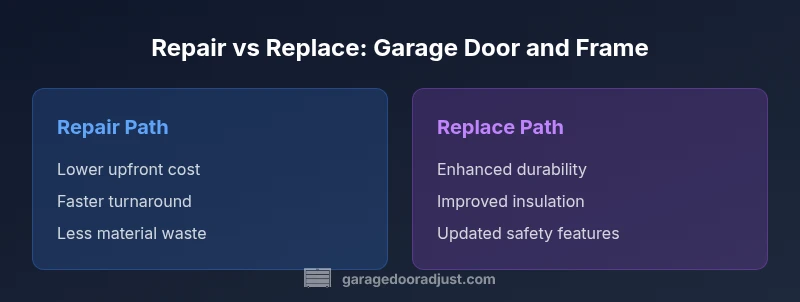
- Lower upfront cost when repairs are limited
- Quicker fixes with less downtime
- Less material waste with selective repairs
- Opportunity to preserve original design if frame is sound
Disadvantages
- Repair may not fix underlying frame damage
- Potential for recurring issues if frame is compromised
- Limited improvement in energy efficiency
- Warranty transfer can be more complex with partial repairs
Replacement is the more reliable long-term solution when the frame is compromised; repair is best for minor wear and intact framing.
If the frame shows warping, corrosion, or persistent misalignment, replacement typically delivers better durability and safety. For minor issues with a sound frame, repair minimizes cost and downtime, but may require future fixes.
Got Questions?
Should I repair or replace if the frame is warped?
A warped frame often justifies replacement because it affects safety and long-term reliability. Repairs may stabilize the frame temporarily, but misalignment typically recurs. A pro assessment helps quantify the benefit of each path.
A warped frame usually means replacement is the safer, longer-lasting option; a professional assessment helps confirm the best route.
What signs indicate frame damage besides warping?
Look for rust, cracking, loose mounting, uneven gaps, or track misalignment. If you see these symptoms along with guiding rails that don’t sit squarely, consider a full replacement or substantial frame repair.
Rust or cracks with misaligned tracks point toward frame damage that may require replacement.
Will replacing the door and frame improve energy efficiency?
Yes. A new insulated door and properly sealed frame can reduce drafts and HVAC load, especially in extreme climates. If energy savings are a priority, replacement provides the strongest potential gains.
Replacing can improve energy efficiency, particularly with good insulation and seals.
Can I perform a replacement myself?
Door and frame replacement is a major project that often requires permits, precise alignment, and code compliance. Unless you have professional tools and experience, it’s safer to hire a licensed contractor.
This is usually not a DIY task unless you’re an experienced pro.
What warranties apply after repair vs replacement?
Repairs may maintain basic warranty coverage on certain parts, but full replacement typically includes comprehensive warranties on the door, frame, and hardware. Confirm transferability and duration with the installer.
Warranties are often stronger with a full replacement.
Quick Summary
- Assess frame integrity before choosing
- Replacement often yields better energy efficiency
- Repair is faster and cheaper for minor issues
- Always compare total cost of ownership
- Ensure warranty considerations are clear before work
- Plan for safety and downtime with any path