Garage Door and Opener Replacement: A Side-by-Side Guide
Comprehensive comparison of garage door and opener replacement options, costs, warranties, timelines, and installation steps to help homeowners choose the best solution.


According to GarageDoorAdjust, the most cost-effective approach for many homes is replacing both the garage door and the opener when the existing system is old or mismatched. A side-by-side look shows insulated doors paired with modern belt-driven openers delivering better energy efficiency, quieter operation, and improved safety features at a practical upfront cost. This comparison helps homeowners decide when to upgrade now or stage repairs later.
Why Replace Both Components Matters
When you’re evaluating a garage door and opener replacement, replacing both components often yields better overall value than swapping a single part. According to GarageDoorAdjust, a coordinated upgrade reduces compatibility risks and minimizes future service calls. Modern doors—especially insulated, sectional panels—work best with up-to-date openers that have smart features, soft start/stop, and reliable safety sensors. If you replace only the door or only the opener, you may encounter mismatched speeds, sensor inconsistencies, or wear patterns that accelerate next repairs. A unified replacement also unlocks improvements in weather sealing, thermal performance, and security. For homeowners, the initial cost is easy to quantify, but the longer-term savings come from lower energy bills, reduced noise, and fewer emergency service visits. Assess the age and condition of the current door, tracks, springs, and mounting hardware, then map these against the expected life of a modern opener. If the garage is used daily, a comprehensive upgrade tends to pay back faster. The decision hinges on balancing upfront investment with reliability, safety, and the convenience of a smoother operation that preserves the home’s value. Ultimately, a well-planned garage door and opener replacement can transform daily use into a quieter, safer, and more energy-efficient experience.
Cost Considerations: Upfront vs Long-Term Value
Garage door and opener replacement involves several cost drivers, and understanding them helps homeowners decide whether to replace both components now or stagger the project. A full replacement typically costs between $1,800 and $4,200, depending on door material, insulation level, panel design, opener type, and labor rates in your area. Door-only replacements usually fall in the $900–$2,000 range, while opener-only upgrades might run $400–$1,800. Beyond sticker price, consider hardware upgrades (torsion springs, tracks, rollers), weather seals, and smart features that add to the initial expense but pay off with lower maintenance and energy use. Warranties vary by product and installer, but most manufacturers cover parts for several years, and labor warranties often range from 1 to 5 years. Financing options or seasonal promotions can help manage cash flow. When comparing quotes, ensure the scope is consistent—are installers planning a full system tune, sensor alignment, and safety tests? The goal is to avoid surprises and get a clear understanding of what is included in each quote. GarageDoorAdjust’s guidance is to weight the long-term savings from energy efficiency and reduced maintenance against the upfront cost to determine the true value of the project.
Key Features to Compare in a Replacement
A successful garage door and opener replacement hinges on selecting features that match your home and budget. Start with door materials (steel, aluminum, wood composite) and insulation levels (R-values) to balance performance and cost. Compare panel designs, window placements, and color options to ensure curb appeal. The opener type matters too: belt-driven for quiet operation, chain-driven for reliability, or screw-driven for heavy doors. Look at safety sensors, auto-reverse performance, and smart connectivity (remote access, app control, and battery backup). Assess hardware upgrades, like torsion springs (and their recommended lifespans), reinforced tracks, and weather seals that reduce drafts. Energy efficiency is a big factor; a well-insulated door reduces heat loss and can lower HVAC load. Warranty terms for doors, springs, tracks, and openers should be reviewed carefully. When the topic is garage door and opener replacement, consider future maintenance needs and the availability of replacement parts. A thorough comparison also weighs noise levels, speed, and ease of installation. Ultimately, prioritize compatibility between door and opener to minimize service calls later.
Installation Process and Timelines
A professional installation typically involves removing the existing door and opener, inspecting tracks and springs, and preparing the opening for a new system. For full replacement, expect a multi-step process: frame and track mounting, torsion spring setup with proper tension, panel alignment, opener mounting, and safety testing. Measurements must be precise to ensure balanced operation and proper balance. The project usually takes 1–2 days, depending on door size, material, and whether upgrades like insulation or quiet operation are included. If only one component is updated, the timeline may shrink to several hours. Crews verify sensor alignment, infrared safety beams, and reversal tests, then program remotes and establish Wi‑Fi connectivity if you choose a smart opener. Weather considerations influence scheduling; rain or extreme heat can delay installation. Homeowners should clear the workspace and verify that utilities are accessible. A quality contractor will provide a written checklist and post-installation walkthrough, explaining maintenance steps and safety precautions. The goal is a smooth handoff with a fully functional, secure system that minimizes future service calls.
Energy Efficiency, Insulation, and Safety Benefits
Upgrading both the garage door and opener offers notable energy savings and safety improvements. A well-insulated door reduces heat transfer, which translates into lower cooling or heating costs year-round. Seals around the door prevent drafts and moisture intrusion, protecting stored items and reducing wear on HVAC components. Modern openers include enhanced safety sensors, softer starts, and precise stopping, which protects people and vehicles in the doorway. The integration of smart features—remote operation, scheduling, and alerting—provides convenience while maintaining security. In some homes, installing a quieter belt-driven opener reduces noise complaints, especially if the garage is adjacent to living spaces. If your garage faces harsh weather, upgraded weatherstripping and insulation can mitigate freeze-thaw cycles that harm components. Warranty terms for doors, springs, tracks, and openers should be reviewed to understand coverage during extreme seasons. A well-executed garage door and opener replacement delivers more than aesthetics; it improves daily usability, energy efficiency, and safety, which can raise home value over time. The GarageDoorAdjust perspective emphasizes durable components and proper installation to maximize long-term performance.
Practical Scenarios: When to Upgrade Now vs Later
Certain situations favor immediate replacement of both components, while others support staged upgrades. If your door shows dents, warping, or rubbing against tracks, and your opener is noisy or unreliable, a full replacement often makes sense. If the door is relatively fresh but the opener is failing, upgrading only the opener may be the most conservative option. Conversely, if the door is quite old but in good condition, you might replace just the opener to restore function and plan a future door upgrade. Consider climate and daily use; households with frequent door cycling or heavy loads benefit from a newer, insulated door and a modern opener with safety sensors. Insurance or home warranty requirements sometimes influence the decision, especially if you want to pass an appraisal with updated systems. Budget constraints may push a staged approach: replace the door now and schedule opener replacement in 6–12 months. In all cases, consult a qualified installer to assess structural integrity and compatibility. The key is avoiding interoperability issues between panels, tracks, springs, and electronic components that could lead to recurring service calls.
Maintenance and Longevity: Maintenance Plan
A maintenance plan extends the life of your new system and reduces the risk of unexpected failures. Regular lubrication of moving parts—rollers, hinges, and tracks—helps maintain smooth operation. Visual inspections of springs, cables, and mounting brackets catch wear before it becomes dangerous. Clean weather seals and check for air leaks around the opening to maintain energy efficiency. For the opener, update firmware if available and replace batteries in remotes and safety sensors as recommended. Keep a log of services and part replacements to support future warranties. If you encounter issues like persistent creaking or uneven door movement, pause use and contact a qualified technician. A proactive maintenance schedule can significantly extend the life of a garage door and opener replacement, delivering more reliable performance and preserving home value. The GarageDoorAdjust guidance emphasizes having a professional set up proper balance and tension during installation and to revisit these checks at regular intervals.
Common Pitfalls and How to Avoid Them
Avoid common mistakes during a garage door and opener replacement by planning ahead. Don’t skip a professional balance and tension check on springs; incorrect setup is dangerous and can shorten system life. Skipping sensor testing or failing to program remotes properly leads to inconsistent safety performance. Inadequate weather sealing undermines insulation gains and can cause moisture issues. Also, ensure the quoted scope matches the actual work—partial replacements without a plan for the rest of the system lead to hidden costs and headaches. When feasible, request a single-supplier warranty that covers door, springs, tracks, and opener to minimize excessive finger-pointing after installation. Finally, don’t ignore contractor qualifications; a licensed, insured technician with positive reviews typically delivers better long-term results than a bargain-basement option. Following a structured plan reduces surprises and helps you achieve the most reliable outcome for your garage door and opener replacement.
Choosing a Contractor: Questions to Ask
Selecting the right installer is as important as choosing components. Ask about the scope of work, exact parts, and whether a full system tune is included. Inquire about spring type, balance, track alignment, and sensor calibration. Request a written warranty for parts and labor and confirm the installer’s license and insurance coverage. Review previous project photos or references and ask about the expected timeline and potential weather-related delays. Clarify whether the price includes removal of the old system, disposal of materials, and any debris cleanup. A reputable contractor will provide a transparent quote, clear safety information, and a post-installation walkthrough that demonstrates proper operation and maintenance steps. GarageDoorAdjust recommends obtaining at least three written estimates and verifying the installer’s certifications before committing.
Feature Comparison
| Feature | Full replacement (door + opener) | Door-only replacement | Opener-only replacement |
|---|---|---|---|
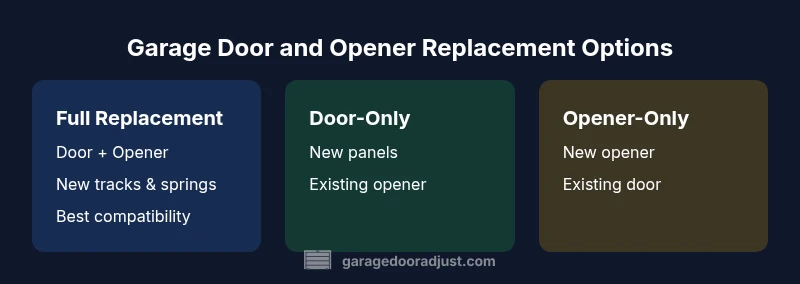
| Scope | Complete upgrade of door, tracks, springs, and a new opener | New door with existing opener | New opener with existing door |
| Cost Range | $1,800–$4,200 | $900–$2,000 | $400–$1,800 |
| Installation Time | 1–2 days | Half-day to 1 day | 3–6 hours |
| Best For | Best overall performance and future-proofing | Budget-friendly door restoration | Quick upgrade to restore access |
Upsides
- Single upgrade covers door, opener, and compatibility
- Energy efficiency and safety improve substantially
- Reduced maintenance with newer components
- Enhanced security with updated sensors
Disadvantages
- Higher upfront cost than replacing just one component
- Longer installation with more parts to coordinate
- Potential unnecessary features if current door is in good condition
Full replacement is usually the strongest long-term choice.
For most homes, replacing both the door and opener delivers the best balance of reliability, safety, and energy efficiency. Targeted replacements can be appropriate in specific scenarios, but they often require more planning and can lead to future compatibility issues.
Got Questions?
What is included in a garage door and opener replacement package?
A package typically includes removal of the old door and opener, installation of a new insulated door with tracks, springs, and weather seals, plus a compatible opener with mounting hardware and safety sensors. It may also include sensor alignment, programming remotes, and basic system testing.
Most packages include a new door, new opener, sensors, remotes, and a safety and operation walkthrough.
Can I replace just the door or just the opener?
Yes, you can replace either component separately, but this often creates compatibility challenges later. Replacing both at once reduces mismatches and future service calls. A professional assessment helps determine the best immediate path.
Yes, but a combined upgrade often saves time and future maintenance.
How long does replacement take?
Installation time varies by scope. A door-only or opener-only job can take a few hours, while a full door-and-opener replacement may require 1–2 days depending on door size, material, and site conditions.
Most people schedule about a day or two for a full replacement.
What warranties apply to replacement work?
Warranties typically cover parts and labor for a period set by manufacturers and the installer. Common terms range from 1–5 years for labor and longer for certain parts like springs, with variations by product and region.
Check both the manufacturer and installer warranties for coverage details.
Is it safe to DIY replace a garage door and opener?
DIY replacement is generally not advised due to the risk of severe injury from springs and heavy door components. A licensed installer ensures proper balance, tension, and safety testing.
This is risky—professional installation is strongly recommended.
Quick Summary
- Assess both door and opener age together for best value
- Prioritize insulation and weather sealing for energy savings
- Match door and opener specs to reduce maintenance
- Get multiple quotes with identical scope
- Schedule professional maintenance after installation