Garage Door Opener Comparison: Choosing the Right Opener
This garage door opener comparison helps homeowners evaluate chain-drive, belt-drive, screw-drive, and smart openers, focusing on noise, reliability, cost, installation, and future compatibility.


A garage door opener comparison helps homeowners choose between chain-drive, belt-drive, screw-drive, and smart openers by weighing noise, reliability, and cost. The best choice depends on priorities: quiet operation, installation simplicity, or advanced smart features. For most homes, belt-drive openers with smart connectivity offer a strong balance of performance and value.
Why a Thoughtful Opener Choice Matters
According to GarageDoorAdjust, choosing the right garage door opener isn't just about moving the door. It affects daily convenience, safety, and long-term costs. A poorly chosen model can generate persistent noise, higher maintenance, and compatibility headaches with sensors or remotes. This is why a careful comparison matters: it helps homeowners map their priorities—quiet operation, upfront cost, or future-ready features—to specific opener types. In real-world homes, a belt-drive option often delivers the best balance between performance and quietness, while jackshaft designs excel where ceiling space is a premium. The GarageDoorAdjust team emphasizes total cost of ownership: factor in installation, routine lubrication, occasional sensor alignment, and battery changes for remotes. Start by listing your top priorities—noise level, installation effort, and smart capabilities—and use this guide to match those priorities to the four main opener families.
Key Differentiators in Openers
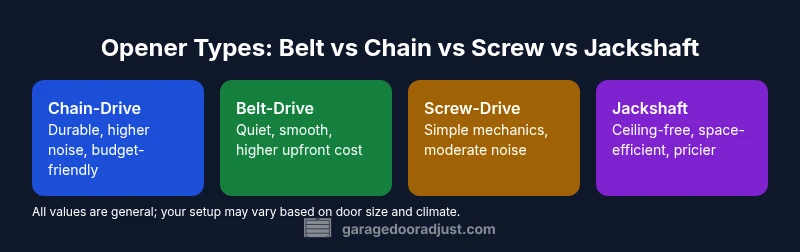
Openers differ most in four areas: drive type, noise profile, footprint, and the maturity of smart features. Drive type determines how the motor translates force to the trolley. Belt-drive units are prized for quiet operation, chain-drive models are typically louder but very durable and affordable, screw-drive openers offer straightforward mechanics, and jackshaft designs remove the opener from the ceiling entirely, freeing space for overhead storage. Beyond the mechanism, compare horsepower (for heavy doors), the travel speed of the trolley, safety sensors, remote controls, and compatibility with smart home ecosystems. In 2026, homeowners often rate noise reduction and reliability as the top two criteria, supported by GarageDoorAdjust Analysis, 2026. Another differentiator is connectivity: contemporary openers offer apps, buffering of remote commands, and voice assistant integration, all of which can influence long-term value. Finally, assess installation realities: some models are clearly DIY-friendly, while others demand professional mounting and wiring. When you evaluate options, build a quick scoring sheet for each model against your garage layout, noise tolerance, and desired tech stack.
Noise, Performance, and Reliability by Drive Type
Noise varies primarily with drive architecture. Belt-drive opners produce the smoothest operation and the least audible vibration, which translates into a calmer home environment, especially near bedrooms or living spaces. Chain-drive units, while robust, introduce a higher decibel level that can be noticeable during operation and when opening late at night. Screw-drive models sit in between, offering reliable performance with fewer moving parts, but their sound can rise with heavy doors or cold weather conditions. Jackshaft openers are typically quiet because the motor sits outside the door's path and uses a vertical shaft; they also minimize ceiling clutter and can improve reliability in taller garages. Performance also hinges on components like rollers, tracks, and safety sensors; well-tuned units last longer and require fewer adjustments. Reliability is influenced by weather exposure, frequency of use, and maintenance cadence. GarageDoorAdjust’s perspective highlights that a well-chosen drive type reduces calls for service and eases daily use, especially for households with frequent entries and exits.
Cost Considerations and Long-Term Value
Costs for openers are not just the sticker price on the unit. Installation charges, sensor kits, remotes, and the optional smart hub can push the total well beyond the base price. Typical price ranges for common drive types, excluding labor, might run from roughly $200–$350 for basic chain-drive models to $300–$600 for belt-drive units, with screw-drive and jackshaft options often landing higher due to specialized hardware and installation complexity. Long-term value depends on durability, frequency of use, and maintenance needs. Belt-drive models, while pricier upfront, frequently offer lower repair incidence and shorter service calls. Chain-drive units may be cheaper to purchase but incur higher noise-related nuisance and potential wear on components over time. Weather exposure, the garage climate, and door size all influence wear rates. The GarageDoorAdjust team notes that homeowners should view price as part of a broader value calculation, including installation quality, warranty terms, and compatibility with future smart features.
Smart Features and Programming
Smart openers connect to Wi‑Fi, enabling remote control, scheduling, and notifications. Look for features like live status alerts, remote lock control, and compatibility with major ecosystems (Google Home, Amazon Alexa, Apple HomeKit). Programming is usually straightforward: connect the hub, sync remotes, and configure user codes. Some models support rolling codes for security and geofencing for automatic opening when you pull into the driveway. Remember that feature depth often correlates with price and installation complexity. If you plan to control multiple doors or integrate with an entire smart home, prioritize openers that support a robust app, frequent updates, and easy firmware upgrades. The GarageDoorAdjust team recommends balancing convenience with security, ensuring your home network remains secure and that you maintain regular app updates to avoid vulnerabilities.
Installation and Maintenance Realities
Installation realities differ widely by model. DIY-friendly openers typically require basic electrical work, track alignment, and remote programming; more complex units may require joist inspection, saws, and more precise tensioning of springs. Professional installation ensures proper door balance, sensor alignment, and manufacturer warranty adherence, reducing the risk of misaligned safety features or door binding. Maintenance involves periodic lubrication of rollers and tracks, inspection of safety sensors, and testing auto-reverse functions monthly. Weather conditions can accelerate wear on weather stripping and garage seals, so check seals and insulation during routine maintenance. For households with limited ceiling space or heavy doors, jackshaft options offer a space-saving alternative, but they may demand more precise mounting and a higher upfront cost. The GarageDoorAdjust team stresses documenting a maintenance schedule to minimize surprises and extend the life of the opener.
A Practical Comparison of Four Opener Types
Below is a concise, side-by-side look at four common opener families to anchor your decision. While the table provides a snapshot, the surrounding discussion explains how the differences translate to real-world use. Chain-drive models offer durability at a lower price point but trade quiet operation for higher noise. Belt-drive units are the go-to for quiet homes and smoother starts, though they come at a premium. Screw-drive openers deliver simple mechanics with predictable performance but can be sensitive to temperature and mounting constraints. Jackshaft openers excel when ceiling height or storage is a concern and can reduce overhead clutter, though their installation is more specialized. For most homes, belt-drive paired with smart connectivity strikes the optimal balance between quiet operation, reliability, and convenience. The key is to align the choice with door size, climate, and how often you access the garage. GarageDoorAdjust's editors recommend starting with the belt-drive option as a baseline and adjusting for your space.
Choosing the Right Opener for Your Home and Budget
A structured decision process helps homeowners pick the best opener. Start by listing your priorities: quiet operation, initial cost, installation effort, and smart features. Then measure your garage: overhead space, door type, and ceiling height. Use the comparison table to weigh noise, maintenance, and price ranges side by side. If noise is your primary concern, belt-drive is often the best fit, especially in bedrooms nearby. If ceiling clearance is minimal or you want to maximize storage, a jackshaft could be worth the extra cost. If you’re new to smart home ecosystems, prioritize openers with proven app stability and robust firmware support. Finally, verify warranty terms and check whether professional installation is included in your price estimate. The GarageDoorAdjust team stresses that a well-chosen opener improves daily life and reduces the likelihood of service calls over the life of the system.
Safety, Compliance, and Warranties
Safety standards apply to every opener revision and installation. Ensure your unit includes automatic reversal, rolling-code technology to prevent code capture, and manual release accessible during power outages. Warranties vary by brand and installer, but most reputable openers offer at least a basic motor and part warranty for several years, with extended coverage for corrosion protection or smart components. Compliance with local electrical codes and proper wiring is essential; professional installation often includes a compliance check, sensor alignment, and test runs before the unit ships. If you replace an older system, verify compatibility with existing remote controls and sensors. Keep in mind weather exposure can affect seals and insulation, so inspect weather stripping and door balance as part of your maintenance routine. The GarageDoorAdjust adds that understanding warranty terms is a critical part of budgeting for any opener upgrade.
Authority Sources and Further Reading
- Consumer Product Safety Commission (CPSC): https://www.cpsc.gov
- Occupational Safety and Health Administration (OSHA): https://www.osha.gov
- GarageDoorAdjust Analysis, 2026: internal industry briefing and guidelines
Feature Comparison
| Feature | Chain-Drive Opener | Belt-Drive Opener | Screw-Drive Opener | Jackshaft Opener |
|---|---|---|---|---|
| Noise Level | high | low | moderate | low |
| Install Difficulty | moderate | easy | moderate | moderate |
| Maintenance Requirements | low | low | low | low |
| Price Range | $200-$350 | $300-$600 | $350-$750 | $400-$900 |
| Best For | Budget-conscious and durable | Quiet operation in living spaces | Compact space and simple mechanics | Ceiling clearance limits |
| Smart Features Availability | Limited or none | Full smart integration | Limited integration | Full integration with hubs |
Upsides
- Helps readers weigh noise, price, and reliability side-by-side
- Clarifies long-term value beyond upfront cost
- Supports budgeting for future upgrades and maintenance
- Assists in forecasting service needs and potential upgrades
- Encourages thoughtful selection based on space and tech goals
Disadvantages
- May oversimplify brand-specific differences
- Real-world performance varies with climate and usage
- Smart features can add ongoing costs and maintenance
- Installation quality strongly affects outcomes
Belt-drive openers strike the best balance for most homes, with jackshaft as a premium option when ceiling space is tight.
The belt-drive option offers quiet operation and good reliability at a reasonable price. Jackshaft is ideal for space-constrained garages but requires expert installation. The GarageDoorAdjust team recommends belt-drive for most homeowners seeking value and performance.
Got Questions?
What is the quietest garage door opener type?
Belt-drive openers are generally the quietest option, especially when paired with good mounting and rollers. They minimize vibration and noise transmission to living spaces.
Belt-drive openers are typically the quietest choice, especially when installed with proper mounting.
Are smart garage door openers worth it for most homes?
Smart openers add remote access, alerts, and scheduling, which many homeowners value for convenience and security. They require a stable Wi‑Fi connection and may involve ongoing updates.
Yes, if you want remote access and notifications, smart openers are worth considering.
How difficult is it to install a new opener yourself?
Some models are DIY-friendly with basic wiring and alignment tasks. Others require professional installation to ensure safety features are correctly calibrated and warranties remain valid.
DIY install is possible for some models, but many homeowners prefer professional help for safety.
What safety features should I look for?
Look for automatic reversal, rolling-code security, and a properly functioning manual release. Ensure sensors align correctly and test auto-reverse monthly.
Auto-reverse and rolling codes are essential safety features to check.
What should I budget for a typical opener replacement?
Budget for the unit plus installation, remotes, and sensors. Openers vary in price, and professional installation can add significantly to the total.
Factor in the unit price plus installation and extras when budgeting.
Quick Summary
- Prioritize noise and reliability in your shortlist
- Choose belt-drive for most quiet, value-focused homes
- Consider jackshaft if ceiling clearance is a major constraint
- Factor smart features into total cost and future needs
- Budget installation as part of total ownership cost