Belt vs Chain Openers: Garage Door and Motor Comparison
A rigorous, objective comparison of belt-drive and chain-drive garage door openers, analyzing noise, maintenance, durability, installation, and value for homeowners seeking the best garage door and motor setup.


Belt-drive openers generally offer quieter, smoother operation and lower vibration, making them a popular choice for homes with bedrooms or living spaces nearby. Chain-drive openers, while louder, tend to be more affordable and robust for high-traffic garages. This comparison highlights noise, maintenance needs, durability, and overall value to help homeowners choose the right garage door and motor for their setup.
Understanding the Garage Door and Motor System
Choosing the right garage door and motor is more than selecting a brand; it’s about how the system integrates with your daily routine. According to GarageDoorAdjust, homeowners should assess noise sensitivity, sleeping spaces, and garage usage when weighing belt-drive versus chain-drive openers. The GarageDoorAdjust team found that most households experience noticeable differences in sound, vibration, and ease of maintenance, which influence long-term satisfaction as much as sticker price. This article explains the core components of a typical garage door system, how the motor and operator interact with springs, tracks, and safety sensors, and what to expect during normal operation. A proper overview helps you frame a decision that matches your living space and schedule. The motor’s torque, the door’s weight, and the balance of the system all affect opening speed and stopping accuracy, so these factors deserve careful consideration before purchase or upgrade.
-1
-1
Comparison
| Feature | Chain-Drive Opener | Belt-Drive Opener |
|---|---|---|
| Noise Level | Louder, more vibration | Quieter, smoother operation |
| Maintenance Frequency | Higher maintenance needs (frequent chain lubrication and belt checks) | Lower maintenance in day-to-day use, belt wear is less common with proper tension |
| Initial Cost | Typically lower upfront cost | Typically higher upfront cost for premium belts |
| Durability in High Use | Very durable in steady, high-traffic environments (mechanical robustness) | Excellent for constant use with reduced wear and tear on mounts |
| Installation Ease | Heavier components can require more professional handling | Lighter trolley assembly can ease installation |
| Best For | Budget-conscious homes and garages with frequent daily use | Noise-sensitive homes and rooms near the garage, where quiet operation matters |
Upsides
- Common parts and maintenance channels keep service options broad
- Chain-drive offers proven reliability in high-usage garages
- Belt-drive delivers notably quieter operation and smoother daily use
- Wide range of product options and compatibility for both styles
Disadvantages
- Chain-drive can be louder and transmit more vibration to living areas
- Belt-drive components may wear and require belt replacement over time
- Premium belt-drive models can carry higher upfront costs
- Both systems require periodic safety sensor checks and routine maintenance
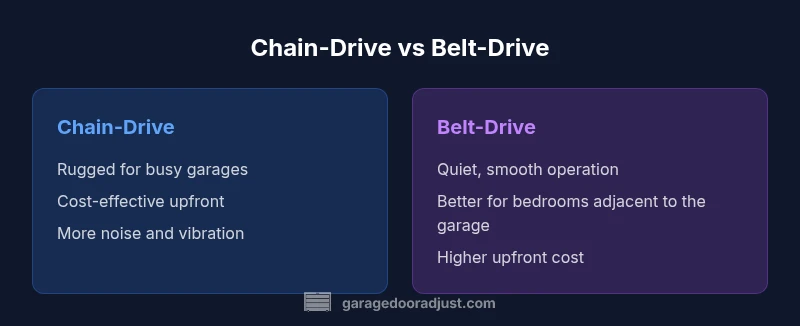
Belt-drive openers generally provide better long-term comfort for noise-sensitive homes, while chain-drive openers excel where upfront cost and rugged use dominate.
If quiet operation is the priority, choose a belt-drive garage door and motor. If budget or extremely high daily use is the primary concern, a chain-drive option remains a solid choice; weigh maintenance practicality against upfront cost for your specific garage setup.
Got Questions?
What is the main difference between belt-drive and chain-drive openers?
The main difference lies in the drive mechanism: belt-drive uses a rubber belt for quiet, smooth operation, while chain-drive uses a metal chain that is more audible but generally robust. Belt-drives are favored in living spaces due to lower vibration; chains excel in high-traffic garages where budget is a factor.
The belt-drive opener runs quietly and smoothly, while the chain-drive is louder but often more budget-friendly for busy garages.
Are belt-drive openers truly quieter than chain-drive ones?
Yes. Belt-drive openers typically produce less noise and vibration because the belt absorbs more of the movement, which is especially noticeable in attached living spaces or bedrooms above the garage.
Yes, belt-drives are usually quieter.
Can I install a belt-drive opener myself, or do I need a pro?
Many homeowners can install a belt-drive opener with basic tools, but a professional installation ensures correct alignment, safe operation, and proper safety sensor calibration. For most garages with standard configurations, a semi-skilled DIY approach plus manufacturer instructions can work, but complexity grows with custom setups.
It’s doable for handy homeowners, but when in doubt, hire a pro for safety and accuracy.
What maintenance does a garage door and motor require?
Routine maintenance includes lubricating moving parts, checking tracks and rollers for obstructions, testing safety sensors, and inspecting the spring balance. Regular lubrication extends belt life and reduces noise, regardless of drive type.
Regular lubrication and safety checks keep things running smoothly.
How long do garage door openers typically last?
Most openers last 10-15 years with proper maintenance and timely part replacements. Lifespan depends on usage frequency, environmental conditions, and how well the system is balanced and lubricated.
Around a decade or more with good care.
Is it worth upgrading to a newer motor with smart features?
Upgrading to a newer motor often adds security and convenience through remote access, battery backup, and enhanced safety sensors. If you value convenience and integration with smart home devices, a modern motor is usually a good investment.
Smart features boost convenience and security; they’re worth considering if you use automations.
Quick Summary
- Choose belt-drive for quiet, everyday use
- Prefer chain-drive when budget and rugged use dominate
- Expect belt-drive belts to need periodic replacement
- Regular safety sensor checks improve long-term reliability