Garage Door Chain vs Belt: A Practical Homeowner Comparison
Compare chain-drive and belt-drive garage door openers to decide which is best for your home. We cover noise, maintenance, cost, durability, and suitability for doors in various setups.


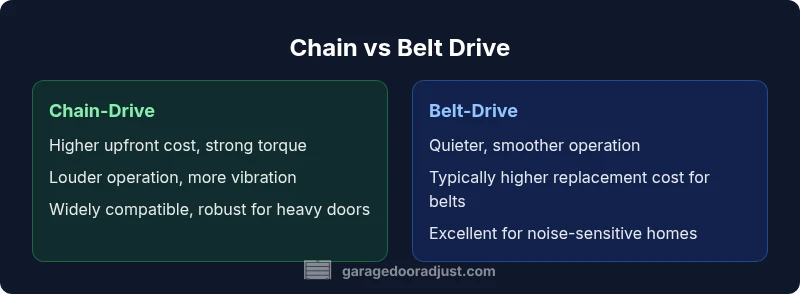
A chain-drive and a belt-drive garage door opener each trade off noise, durability, and maintenance. Belt-drive is quieter and smoother with less vibration, ideal for bedrooms and living areas. Chain-drive delivers strong torque, better for heavier doors or tight budgets, but is louder and requires more frequent lubrication and tension checks.
Key Differences in Drive Systems
Garage door openers come in two common drive configurations: chain-drive and belt-drive. In a chain-drive system, a metal chain connects the motor to a trolley on a track, transferring torque with a gear-driven chain. In belt-drive, a reinforced belt (often steel cords with rubber) moves the trolley. The design choice affects not only performance, but also maintenance needs, noise, and compatibility with door sizes. Chain-drive tends to be more rugged and cost-effective upfront, while belt-drive prioritizes quiet operation and smoothness. For homeowners, the decision hinges on whether you most value quiet evenings, or cost efficiency and simplicity. In many homes, belt-drive is the preferred option in rooms adjacent to the garage due to lower noise listening comfort, whereas chain-drive may be selected when budget constraints are tighter or the door is particularly heavy. According to GarageDoorAdjust, belt-drive varieties typically provide better quietness and less vibration under normal operating conditions, while the chain-drive can handle heavier doors with fewer compromises in the same budget.
Noise, Vibration, and Comfort
Noise level matters most in homes with bedrooms, living spaces, or study areas near the garage. Belt-drive openers use a rubber belt or similar composite material to transfer motion, which dampens sound and reduces vibration. Chain-drive units rely on a metal chain, which tends to transmit more mechanical noise and minor tremors through mounting hardware. In practical terms, belt-drive systems are perceived as noticeably quieter during start-up, operation, and shutdown, while chain-drive systems may produce a steady hum and a crisper click when starting movement. For people sensitive to nighttime sound, choosing belt-drive can improve comfort without sacrificing reliability. The GarageDoorAdjust Team notes that routine maintenance—such as ensuring proper lubrication of moving parts and keeping tracks aligned—helps belt-drive systems maintain their quiet performance over time.
Longevity, Maintenance, and Lifespan
Maintenance requirements differentiate the two drive types. Belt-drive openers generally require less frequent lubrication and tension adjustment, assuming proper installation and periodic inspection. Chains tend to need more regular lubrication, tension checks, and occasional track alignment to counteract wear. In colder climates, belt materials can experience changes in stiffness, which may affect smoothness, though modern belts are designed to tolerate typical residential temperatures. Regular inspections should include checking belt wear or chain stretch, tension, mounting hardware security, and noise anomalies. GarageDoorAdjust emphasizes a proactive maintenance cadence: inspect every 6–12 months, lubricate moving parts, and replace worn components before they fail. A well-maintained belt-drive system often delivers smoother operation for many years, while a robust chain-drive can be a dependable choice for heavy doors when maintenance is kept up.
Installation, Compatibility, and Upgrades
Installation complexity and compatibility hinge on the opener model and the door’s weight. Belt-drive systems may require a belt-compatible trolley and specific pulleys, but many modern openers offer straightforward belt conversions without major structural changes. Chain-drive units typically work with a broad range of garage doors and can be a cost-effective option if you are upgrading from a smaller capacity system. When upgrading, assess door weight, track alignment, and existing mounting points. If your door is unusually heavy or wide, a chain-drive system might maintain torque better under load, while a belt-drive upgrade can deliver noticeable noise reductions in the same installation footprint. Always follow manufacturer guidelines and consult a trained technician if you are unsure about compatibility, especially for retrofits or extended-height doors.
Cost Considerations: Upfront and Long-Term
Cost is a major factor in choosing between chain-drive and belt-drive openers. Chain-drive units are often perceived as more budget-friendly upfront, particularly in basic configurations, but the total cost varies with brand, features (like smartphone control or battery backup), and horsepower. Belt-drive models frequently come with a higher upfront price due to quieter operation and smoother performance, but they may offer lower long-term maintenance expenses thanks to fewer lubrication needs and less vibration-related wear. The total cost picture should consider installation labor, potential retrofits, and the expected life of belts or chains. In general, belt-drive systems provide a premium experience that is worth the investment for noise-sensitive homes, while chain-drive systems appeal to budget-conscious buyers who prioritize robust performance and simple upkeep when properly maintained.
Real-World Scenarios and Decision Framework
Every home is different, so weigh your priorities carefully. If your garage is adjacent to living spaces or bedrooms, belt-drive is often the better choice for minimizing disruption. For an attached garage with heavy doors or limited installation space, chain-drive might offer better torque delivery and a lower upfront price. Climate, door size, and usage frequency also influence durability and maintenance needs. A two-step framework helps: (1) Define the top three priorities—quiet operation, cost, or maintenance ease. (2) Match those priorities to the door’s weight, size, and typical usage pattern, then compare two or three models from reputable brands. The GarageDoorAdjust analysis emphasizes validating weight ratings, drive compatibility with your door, and the availability of service in your area.
Common Misconceptions About Drive Types
One common myth is that belt-drives are always perfect for every home. While belt-drive units are quieter and smoother, they can be more sensitive to belt wear and improper tension, especially in high-use scenarios or extreme climates. Another misconception is that chain-drives are always louder; modern chain-drive systems with upgraded pulleys can be surprisingly quiet, though still typically louder than belt-drives. Finally, some homeowners assume that belt-drives are fragile; in reality, well-made belts resist wear when properly aligned and tensioned. Practical reality requires balancing noise tolerance, door weight, climate, and budget to select the best fit for your home.
Quick Guide: How to Inspect Your Opener for Chain vs Belt
Begin by listening to the unit during operation and visually inspecting the drive area. A belt-drive will show a flat, rubbery belt path with pulleys; you may see wear on the belt edges or belt tensioners in worn states. A chain-drive reveals a metal chain that glides over sprockets; look for chain stretch, rust, and loose or noisy components. Check for abnormal noises, vibrations, and door misalignment after cycling. Regular lubrication of moving parts, track alignment, and tension adjustments are essential regardless of drive type. If you notice excessive vibration, unusual noises, or slow response, consult a professional—early maintenance can prevent bigger failures.
Best Practices for Prolonging Belt or Chain Life
Whether you choose belt-drive or chain-drive, consistency in maintenance yields the best results. Lubricate the moving parts regularly, especially the chain or belt pathways, sprockets, and track rollers. Ensure proper tension and alignment, and replace worn components before they fail. Keep the track clean and free of obstructions, and verify safe balance of the door. In damp or dusty environments, consider additional protective measures such as weatherstripping and routine inspections to avoid premature wear. Following a scheduled maintenance routine helps preserve performance and minimizes unexpected downtime.
When to Replace Instead of Repair
If a belt shows significant fraying, glazing, or frequent slipping, replacement is usually more cost-effective than continuous repairs. In chain-drive systems, persistent chain stretch, chain skipping, or consistent gear wear often signals that a full replacement is more economical than frequent patchwork repairs. Evaluate the age, service history, and existing warranties. If you notice a sudden failure risk or escalating repair costs, replacing the entire drive unit may provide better long-term reliability and a more predictable maintenance profile. Always consult a qualified technician for an accurate assessment.
Comparison
| Feature | Chain-drive Opener | Belt-drive Opener |
|---|---|---|
| Noise Level | Louder during operation | Quieter and smoother in most use cases |
| Maintenance Frequency | Higher (lubrication and tension checks) | Lower (less frequent lubrication) |
| Upfront Cost | Moderate to high depending on model | Moderate with premium quieting features |
| Lifespan Under Load | Solid torque; robust for heavy doors | Excellent for standard residential doors with lighter loads |
| Best For | Budget-conscious buyers or heavy doors | Quiet operation in bedrooms and living spaces |
| Temperature Sensitivity | Generally robust but lubrication can vary with climate | Belts made to resist temperature-related stiffness |
| Installation Complexity | Widely compatible but may require more adjustment | Often simpler for new installations or upgrades |
Upsides
- Belt-drive offers notably quieter operation
- Smooth and steady opening/closing for most doors
- Lower vibration can reduce wear on mounting hardware
- Belts can provide a longer life with proper tension and care
Disadvantages
- Higher upfront cost than basic chain-drive kits
- Belt wear and stretch require occasional replacement
- Not all models support very heavy or oversized doors
- Some installations need specialized alignment for optimal belt tension
Belt-drive is the better choice for quiet, everyday use; chain-drive offers strong performance with budget-friendly options.
If noise is a priority, belt-drive wins. If initial cost and rugged performance are essential, chain-drive remains compelling—especially with proper maintenance.
Got Questions?
What is the main difference between a chain-drive and belt-drive garage door opener?
The primary difference is how torque is transmitted. Chain-drive uses a metal chain and sprockets, typically louder but robust; belt-drive uses a reinforced belt, delivering quieter operation and smoother movement, with maintenance needs skewed toward belt wear. Both types can be reliable when properly installed and maintained.
Chain-drive uses a chain; belt-drive uses a belt. Belt-drive is quieter, chain-drive is typically louder but robust. Proper installation and maintenance are key for both.
Is belt-drive really quieter than chain-drive?
Yes. Belt-drive systems are generally quieter and produce less vibration because the belt absorbs more movement and dampens sound. However, installation quality and door weight influence the actual acoustic result.
Yes, belt-drives are usually quieter, thanks to vibration dampening. Proper setup matters for final results.
Can I convert a chain-drive to a belt-drive without changing the whole system?
Conversion is possible on some models, but it often requires a compatible opener, new pulleys, and possibly a different trolley. Check with the manufacturer and a professional installer to confirm compatibility and warranty implications.
Conversion can be possible on some models, but you may need a compatible unit and parts. Consult a pro.
What maintenance tasks are common for belt-drive openers?
Regularly inspect belt tension, wear, and alignment. Lubricate moving parts per manufacturer guidelines, and replace worn belts before failure. Keep pulleys clean and ensure the door is properly balanced to minimize undue belt stress.
Keep the belt tension right, inspect wear, lubricate parts, and replace worn belts before they fail.
Are belt-drive openers more expensive to repair than chain-drive?
Repair costs depend on the specific failure. Belt components can be pricier to replace, but belts typically wear slower than chains when properly maintained. Overall, belt-drive repairs may involve fewer frequent service calls in quiet, regular-use homes.
Belts can cost more to replace, but they wear slower with proper care. Maintenance frequency matters.
How does climate affect belt-drive performance?
Extreme temperatures can affect belt flexibility and lubrication needs, but modern belts are designed for residential climates. Regular checks help prevent performance dips in heat or cold.
Climate affects belt flexibility and lubrication needs, so regular checks help keep performance steady.
Quick Summary
- Choose belt-drive for quiet operation and smoothness
- Consider chain-drive for heavy doors and lower upfront costs
- Regular maintenance extends drive life in both systems
- Verify compatibility and installation requirements before upgrading
- Assess climate and usage to determine the best fit