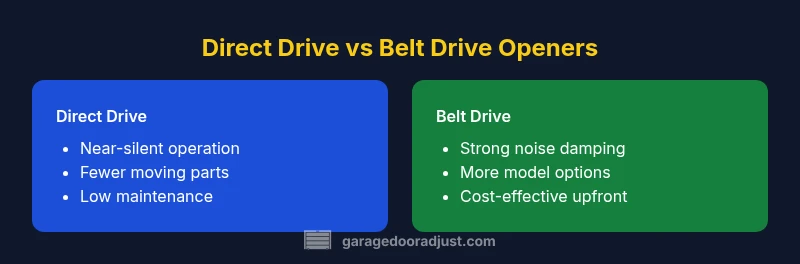
Direct Drive vs Belt Drive Garage Door Openers: A Thorough Comparison
Side-by-side comparison of direct drive and belt drive garage door openers, focusing on noise, maintenance, installation, and value to help homeowners decide which option fits quiet homes and budgets.


Direct drive and belt drive garage door openers are the two most common drive types. Direct drive is exceptionally quiet and simple, with few moving parts, while belt drive offers smooth operation and strong noise dampening through a rubber belt. In most homes, the choice hinges on acceptable noise levels, maintenance willingness, and upfront versus long-term costs. This comparison breaks down the core tradeoffs to help homeowners decide which is best for their garage.
Why Drive Type Matters for Convenience and Longevity
Choosing between direct drive vs belt drive garage door opener affects everyday use and long-term reliability. Both drive types aim to move the door smoothly, but their design differences influence noise, maintenance, installation, and compatibility with different garage configurations. According to GarageDoorAdjust, homeowners often underestimate how much a drive type shapes daily operation and future repairs. In this guide, we outline the core reasons this choice matters, and how factors such as garage size, door weight, and climate can tilt the balance toward one option or the other. A thoughtful comparison helps you avoid overpaying for features you won’t use and ensures you select a setup that aligns with your tolerance for sound and frequency of service.
How Direct Drive Works vs Belt Drive Mechanics
At a high level, a direct drive opener uses a motor connected directly to the door carriage, with the mechanism moving the door along a fixed track. There are very few moving parts, which minimizes wear and reduces maintenance needs. In contrast, a belt drive opener uses a motor to drive a resilient belt that powers the carriage. The belt acts as a damping element, which can reduce transmission of motor noise into the frame and walls. When considering direct drive vs belt drive garage door opener configurations, you’ll notice differences in how the door moves, how the system handles weight, and how closely the track alignment must be managed. For many homeowners, the decision hinges on whether you prioritize ultra-quiet operation (direct drive) or a balance of smoothness and cost (belt drive).
Noise, Vibration, and Comfort: Real-World Impact
Noise and vibration are among the most visible differences between the two drive types. Direct drive systems typically produce the least vibration because the drive mechanism is integrated with a minimal number of moving parts. Belt drive models dampen motor noise with a rubber belt, which yields a pleasant reduction in audible sound but can produce a soft creaking or buzzing under certain conditions. For homes with bedrooms above the garage or shared walls, the tranquility of a direct drive can be a decisive factor. In garages with thin walls or living spaces adjacent to the door, the quieter profile of direct drive becomes a practical feature, especially for late-night operation. Practical field observations show that the perceived noise level is also influenced by installation quality, door weight, and track alignment.
Installation Considerations: Space, Compatibility, and Complexity
Direct drive openers tend to be compact and have fewer moving parts, which simplifies installation and reduces service calls for misalignment. Belt drive models, while familiar to many homeowners, require careful belt tensioning and precise alignment to maximize performance and lengthen life. In small garages with limited ceiling space, the shorter footprint of a direct drive system can be advantageous. In larger or higher-ceiling garages, belt drive units often offer flexibility regarding mounting height and track length. When determining compatibility, consider rail length, track configuration, and the door’s weight rating. The installation process influences not just upfront labor costs but also future maintenance, since a sloppy initial setup can accelerate wear and noise.
Maintenance and Durability: What Fails, What Lasts
Maintenance needs differ between the two drives, largely due to the number of moving parts and the nature of the belt versus a fixed drive. Direct drive openers typically require less routine maintenance—occasional lubrication, basic inspections, and periodic balance checks may suffice. Belt drive systems may demand more attention to belt wear, pulley alignment, and belt tension. Weather exposure, humidity, and temperature fluctuations also affect belt longevity; in garages exposed to extreme conditions, the belt can become stiffer or degrade faster, impacting smoothness. In general, direct drive systems boast fewer parts to wear, translating into lower long-term maintenance in many use cases, while belt drives maintain attractiveness for households that prefer a traditional, proven mechanism with straightforward replacement parts.
Cost Overview: Upfront vs Long-Term Value
Direct drive openers tend to carry a higher upfront price due to their compact design and low-maintenance promise. Belt drive models typically sit in the mid-range for cost, providing a good balance of cost and performance. Over the life of the unit, the maintenance profile can shift the total cost comparison in favor of direct drive for households prioritizing uptime and quiet operation. Conversely, for homeowners who want strong performance without paying a premium upfront, belt drive offers a compelling value proposition. When evaluating cost, don’t forget ancillary expenses such as installation, accessories, and potential retrofits for older doors that might influence compatibility and future service needs.
Safety and Warranty Implications
All garage door openers carry warranties that cover mechanical failures, with coverage often tying to installation quality and regular maintenance. Direct drive systems typically offer robust warranties tied to their durable design and minimal components, while belt drives rely on the belt and pulley assemblies, which can wear over time. Insurance and safety standards emphasize correct installation, balanced door springs, and properly functioning safety sensors. GarageDoorAdjust recommends documenting maintenance, keeping old parts for reference, and ensuring professional installation if you lack the tools or experience to avoid compromising warranty terms.
Common Misconceptions Debunked
There are several myths about drive types that homeowners often encounter. A popular misconception is that belt drive is always too noisy; in reality, belt-driven systems can be very quiet when properly installed and maintained. Another myth is that direct drive is universally superior in every home; while direct drive excels in quiet operation and simplicity, its higher upfront cost and limited model variety may not fit every budget or space. Finally, some homeowners believe maintenance is unnecessary for belt drives; however, regular checks for belt wear and track alignment are essential to keep performance steady and prolong belt life.
DIY vs Professional Installation: Pros, Cons, and When to Hire
Direct drive and belt drive openers can be installed by experienced DIY enthusiasts, but both options carry safety risks and potential warranty implications if not performed correctly. A DIY approach offers savings on labor, but misalignment or improper wiring can cause safety hazards. Professional installation reduces risk, ensures optimal performance, and preserves warranty coverage. If your door is heavy, has a complex track layout, or you lack the right tools and ladder space, hiring a pro is wise. For straightforward setups in typical garages, a careful DIY approach can be feasible, provided you follow the manufacturer’s instructions to the letter.
Real-World Scenarios: Which Drive Type Suits Your Home?
- If you live in a busy household with late-night use and sleeping neighbors above or beside the garage, direct drive’s almost silent operation may be worth the investment.
- If your priority is a balance between performance and cost, belt drive models offer reliable performance with strong damping that reduces audible impact without the premium price of direct drive.
- In climates with extreme temperature swings, consider how belt material responds to contraction and expansion; direct drive’s solid connection may provide stable performance across seasons.
- For new constructions or recent remodels where ceiling space is limited, the compact form factor of direct drive units can simplify installation and future maintenance.
Practical Checklist: Making Your Final Choice
Before you decide, use this quick checklist:
- Assess your noise tolerance and bedroom proximity to the garage.
- Compare upfront costs and long-term maintenance estimates across models.
- Check the weight rating of your door and ensure compatibility with the drive type.
- Plan for professional installation if you’re unsure about wiring, sensors, or safety interlocks.
- Review warranty terms and service options in your area to avoid unexpected costs later.
Summary of the Decision Factors
In sum, the choice between direct drive vs belt drive garage door opener hinges on a balance of quiet operation, maintenance needs, cost, and installation considerations. Direct drive offers utmost quietness and simplicity at a higher upfront price, while belt drive delivers smooth performance and broader model availability at a more accessible cost. Use the practical checklist to guide your decision based on your garage layout, door weight, and personal tolerance for maintenance.
Final Thoughts and Next Steps
With the right information, you can confidently pick the drive type that aligns with your home, budget, and daily life. Start by verifying compatibility with your existing door, reading warranty details, and comparing service options. If in doubt, consult a GarageDoorAdjust technician for a quick assessment and a professional recommendation tailored to your home’s specific conditions. The goal is a quiet, reliable operation that stands up to daily use without creating headaches or costly surprises.
Comparison
| Feature | Direct Drive | Belt Drive |
|---|---|---|
| Noise Level | Very quiet; near-silent operation | Quiet to moderate; effective damping |
| Maintenance & Durability | Minimal maintenance; fewer moving parts | Moderate maintenance; belt wear possible |
| Installation Complexity | Compact design; simpler alignment | Flexible mounting; belt tensioning may be required |
| Cost Range | Higher upfront cost | Lower upfront cost |
| Best For | Homes prioritizing ultra-quiet operation | Budget-conscious homes needing smooth operation |
Upsides
- Lower long-term maintenance due to fewer moving parts
- Quieter operation overall
- Compact and space-saving design
- Longer lifespan under typical use
- Fewer belt-related failures in dry environments
Disadvantages
- Higher upfront cost for direct-drive models
- Limited model variety in some markets
- Direct-drive repairs may require specialized parts and service
Direct drive generally wins on quiet, low maintenance; belt drive remains a strong all-around option
Choose direct drive for minimal upkeep and the quietest operation. Choose belt drive if upfront cost and broad availability matter more, and you still want solid noise reduction.
Got Questions?
What is the main difference between direct drive and belt drive garage door openers?
Direct drive uses a fixed motor directly connected to the door carriage with minimal parts, delivering very quiet operation. Belt drive uses a motor-driven belt to move the carriage and dampen sound, offering smooth performance with more components. Both aim for reliable operation, but their mechanics influence noise, maintenance, and installation.
Direct drive is the quiet, simple option; belt drive adds damping for smoother operation. Both achieve smooth movement, but your space and budget will guide the best pick.
Which is quieter, direct drive or belt drive?
Direct drive is typically quieter because it has fewer moving parts and less vibration transmission. Belt drives can be very quiet as well, but they rely on belt dampening and may produce a softer hum or occasional belt-related sounds if not properly maintained.
Direct drive tends to be quieter, though belt drives can be surprisingly quiet when well maintained.
Are direct-drive openers more expensive to repair?
Direct-drive systems often have fewer components, which can translate to lower maintenance costs over time. However, when a direct-drive component fails, replacement parts may be less common and somewhat more specialized, potentially increasing repair costs compared to belt drives in some markets.
Direct-drive parts may be less common, but maintenance is typically lower overall. Repairs can be specialized in some cases.
Can I install a direct-drive opener myself?
Yes, a skilled DIYer with electrical and garage door experience can install either drive type, but direct-drive installations can be more compact and may require precise alignment. If you’re unsure about wiring, sensors, and safety interlocks, professional installation is recommended to protect warranty and safety.
It’s possible for an experienced DIYer, but for safety and warranty, professional installation is often the smarter choice.
Do belt-drive openers require more maintenance?
Beltdrives typically require periodic belt inspection and tension checks, which helps prevent wear and noise. Direct-drive units generally need less frequent maintenance since there are fewer moving parts, but you still should perform regular balance checks and lubrication as recommended by the manufacturer.
Yes, belt drives may need more routine belt checks, while direct drives are simpler to maintain.
What should I consider for a small garage when choosing between these drives?
For small garages, space constraints and weight capacity matter. Direct-drive units have a compact footprint and less complexity, which can be ideal for tight ceilings. Belt drives offer flexibility and strong dampening without needing specialized mounting in many cases. Evaluate ceiling height, track length, and door weight before deciding.
In a small garage, direct drive often saves space and reduces setup complexity, while belt drives give more mounting options and good noise dampening.
Quick Summary
- Assess noise tolerance before choosing a drive type
- Expect higher upfront costs with direct drive, but lower maintenance over time
- Consider belt drive for a balance of cost and smooth operation
- Verify compatibility with your garage layout and door weight
- Prefer professional installation to protect warranty and safety