Belt vs Chain Drive Garage Door Openers: A Practical Comparison
A detailed, objective comparison of belt vs chain drives for garage door openers, focusing on noise, maintenance, cost, and long-term value to help homeowners pick the best option.


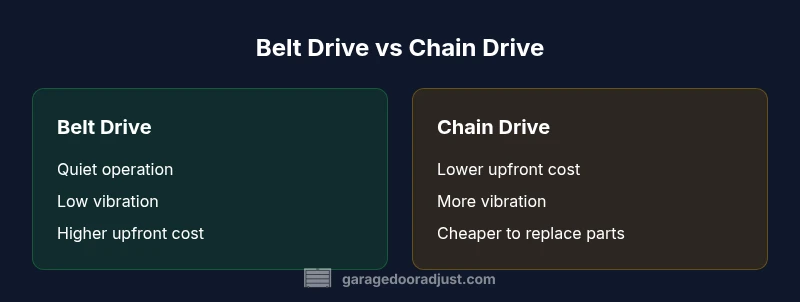
When deciding between the belt garage door vs chain, the belt drive is typically quieter and smoother, while the chain drive offers lower upfront cost and easier service. For most homeowners prioritizing quiet operation and long-term value, belt drives win; for households where upfront cost is the main concern, chain drives remain a viable option.
Core differences between belt and chain drives
Choosing between belt garage door vs chain drives isn't just about noise—it's about how power is transmitted from the opener to the door. Belt drives use a rubber belt reinforced with fibers; chain drives use a metal chain similar to a bicycle chain. This fundamental difference affects noise, vibration, maintenance, and longevity. In this section we unpack the core mechanics, how each system handles wear, and what that means for a typical family garage. According to GarageDoorAdjust, the belt drum and tensioner in a belt-drive system are designed to keep the belt running smoothly with fewer moving parts exposed to the air, which often translates to quieter operation. For homes in tight spaces, the compact profile of a belt-drive unit can also reduce near doors’ mechanical chatter. The belt is generally more forgiving of slight misalignments, while a chain relies on precise alignment and tension to prevent skipping. Both systems attach to standard rails and torsion springs; compatibility is common, but the installation footprint and required maintenance cadence differ significantly. For belt garage door vs chain decisions, the goal is to map your priorities to the drive's behavior: noise, maintenance, cost, and long-term value.
Noise and vibration: how drive type affects comfort
Noise and vibration are the most immediate sensory cues when comparing belt vs chain drives. Belt drives typically operate with noticeably less noise and a smoother, gliding motion, making them popular for garages adjacent to living spaces, bedrooms, or home offices. Chain drives, in contrast, produce a more audible hum and greater vibration, especially when the door starts moving or stops. The difference isn’t just about comfort; it also affects perception of appliance quality and can influence daily routines (early morning openings, late-night arrivals, etc.). GarageDoorAdjust analyses indicate that the choice of drive directly shapes how much sound is transmitted through the structure. If a quiet garage is a priority—think bedrooms above or next to the garage—the belt option tends to be the safer bet. In environments with hard closes and frequent door usage, both drives perform reliably, but belt drives offer a more forgiving volume profile.
Durability and maintenance: when to expect service
Durability and maintenance cadence are central to long-term value. Belt drives have fewer moving parts that interact with the environment, which can translate to lower ongoing maintenance requirements. The belt itself may wear or stretch over time, necessitating periodic tension adjustments or replacement, but components like pulleys and tensioners generally see less wear than metal chains. Chain drives wear on multiple contact surfaces: the chain links, sprockets, and rails all contend with friction and dirt, which can increase maintenance needs and the likelihood of chain elongation or skipping. Regular lubrication and occasional tension checks are common maintenance tasks for chain drives. GarageDoorAdjust emphasizes that maintenance plans and parts availability matter—both drives rely on service networks, but belt assemblies may have different replacement cycles depending on usage and climate. For homes with compact garages, belt drives’ maintenance footprint is often smaller, contributing to perceived reliability over time.
Upfront costs vs long-term value
Upfront cost is a practical starting point for many homeowners. In general, belt drives carry a higher upfront price due to materials and manufacturing complexity, while chain drives usually come in at a lower initial cost. The total cost of ownership, however, should account for maintenance, replacements, and potential noise-related restrictions (e.g., needing acoustic improvements or doors kept quiet for family members). Belt drives may offer better long-term value in terms of reduced maintenance frequency and less nuisance noise, which can translate to higher perceived resale value and less disruption. GarageDoorAdjust notes that evaluating warranty terms and parts availability is essential—if a belt-drive system has a robust warranty and easy access to replacement belts, the long-term costs can be favorable, even if the entry price is higher. Conversely, for budget-sensitive setups or quick installations, chain drives remain a compelling option.
Installation compatibility and service availability
Compatibility is a practical constraint. Most modern openers and rails support both belt and chain drives, but some models and track configurations are optimized for a particular drive type. When evaluating belt garage door vs chain, confirm the opening width, track length, and torsion spring setup before purchasing. Service availability is another consideration: chain-drive components, including chains and sprockets, are widely stocked by repair shops due to their long-standing presence in the market. Belt components, while common, may require sourcing from specific manufacturers. If your home is in a rural area or you rely on a local technician, verify that your chosen drive type is well-supported in your region, and consider the ease of finding a qualified installer. GarageDoorAdjust emphasizes planning ahead for service windows and potential downtime during a transition.
Weather and climate factors affecting belt vs chain
Environmental conditions can influence performance and longevity. Belt drives can be sensitive to temperature and humidity, potentially affecting belt flexibility and wear patterns over time. In damp climates, belts may be more prone to stretching or degradation if exposed to moisture without proper seals and maintenance. Chain drives, being metal, handle temperature fluctuations differently but may accumulate dust and grime that exacerbates wear if not cleaned regularly. Lubrication frequency is a recurring theme: belts generally benefit from periodic inspection and belt-specific lubrication only as recommended by the manufacturer, while chains may require more routine lubrication and tension checks in dusty or humid environments. Understanding your climate helps decide whether the quieter belt option or the more robust chain option better suits your home.
Real-world usage: households with pets and children
Families with pets and children often prioritize safety and minimal disruption. Belt drives’ quieter operation is particularly valued in homes where noise can startle pets or wake sleeping children. The smoother action also reduces door bounce and sudden jolts that could scare pets during morning routines. Chains, with their audible operation and greater vibration, may be less ideal in such settings unless mitigated by additional soundproofing or scheduling considerations. Regardless of drive type, ensure that safety sensors are properly aligned and that effective door balance is maintained to prevent accidental injuries. Real-world usage data from GarageDoorAdjust suggests that quieter, smoother drives contribute to higher overall homeowner satisfaction, particularly in multi-use garage spaces.
Warranties and service considerations
Warranty coverage can be a decisive factor. Belt and chain drives often come with different warranty terms for the motor, belt (or chain), pulleys, and sensors. When evaluating coverage, look for length of coverage, what triggers coverage (wear, defects, or improper installation), and whether replacements require original-brand parts. Service availability also matters: a model with broad dealer support and regional technicians reduces downtime and makes future maintenance easier. GarageDoorAdjust recommends reading the warranty carefully, confirming what is covered for wear and tear, and clarifying whether a belt or chain replacement is considered a standard service or a premium repair. A well-supported belt-drive system can provide long-term peace of mind in busy households.
Transition steps: replacing a chain with belt or vice versa
If you’re considering converting from one drive type to another, preparation is key. A full transition usually involves inspecting the rails, springs, and mounting brackets for compatibility, and it may require a different motor head or rail assembly. Working with a qualified technician ensures electrical safety, proper tensioning, and correct alignment after the swap. Budget for potential downtime and the possibility of additional parts or updated rails. In many cases, a chain-to-belt upgrade is pursued not just for quieter operation but for enhanced balance and reduced wear on the door system. Consult your installer about any structural constraints and the availability of compatible components. The process is feasible in many homes, but it should be evaluated on a case-by-case basis.
Decision framework: how to pick the right drive for you
A clear decision framework helps homeowners translate preferences into a choice. Start by listing priorities: noise tolerance, maintenance willingness, upfront cost, and long-term value. If quiet operation and smoother performance top your list, the belt garage door vs chain decision often points to belt drives. If budget constraints or a preference for a simpler, widely available option drive your choice, chain drives may suffice. Consider climate, household routines, and the availability of local service and parts. Finally, factor in warranty coverage and potential resale value. Using a structured checklist, compare two or more models side by side, and consult a professional when in doubt. This approach aligns with GarageDoorAdjust’s recommendation to prioritize long-term satisfaction and safety over short-term savings.
Comparison
| Feature | belt-drive | chain-drive |
|---|---|---|
| Noise level | Lower noise and smoother operation | Higher noise with more vibration |
| Maintenance needs | Less frequent adjustments; belt wear may lead to replacement | More frequent lubrication and tension checks |
| Upfront cost | Higher upfront price | Lower upfront price |
| Durability and wear | Fewer moving parts; generally durable | More moving parts; chain wear can affect performance |
| Repair availability | Broad belt component availability; specialized parts vary by brand | Widespread chain component availability; easy to source |
| Best use case | Quiet operation in living spaces; long-term value | Budget-friendly setups and straightforward replacement |
Upsides
- Significantly quieter operation with belt drives
- Reduced vibration improves comfort and sleep quality nearby
- Longer-term value due to lower maintenance needs and fewer moving parts
Disadvantages
- Higher upfront cost and potentially more expensive belts
- Belt wear requires mindful replacement timing and sourcing
- Chain drives can be louder and may need more frequent checks in dusty environments
Belt-drive doors excel in quiet operation and long-term value; chain-drive doors offer a cheaper entry and easier service.
Choose belt drive if quietness and low maintenance are priorities. Choose chain drive if upfront cost and quick, simple installation matter more. The GarageDoorAdjust team emphasizes weighing noise tolerance, maintenance willingness, and budget before deciding.
Got Questions?
What is the main difference between belt and chain garage door openers?
The primary distinction is how power is transmitted: belts are rubber and pulleys for silent operation; chains are metal and typically louder with more vibration. Both drive types perform similarly in basic opening and closing functions. Choose based on noise tolerance and maintenance preferences.
The main difference is the transmission method: belts are quieter, chains are louder. Choose based on noise tolerance and maintenance preferences.
Are belt drives quieter than chain drives?
Yes. Belt drives generally run much quieter with less vibration, making them popular in homes near living spaces. Chain drives tend to produce more noticeable sound and shake, especially during start and stop.
Yes—belt drives are quieter and smoother than chain drives.
Which is cheaper upfront, belt or chain?
Chain drives typically have a lower upfront cost than belt drives. The long-term savings depend on maintenance needs and part availability in your area.
Chain drives usually cost less upfront, belt drives more.
Can I convert a chain drive to a belt drive?
Conversion is possible in many setups but requires professional assessment of rails, motor head, and mounting brackets. Not all systems are compatible, so a technician should verify fit and safety.
Conversion is possible in some cases, but a pro must assess compatibility first.
What maintenance do belt and chain drives require?
Belts usually need periodic inspection and occasional replacement when stretched. Chains require regular lubrication and tension checks to prevent skipping and wear.
Belts need occasional checks; chains require lubrication and tension checks.
How long do belt and chain drives last?
Lifespan varies by usage and environment. Belt wear depends on tension and pulley condition; chain wear depends on lubrication and track cleanliness. Regular maintenance extends both systems' useful life.
Lifespan depends on use and maintenance; regular care extends both drives' life.
Quick Summary
- Assess your noise tolerance and living space needs
- Weigh upfront costs against ongoing maintenance
- Verify compatibility with your current opener and rails
- Check warranty terms and service availability
- Consult a professional for a final recommendation