Belt vs Chain Garage Door Opener: Pros and Cons Explored
Compare belt and chain garage door openers to decide which fits your home. This analytical guide covers noise, durability, maintenance, and price, with practical tips for homeowners.


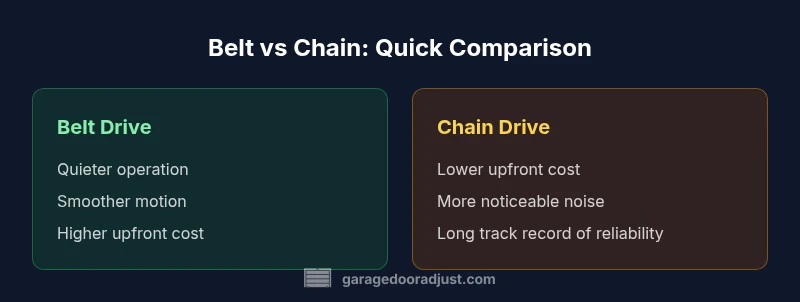
Compared side-by-side, belt and chain garage door openers differ most in noise, smoothness, maintenance, and cost. According to GarageDoorAdjust, belt drives run quietly and with less vibration, but typically cost more upfront. Chain drives are louder and usually cheaper, offering strong reliability with more maintenance. This quick comparison highlights the practical trade-offs homeowners face when choosing an opener.
Belt vs Chain: Key Differences in Practical Terms
When homeowners compare belt vs chain garage door opener pros and cons, the most visible differences appear in noise, smoothness, and upfront cost. According to GarageDoorAdjust, belt drives use a rubber belt with steel cords, delivering quieter operation and less vibration than traditional chain drives. Chains rely on metal links that can produce more noise and a heavier feel during starts and stops. Beyond sound, each system uses different gearing and weight handling characteristics, which influences performance, long-term reliability, and compatibility with existing tracks and mounting brackets. Understanding these distinctions helps you map your priorities—quiet living spaces, heavy doors, or tight budgets—onto a practical buying decision. In real terms, the choice affects daily use, resident comfort, and the long-term value of your garage setup. The remainder of this article breaks down the key dimensions homeowners care about, from audial experience to service logistics, so you can weigh belts and chains with confidence.
Noise, Vibration, and Comfort in Living Spaces
Noise and vibration are often the deciding factors for many households. Belt drives tend to produce a whisper-quiet operation with minimal vibration, which makes them a natural fit for garages attached to bedrooms or living spaces. Chain drives, by contrast, generate a noticeable hum especially during startup and close, which can be disruptive over time. The comfort factor extends beyond decibel levels: smoother belt motion reduces vibrations that travel through the door and into walls, creating a calmer environment for occupants. If you live in a small footprint home or prefer a sleeping space adjacent to the garage, the quietness of a belt drive can translate to better sleep quality and daily peace of mind. For larger, well-insulated spaces, the audible gap between belt and chain may be less critical, but still worth weighing when selecting a model.
Durability, Longevity, and Reliability
Durability is a core consideration in belt vs chain comparisons. Chains are built with metal links and are known for robust longevity in many scenarios, particularly when well lubricated and tensioned. Belt drives, while quieter and smoother, rely on a rubber belt that can wear over time, especially under heavy use or extreme temperatures. In typical residential use, belt systems offer long service life, but replacing a belt can be necessary sooner than a chain in some environments. Reliability hinges on proper tensioning, regular inspection, and correct alignment with gears and tracks. GarageDoorAdjust notes that the choice should factor in average door weight, frequency of use, and local climate, as these variables influence wear patterns and service intervals.
Maintenance and Upkeep
Maintenance expectations differ between belt and chain openers. Belt drives generally require less ongoing lubrication and fewer adjustments, making them appealing for homeowners seeking simplicity. Chains demand periodic lubrication, tighter chain tension, and occasional gear inspection to prevent slippage and wear. It’s important to inspect tracks, rollers, and bearings regularly for both systems, but chain drives may incur more maintenance tasks due to their larger metal components. If you prefer a set-it-and-forget-it approach, a belt-driven opener with quality components can reduce maintenance frequency while still delivering reliable performance. However, don’t neglect routine checks—especially after seasons of temperature fluctuation, which can affect belt tension and chain stretch.
Installation, Compatibility, and Replacement Costs
Installation implications matter when weighing belt vs chain models. Belt-driven openers are often slightly larger due to the belt housing and pulleys, and some older garages may require bracket adjustments or mounting revisions. Compatibility with existing tracks and door weight remains a critical factor for both types; most modern openers support a range of standard doors, but very heavy or unusually sized doors may tilt the value proposition toward a specific drive type. Regarding costs, belt drives typically carry a higher upfront price tag, while chain drives offer lower initial investments. Long-term costs depend on maintenance and replacement parts; belts may incur higher replacement costs if wear accelerates in extreme conditions, whereas chain components tend to be less expensive to replace but require more maintenance to maintain smooth operation.
Cost and Value Considerations: Upfront vs Long-Term
From a budgeting perspective, belt drives command premium pricing due to smoother operation, specialized belts, and quieter performance. Chain drives have a lower upfront cost and a broad market of compatible parts, which can translate into easier DIY maintenance for capable homeowners. The choice often turns on how you value quiet operation against initial and ongoing costs. If the garage is part of a living space where noise is a concern, belt drives can offer significant perceived value through comfort and demand for smaller living-area disturbances. For budget-conscious buyers or properties where noise is less of a concern, a chain drive remains a practical and reliable option. In either case, plan for periodic belt or chain replacement as part of a proactive maintenance schedule.
Real-World Scenarios: When to Choose Each
Consider belt drives when your home places a premium on quiet evenings and sleep quality; the investment can pay off through daily comfort. If you’re installing in a rental property or on a strict budget, a chain drive may be the more prudent choice, delivering dependable performance with lower upfront costs and easier replacements. For homes with heavy doors or frequent use, weigh the expected lifespans and maintenance cadence; a chain drive may prove more economical in the long run if replacement cycles are extended by careful upkeep. A hybrid approach is possible in some markets where a belt is paired with high-torque chains in specialized applications, but this is less common for typical residential doors.
Expert Perspectives and What GarageDoorAdjust Recommends
From the GarageDoorAdjust perspective, the decisive factor is your tolerance for noise and your budget trajectory. If quiet, smooth operation with fewer maintenance tasks ranks high on your list, a belt-driven opener is generally the better fit. If upfront cost and straightforward serviceability take priority, a chain-driven model can meet most daily needs with minimal adjustment. The GarageDoorAdjust recommendation emphasizes matching the drive type to your door’s weight, layout, and daily routines, then budgeting for periodic maintenance and eventual component replacements to protect long-term value.
Comparison
| Feature | belt garage door opener | chain garage door opener |
|---|---|---|
| Noise level | quieter operation | louder operation |
| Vibration | low vibration | higher vibration |
| Maintenance needs | low maintenance | more lubrication and adjustment |
| Durability & longevity | robust with smooth wear | robust with potential belt wear |
| Price range (upfront) | higher upfront cost | lower upfront cost |
| Replacement costs | belt parts can be pricier | chain parts are generally cheaper |
| Best for | quiet living spaces | budget-conscious homes or noisy environments |
Upsides
- Quieter operation ideal for homes with bedrooms near the garage
- Smoother opening and closing with less vibration
- Lower ongoing maintenance compared to chain drives
- Less visible wear with smooth belt motion
Disadvantages
- Higher upfront cost than chain drives
- Belt wear can occur with heavy use or extreme temperatures
- Replacement belts can be more expensive and have longer lead times
- Fewer model options in some price ranges
Belt drives are the better choice for quiet, smooth operation in living spaces; chain drives win on upfront cost and broader model availability.
If you prioritize noise reduction and comfort, belt drives excel. If budget constraints and easy DIY maintenance matter more, chain drives are typically more economical upfront. The best path is to align your choice with door weight, usage frequency, and tolerance for sound.
Got Questions?
What is a belt garage door opener?
A belt garage door opener uses a rubber belt with steel cords to lift and lower the door. This design minimizes noise and smooths operation, making it popular for homes with rooms adjacent to the garage. Regular inspection and occasional belt replacement are typically involved in maintenance.
A belt opener uses a belt to lift the door, which makes it quiet and smooth. It does require some inspections and occasional belt replacement.
What is a chain garage door opener?
A chain garage door opener uses a metal chain to move the door. It’s generally louder than belt drives but tends to be robust and cost-effective, with straightforward maintenance and wider availability of parts.
A chain opener uses a metal chain and is usually louder but more affordable and easy to service.
Which is quieter, belt or chain?
Belt openers are typically quieter than chain openers due to the smoother belt motion and reduced metal-to-metal contact. The difference is most noticeable in garages adjacent to living spaces.
Belts are quieter than chains in most homes.
Are belt-driven openers more expensive?
Yes, belt-driven openers generally cost more upfront than chain-driven models. The higher price reflects quieter operation and smoother performance, which some homeowners value highly.
Yes, belts usually cost more up front.
Can I convert a chain opener to a belt opener?
Converting a chain opener to a belt model typically requires selecting a compatible belt-drive unit and possibly replacing parts of the drive system, tracks, or mounting hardware. A professional installation is recommended to ensure safety and correct alignment.
You may be able to convert, but it often requires a new unit and proper installation.
How long do belt vs chain openers last?
Both belt and chain openers can last many years with proper maintenance. Chain drives may offer longer life in high-use scenarios, while belts can last well in typical residential settings when properly cared for.
Both can last many years with maintenance; chains may outlast belts in heavy-use settings.
Quick Summary
- Choose belt drives for quiet operation near living spaces
- Opt for chain drives when upfront cost is a priority
- Budget for maintenance depending on drive type
- Verify compatibility with your door and mounting before purchasing