Garage Door and Motor Replacement Cost: A Side-by-Side Guide
Compare garage door and motor replacement costs, including materials, labor, and permits. Learn cost ranges, material choices, and budgeting tips for homeowners with GarageDoorAdjust guidance.


Replacing a garage door and opener is a mid-to-high-cost project driven by door material, insulation, and opener model. DIY options are cheapest, while professional replacement provides safety and reliability. Expect a broad cost range and consider long-term energy savings and maintenance. Labor and parts typically form the largest share of the total.
What drives garage door and motor replacement cost
Understanding the total cost of a project as practical as a garage door and motor replacement begins with recognizing the key cost drivers. The price tag is not just the sticker price of the door or the opener; it reflects the full package, including installation, hardware, safety features, and regional labor rates. According to GarageDoorAdjust, the overall cost is heavily influenced by the door material (steel, aluminum, wood, or composite), the level of insulation (which affects energy use and humidity control), and the horsepower/smart features of the opener. The GarageDoorAdjust team found that site-specific factors—garage width, ceiling height, and workspace access—also push the price up or down. Other line items to plan for include removing the old door, disposing of it, potential permits, and any required upgrades to safety components such as sensors and emergency release systems. In short, the keyword garage door and motor replacement cost manifests across material choices, installation complexity, and long-term operating costs, so plan for a broad range and align your choice with priorities for security, energy efficiency, and curb appeal.
WithinParagraphNote":null}
Typical cost components you’ll encounter
A well-structured budget for garage door and motor replacement cost breaks into four major areas: (1) the door and frame, (2) the opener/motor and control system, (3) labor and installation, and (4) ancillary items such as disposal, permits, and safety upgrades. Door costs vary by material and insulation level; steel doors are typically the least expensive, while insulated, composite, or wood doors cost more but offer enhanced energy efficiency and aesthetics. Opener pricing depends on drive type—belt, chain, or direct-drive—and on features like smart connectivity and backup power. Labor covers removal of the existing door, alignment of tracks, weather sealing, sensor calibration, and remotes programming. Permits and disposal fees can add modest charges, especially in urban areas. GarageDoorAdjust Analysis, 2026 shows that the relative weight of labor and parts often dominates the total, with regional labor rates producing noticeable variation across the country.
BestFor":null}
Material choices and their cost impact
Material selection has a symmetrical effect on both the upfront price and the long-term operating costs of a garage door and motor replacement cost. Steel doors are typically the most affordable option, offering durability and low maintenance. Aluminum doors provide a lighter option with good corrosion resistance but can ding more easily. Wood doors deliver classic aesthetics but require more maintenance and higher insulation costs. Composite doors blend some of the benefits of wood and steel with improved durability. Insulation adds to the price but substantially reduces energy loss, making it worthwhile in climates with extreme temperatures. When evaluating price and performance, consider R-value and seal quality, as these influence both comfort and energy bills over time.
BestFor":null}
Opener options and their effect on price
Choosing the right opener affects both cost and performance. Chain-drive openers are usually the most affordable but louder. Belt-drive models are quieter and smoother, typically costing more upfront. Direct-drive openers offer high reliability but at a premium. Smart openers with Wi-Fi, scheduling, and battery backups increase the garage door and motor replacement cost but can provide convenience and improved security. The motor’s horsepower matters: larger, heavier doors require more powerful openers, which raises the price. When budgeting, factor in installation complexity and compatibility with existing tracks and rails.
BestFor":null}
Labor costs, installation time, and regional variation
Labor is a substantial portion of the total garage door and motor replacement cost. Regional wage differences, travel time for technicians, and access challenges (such as a tight driveway or limited garage access) influence quotes. Typical installation time ranges from a few hours for a straightforward opener replacement to half a day or more for a full door and frame replacement with insulation and smart features. In areas with higher living costs or a shortage of skilled installers, labor can represent a larger share of the total. Always request a breakdown to see how much labor adds to the door, opener, and any extra features.
BestFor":null}
DIY vs professional replacement: risks, timelines, and value
A DIY replacement can reduce material costs but increases the risk of improper alignment, mislaid safety features, and warranty voidance. For most homeowners, especially those with large or insulated doors, a professional installation ensures safety and consistent performance and protects warranty coverage. The decision often hinges on your comfort with tools, the complexity of the door system, and the potential long-term savings from correct installation. If you pursue DIY, isolate parts you can realistically handle (e.g., replacing a faulty opener button) and leave structural work to a pro.
BestFor":null}
Permits, warranties, and insurance considerations
Permits, when required, add to the upfront cost and timeline but ensure code compliance, especially for new doors with enhanced safety features. Warranties vary by manufacturer and installer; most door and opener packages include manufacturer warranties for parts, while labor warranties depend on the installer. Review what is covered and for how long, and confirm whether any exclusive installers or contractors must be used to maintain warranty eligibility. Insurance considerations are generally limited, but documenting replacement can help with future claims in the event of weather-related damage.
BestFor":null}
Budgeting for the project: planning tips and typical ranges
Budget planning for garage door and motor replacement cost benefits from a phased approach. Start with a needs assessment: door durability, insulation, and opener functionality. Gather multiple quotes to compare not just price but scope of work. Typical ranges (illustrative only) for full door + motor replacement can span a broad spectrum depending on material and features; expect higher costs for premium materials and smart hardware. The goal is to select a combination that balances upfront costs with long-term savings on energy, maintenance, and reliability.
BestFor":null}
Maintenance after replacement to extend life
Post-replacement maintenance is critical to preserving performance and extending the replacement’s lifespan. Regularly lubricate tracks and rollers with manufacturer-approved lubricants, inspect weather seals, tighten mounting hardware, and replace worn weather-stripping promptly. Test safety features monthly and schedule annual professional tune-ups to adjust balance, alignment, and sensor calibration. Proactive maintenance helps maximize your investment and reduces the likelihood of unexpected failures that drive up overall garage door and motor replacement cost.
BestFor":null}
Common mistakes that raise costs or reduce value
Common cost pitfalls include selecting the cheapest door without considering insulation or warranty, delaying routine maintenance, and ignoring the importance of professional installation. Skipping permits or failing to budget for disposal and old-door removal can pop up as surprise charges. Overlooking compatibility between the door, opener, and existing framing often leads to longer installation times and added labor costs. Start with a clear scope and verify all components and workmanship are aligned with your goals.
BestFor":null}
Financing options and how to evaluate quotes
Financing options can smooth the upfront hit of garage door and motor replacement cost. Explore manufacturer promotions, home equity loans, or contractor financing, and compare interest rates, terms, and total costs. When evaluating quotes, prioritize a transparent line-item breakdown, warranty terms, and clear timelines. A well-structured quote helps you assess value rather than chasing the lowest price, which can compromise quality and longevity.
BestFor":null}
Final decision framework: which option is best for you?
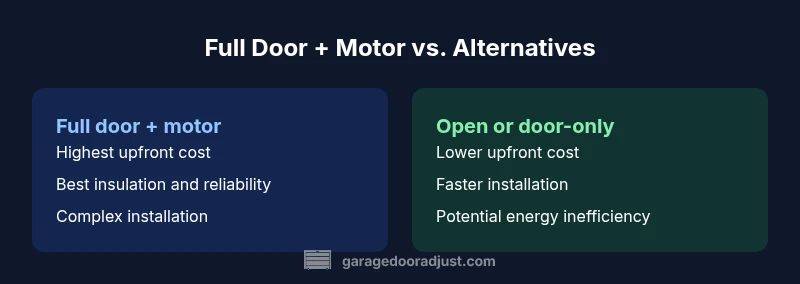
Use a practical decision framework: assess door condition, insulation goals, opener reliability, and budget. If the door and frame are structurally sound but the opener is failing, an opener replacement might suffice. If insulation is a priority or the door shows wear, a full door + motor replacement offers the best long-term value. Always compare quotes side-by-side and align the choice with your home’s energy goals, maintenance tolerance, and safety expectations. The GarageDoorAdjust team recommends a holistic view over a single-factor decision.
Feature Comparison
| Feature | Full door + motor replacement | Door-only replacement | Opener-only replacement | Repair and maintenance |
|---|---|---|---|---|
| Cost range | $1,200–$4,800 | $500–$2,500 | $250–$1,500 | $100–$800 |
| Best for | Maximized performance and insulation | Existing door in good condition | Budget upgrade focusing on opener features | Small fixes and preventive maintenance |
| Typical install time (hours) | 6–10 | 4–8 | 2–4 | 1–3 |
| Energy efficiency impact | High | Moderate | Low | Low |
| Warranty coverage | 3–7 years | 1–5 years | 1–3 years | No |
Upsides
- Improved reliability and security
- Potential energy savings with insulated doors
- Increases home value and curb appeal
- Flexible options to fit budgets
Disadvantages
- High upfront cost and potential hidden expenses
- Longer installation downtime
- Requires professional installation for warranty validity
Full replacement generally offers the best long-term value for most homeowners.
For homes with aging doors or poor insulation, a full door + motor replacement improves reliability and energy efficiency. If your current door is sound and the opener is reliable, a targeted replacement can save money. The GarageDoorAdjust team recommends evaluating overall condition and budget before deciding.
Got Questions?
What factors influence the garage door and motor replacement cost?
Several variables drive the total cost, including door material, insulation level, opener type and features, installation complexity, and regional labor rates. Safety upgrades and disposal can add to the bill. Understanding each element helps you build a more accurate budget.
Key factors include door material, insulation, opener features, and local labor costs.
Is it cheaper to replace the door, the opener, or both?
Replacing only what you need can lower upfront costs, but the best long-term value often comes from pairing a solid door with a reliable opener. If the door is worn or poorly insulated, upgrading the door may save on energy bills and maintenance in the long run.
It depends on the door and opener condition; sometimes replacing both is more cost-efficient long-term.
Do you need permits for replacement?
Permit requirements vary by locality. Some areas require permits for structural changes or safety upgrades, while others do not. Check with your local building department before scheduling work to avoid delays or penalties.
Check your city or county building department to confirm permit needs.
How long does installation typically take?
A straightforward opener replacement can take a few hours, while a full door replacement may require a half-day or more. Complex installations or custom doors can extend timelines.
Most projects finish within a day, but some take longer if there are complications.
What warranties apply to replacements?
Most parts carry manufacturer warranties; labor warranties vary by installer. Always review what is covered, the duration, and whether subcontractors affect warranty eligibility.
Check both parts and labor coverage to know what’s protected.
Should I get multiple quotes?
Yes. Compare scope of work, included components, and warranty terms across several contractors. A detailed quote helps you spot hidden costs and choose the best value.
Get multiple bids to compare price, scope, and warranty.
Quick Summary
- Assess door and opener health before budgeting
- Compare total costs, not just sticker price
- Choose material and insulation to maximize energy savings
- Budget for labor, disposal, and permits
- Plan for maintenance to extend replacement lifespan