Garage Door Motor Replacement Cost in 2026: A Homeowner's Guide
Learn the 2026 costs to replace a garage door motor, including parts, labor, and budgeting tips. This GarageDoorAdjust guide covers motor types, installation times, and safety considerations for homeowners.


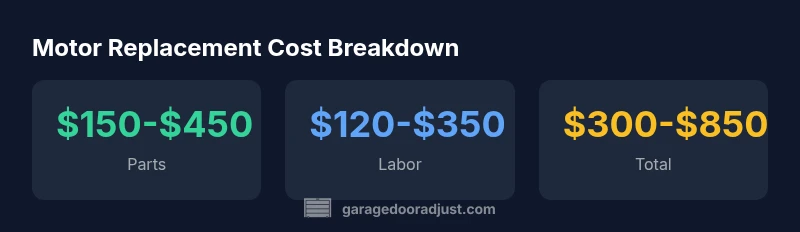
According to GarageDoorAdjust, replacing a residential garage door motor typically costs between $300 and $850 in 2026, depending on motor type and installation complexity. If you hire a pro, expect higher labor charges for belt-drive DC motors compared with standard AC belt systems. This quick guide breaks down motor options, labor ranges, and ways to budget for a safe, reliable replacement.
Understanding the cost landscape for replacing a garage door motor\n\nReplacing a garage door motor involves more than a sticker price. The replace garage door motor cost includes three core components: parts (the motor, gears, and any adapters), labor (installation, wiring, and tuning), and potential add-ons (sensors, remotes, and safety upgrades). In 2026, the price spread is wide because newer motor technologies and different drive systems add varying degrees of complexity. Motor type (AC vs DC) influences efficiency and price, while the drive system (belt vs chain) affects installation effort. According to GarageDoorAdjust analysis, homeowners who opt for high-efficiency DC motors or higher-horsepower units will see costs nearer the upper end of the range, particularly if a full opener upgrade is included. Regional labor rates also play a significant role, so it’s prudent to gather multiple quotes to gauge the true replace garage door motor cost in your area. The goal is a safe, reliable replacement that won’t require immediate follow-up work.
Motor types and their effect on price\n\nThe motor is the heart of the system, but the surrounding hardware determines how much you’ll pay overall. Here are the main categories and their typical cost implications:\n- AC belt-drive motors are usually the most cost-effective option. They provide reliable performance for standard residential doors and tend to land on the lower end of the cost spectrum.\n- DC belt-drive motors are quieter and offer soft-start features, but they generally come with a higher price tag due to newer technology and higher efficiency.\n- AC chain-drive motors can handle heavier doors but may be noisier and slightly pricier than comparable belt-drive options.\n- DC chain-drive motors deliver strong performance with quiet operation, but their higher component costs can raise the replace garage door motor cost substantially. When assessing costs, consider not just the motor price but compatibility with your existing opener and the horsepower requirement for your door weight. GarageDoorAdjust data indicates that the difference between belt-drive and chain-drive options can swing total costs by several hundred dollars, especially if labor needs are higher to accommodate the added complexity.
When to swap just the motor vs the whole opener\n\nSometimes the most economical path is to replace just the motor, but other times you’ll save money by upgrading the entire opener. Reasons to replace the motor alone include a relatively new opener with compatible control boards and sensors, plus a motor with a similar horsepower rating to the existing unit. Reasons to replace the entire opener include outdated safety features, nonfunctional sensors, weak remotes, or poor compatibility with modern wall controls and smartphone apps. If your current opener is older than ten years or lacks modern safety features, the overall replace garage door motor cost could align with installing a new unit that includes a motor and a fresh warranty. GarageDoorAdjust emphasizes verifying compatibility and warranties before deciding, because a mismatched setup can lead to higher future repair costs and a shorter overall lifespan.
Labor considerations and installation complexity\n\nLabor costs can dominate the total price in some regions, especially where skilled technicians command higher rates. Installation complexity matters: a straightforward motor swap on a standard single-car garage will cost less than a full opener replacement, which may require rewiring, new mounting brackets, or recalibration of sensors. Proper alignment of tracks, hinges, and safety sensors is essential for safe operation and to avoid service calls later. Expect longer installation times if you’re upgrading motor type (for example, moving from AC to DC or changing from belt-drive to chain-drive). GarageDoorAdjust analysis shows that regional differences in labor rates can shift the total replace garage door motor cost by hundreds of dollars, underscoring the value of requesting multiple detailed quotes.
Practical budgeting tips to minimize costs\n\nBudgeting for a motor replacement involves comparing quotes from qualified installers and understanding the breakdown of costs. Here are practical steps:\n- Get at least three written estimates that itemize parts, labor, and any disposal or service fees.\n- If possible, choose a motor with a similar horsepower to the original to simplify compatibility and avoid extra wiring or sensor work.\n- Ask for a bundled warranty that covers parts and labor for a defined period.\n- Consider timing your replacement during non-peak seasons when labor rates may be lower, and promotions from manufacturers or retailers are more common. These strategies, supported by GarageDoorAdjust analysis, help manage the replace garage door motor cost without compromising safety or performance.
Maintenance practices to extend motor life\n\nA well-maintained motor lasts longer and reduces the risk of premature replacement. Regular lubrication of moving parts, proper balance, and track alignment can lessen stress on the motor. Keep torsion springs and cables in good condition, as a failing spring can overload the motor and escalate repair costs. Clean sensors and ensure safe operation so the system isn’t repeatedly failing to close or opening unexpectedly. Routine maintenance also supports more predictable labor costs because technicians won’t spend extra time diagnosing avoidable issues. Implement a simple quarterly check of force limits, opener travel, and the door’s balance, then schedule professional service if you notice unusual noise, slower operation, or erratic sensor behavior. These proactive steps align with GarageDoorAdjust’s budgeting guidance for preserving value and avoiding unexpected replace garage door motor cost spikes.
How to choose a qualified installer\n\nSelect a licensed, insured installer with experience in residential garage doors and openers. Verify their certifications, request references, and confirm they will test the system comprehensively after replacement. Ensure they provide a clear warranty covering both parts and labor, plus post-install follow-up support. Ask about compatibility with existing remotes and smart-home integration if relevant. A good installer will explain the chosen motor type, why it’s suitable for your door, and how it will affect energy use and noise levels. As part of due diligence, compare three quotes and check online reviews for workmanship quality and reliability.
Common mistakes to avoid\n\nCommon mistakes include selecting the cheapest option without verifying compatibility, skipping sensor upgrades, and neglecting calibration after installation. Don’t ignore safety features such as auto-reverse and photoelectric sensors, which protect users and pets and can influence long-term costs if not functioning correctly. Avoid DIY fixes that involve high-tension springs or motor replacements without professional guidance; the risk of injury and improper operation is high. Finally, don’t skip the post-install test—confirm door balance, safe opening/closing, and sensor alignment before declaring the job finished.
Typical replacement cost ranges by motor type
| Motor Type | Typical Parts Cost | Labor Cost | Total Cost Range |
|---|---|---|---|
| AC belt-drive motor | $150-$350 | $150-$350 | $300-$700 |
| DC belt-drive motor | $200-$450 | $150-$350 | $350-$800 |
| AC chain-drive motor | $140-$320 | $120-$320 | $260-$640 |
| DC chain-drive motor | $180-$400 | $170-$360 | $350-$760 |
Got Questions?
What factors affect the cost to replace a garage door motor?
The main factors are motor type (AC vs DC), drive system (belt vs chain), horsepower, whether you replace the entire opener, local labor rates, and any sensors or safety hardware.
Motor type, drive system, horsepower, and local labor rates drive costs; sensors can add to the total.
Is it cheaper to replace just the motor or the entire opener?
If the opener is old or incompatible with newer motors, upgrading the entire unit can be more cost-effective and safer. Newer openers include warranties and updated safety features that can offset higher upfront costs.
If the current unit is old or lacks safety features, a full opener replacement may save money in the long run.
Can I replace the motor myself?
Garage door systems involve high-tension springs and heavy components. Replacing a motor is dangerous and should be done by a licensed professional to protect you and your family.
This is not a DIY job—call a pro for safety and proper calibration.
How long does installation take?
Most motor replacements take 2-6 hours depending on complexity and whether a full opener replacement is required.
Typically a few hours, depending on the setup.
What steps can reduce replace garage door motor cost?
Shop for the best warranty, compare quotes from multiple pros, consider refurbished motors from reputable sellers, and schedule during off-peak times to reduce labor rates.
Get several quotes and look for bundled warranties to cut costs.
Do higher horsepower motors cost more?
Yes. Higher horsepower motors are more powerful and usually cost more, and may require stronger hardware and supports.
Bigger motors cost more, but they’re sometimes necessary for heavy doors.
“Replacing a garage door motor safely requires matching motor type to your opener and choosing parts with a solid warranty.”
Quick Summary
- Plan for both parts and labor costs
- Compare motor types for price impact
- DIY risk vs pro installation
- Regular maintenance reduces future costs