How Much Does Garage Door Opener Installation Cost in 2026? A Homeowner’s Guide
Discover the true cost of garage door opener installation in 2026, with breakdowns by opener type, labor, permits, and add-ons. Plan your project confidently with a full cost guide from GarageDoorAdjust.


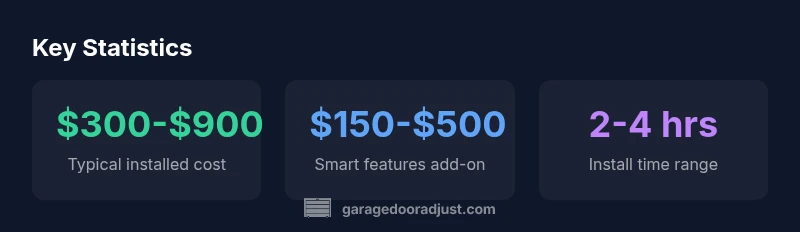
On average, installing a residential garage door opener costs between $300 and $900, including parts and labor. Higher-end models with battery backup and smart features can push total toward $1,200, while basic, chain-drive units may land near $300-$500. A professional installation typically includes safety testing and calibration. Most homeowners also factor in permit or inspection costs, which can vary by location.
Understanding the cost components
When homeowners ask how much does garage door opener installation cost, the answer depends on several interacting factors. The base price includes a new opener unit, mounting hardware, a rail or belt assembly, track hardware, wiring connections, safety sensors, and the labor to install both the opener and the track system. The most significant drivers are opener type (belt-drive, chain-drive, or screw-drive), horsepower (1/2 to 1-1/2 HP), and the presence of smart features or battery backups. Local wage levels and permit requirements also shape the final bill. In 2026, GarageDoorAdjust analysis shows the typical total installed cost ranges from roughly $300 to $900 for standard installations, with higher-end or feature-rich models sometimes approaching $1,200. It’s essential to distinguish between the purchase price of the unit and the professional installation fee, which can be a sizable share of the total. Budget buffers for unforeseen electrical wiring work or wall reinforcement are common. In this section we’ll break down the cost into parts and explain how each factor nudges the total higher or lower. The GarageDoorAdjust team found that the biggest swings occur when adding smart features, battery backups, or requiring electrical rewiring.
Regional price variation and what drives it
Regional variation is a real driver of garage door opener installation cost. Labor rates and permit fees differ widely from city to city, and urban areas with higher wages typically see larger labor components. In contrast, rural areas may offer lower labor costs but higher travel charges. Permit requirements can add $50 to $200 or more depending on the locality, and some regions require inspections that add to the timeline and cost. Weather and structural considerations (like ceiling height or existing header support) can force extra mounting hardware or electrical work, driving costs up. For budgeting, obtain three written quotes and ensure each includes a line-item breakdown for unit price, labor, permit, disposal of the old opener, and any electrical work. GarageDoorAdjust analysis shows the baseline cost range holding steady around $300-$900 nationwide, but projects with new wiring or load-bearing adjustments can tip higher.
Labor vs. materials: what's included in the price
The price for garage door opener installation is a mix of labor and materials. Materials include the opener unit, rail or belt system, tracks, sensors, mounting brackets, and safety features. Labor covers the technician’s time to install and calibrate the unit, thread wiring, mount the rail, align sensors, test the safety features, and program remotes. Some installers charge separately for disposal of the old unit, wall reinforcement, or upgrading wiring to support smart features. Electrical work can sometimes trigger a permit and inspection, adding to the overall cost. By itemizing labor and parts, homeowners can better compare bids and avoid hidden charges. The goal is reliable operation, proper safety sensor alignment, and a balanced warranty period.
Choosing the right opener: features that affect cost
Not all openers cost the same. Belt-drive models tend to run quietly and smoothly but can be pricier than chain-drive units. Screw-drive openers offer fast operation and robust performance, often at a mid-to-high price. Key features that influence cost include horsepower (1/2 to 1-1/2 HP), drive type, battery backup, Wi‑Fi/smart-home integration, rolling code remotes, and added security sensors. Higher horsepower can be beneficial for heavy or high-traffic doors, but it adds cost. Battery backup is popular for power outages but adds to the price. Smart features enhance convenience and resale value but should be weighed against overall budget.
Budgeting with add-ons and warranties
Add-ons drive final costs. Battery backups, smart connectivity, incorporated security features, and premium remote kits add to the sticker price. Warranties vary by brand and installer; many basic packages include a one-year labor warranty and a parts warranty of several years. When budgeting, consider long-term maintenance costs and the cost of replacing batteries or remotes over time. Some installers offer bundled service plans that cover periodic maintenance, sensor recalibration, and annual tune-ups, which can save money over the life of the system.
DIY considerations and when to hire a pro
Garage door opener installation involves significant safety risks, particularly with high-tension springs and heavy components. Improper installation can lead to door malfunctions, sensor misalignment, or injuries. Local codes may require electrical work to be performed by a licensed professional. For most homeowners, hiring a pro ensures correct mounting, proper sensor alignment, safe wiring, and a compliant setup. If you’re considering DIY, be sure you understand door balance, spring tension, and safety protocols; otherwise, the risk of property damage and personal harm outweighs potential savings.
Step-by-step cost estimation worksheet
- List desired opener type (belt, chain, or screw) and horsepower. 2) Add desired features (battery backup, Wi‑Fi, smart features). 3) Check local permit costs and any electrical work needs. 4) Get three written bids with itemized costs. 5) Add a contingency of 10–15% for unexpected electrical or structural work. 6) Compare total cost, warranty length, and service inclusions. Use this worksheet to estimate the total investment and plan for maintenance expenses over time.
Cost ranges by opener type (GarageDoorAdjust Analysis, 2026)
| Opener Type | Typical Installed Cost Range | Key Features | Notes |
|---|---|---|---|
| Belt-drive | $350-$1,000 | Quiet operation, smooth start | Popular choice with balanced cost |
| Chain-drive | $300-$900 | Most affordable, louder operation | Reliable and common |
| Screw-drive | $450-$1,200 | Fast installation, very quiet | Higher end model for busy garages |
Got Questions?
What is the typical installed cost for a basic garage door opener?
Most basic installations fall in the $300-$900 range, depending on opener type and local labor rates. Higher-end features can push the total higher.
Most basic installs cost between three hundred and nine hundred dollars, with higher-end options increasing the total.
Do prices include labor and disposal of the old unit?
Yes, most quotes include labor and removal of the old opener, but always confirm the line items with your contractor before signing.
Yes, labor and old unit disposal are typically included, but verify the details in the bid.
Are permits required for garage door opener installation?
Permit requirements vary by city. Some installations trigger an electrical permit or inspection, adding time and cost.
Permits depend on your city; check with your installer and local building department.
Can I install a garage door opener myself to save money?
DIY installation is generally not recommended due to safety and liability concerns. Professional installation ensures proper sensor alignment and safety.
We don’t recommend DIY for safety reasons; professional installation is the safer choice.
What features add to the cost besides installation?
Battery backups, smart connectivity, Wi-Fi, and advanced safety sensors increase the price but offer convenience and resilience.
Extras like battery backups and smart features raise the cost but add convenience and resilience.
“A well-chosen opener with proper installation reduces safety risks and minimizes future maintenance costs.”
Quick Summary
- Budget labor as a major expense
- Expect regional variation in quotes
- Factor in add-ons for long-term value
- Obtain itemized, written bids