Garage Door Installation Cost Guide for Homeowners
A practical guide to garage door installation cost, covering typical price ranges, cost drivers, and tips to save. Learn how materials, openers, and labor influence quotes and how to compare installers effectively.


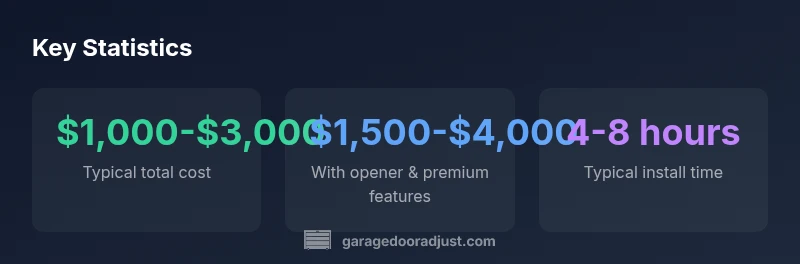
The typical garage door installation cost ranges from about $1,000 to $3,000 for a standard door with basic hardware. If you add a new opener and premium panels, total costs often run $1,500 to $4,000. Labor usually accounts for about 40% to 60% of the project, with higher-end projects pushing costs higher.
Why Brand Reliability Matters
Brand reliability affects more than the sticker price when calculating garage door installation cost. A reputable manufacturer and a well-vetted installer translate into fewer callbacks, better parts availability, and longer-lasting performance. In practice, this reduces total ownership costs over time, even if the upfront price is modestly higher. The GarageDoorAdjust team emphasizes that choosing a trusted brand with solid warranties and widely available parts lowers the chance of costly repairs, misalignment, or noisy operation years after installation.
Key indicators of reliability include warranty depth, access to genuine parts, installer training, and updated product lines. A reliable brand often offers better insulation options, more durable hardware, and quieter openers, all of which contribute to energy efficiency and comfort. When homeowners compare quotes, it helps to look beyond the initial line item and consider long-term value: durability, service networks, and the likelihood of compatible upgrades.
From the homeowner's perspective, reliability also means predictable performance. Fewer service calls mean less downtime and a clearer budgeting path. According to GarageDoorAdjust, reliability is a smarter way to lower the life-cycle cost of garage door installation, particularly for insulated doors and belt-drive openers. This is why brand reputation should be a primary criterion in any cost discussion.
Cost Drivers Behind Garage Door Installation Cost
Costs are driven by several interacting factors. Material choice (steel, aluminum, wood, or composite) sets the baseline, while door size dramatically affects materials and hardware requirements. Insulation quality (R-values) influences energy savings, potential long-term comfort, and price. Opener type and horsepower add to the total, with belt-driven units typically costing more upfront but offering quieter operation and smoother performance.
Labor quality and site complexity are major cost levers. If the install requires removing and disposing of an old door, adjusting tracks, or rerouting wiring, expect higher labor hours and increased costs. Regional labor markets and permit fees also shift the final quote. The GarageDoorAdjust Analysis notes that labor often represents a meaningful share of total cost, and variability in parts availability can push quotes up or down by a few hundred dollars depending on your locale.
Cost Scenarios and Examples
For a standard, mid-range steel door with basic hardware and no opener, expect roughly $1,000 to $1,800 installed. If you add a new automatic opener, the total commonly becomes $1,800 to $2,800. Upgrading to premium insulated doors or wood/steel combinations can push costs to $2,500–$5,000, while high-end custom wood or premium composite doors with advanced openers can reach $4,000–$8,000. Remember that removing an old door or upgrading tracks, weather-stripping, or reinforcement adds $100 to $300 in typical scenarios. The key is to align your material, insulation, and opener choices with your long-term goals for energy efficiency and durability.
Hidden Costs and Savings to Consider
Hidden costs can appear if permits are required, electrical work is needed for opener installation, or structural work is necessary to support a heavier door. Disposal of the old door, new weather-stripping, and sensor upgrades add to the ticket. Conversely, you can save by planning ahead: choosing simpler panels, standard sizes, and standard openers reduces custom hardware costs. Scheduling upgrades during cooler months can also shave labor costs, as demand tends to dip outside peak seasons. A thorough upfront quote that itemizes parts, labor, disposal, and permits helps prevent surprise charges.
How to Estimate Your Cost: Step-by-Step
Start with the door type and material you want, then select an opener and features (remote access, smart integration, battery backup). Measure door width, height, and track setup to confirm compatibility. Request quotes from at least three installers, ensuring each quote includes door, opener, removal of old door, disposal, permits (if needed), and a written warranty. Compare apples-to-apples quotes by listing included components and any possible add-ons. Finally, factor in potential savings from promotions, bundled services, or financing options and build a contingency into your budget for unexpected site issues.
Choosing the Right Installer: Value Over Price
Look for licensed, insured installers with solid references and long warranty coverage. Check whether parts come from reputable manufacturers and if the installer offers post-install service. Ask for a detailed, written contract that lists all components, delivery timelines, and after-install maintenance. If possible, review a recent project to gauge workmanship and how neatly the install was completed. A balanced quote considers material quality, reliability, and the provider's service network, not just the bottom line.
Financing, Warranties, and Maintenance You Should Plan For
Consider whether financing options are available, especially for high-end doors or two-stage projects. Review warranty coverage for door components, hardware, and the opener, plus maintenance requirements over the first few years. Schedule regular maintenance such as lubrication, hinge inspection, and track alignment checks to prolong life and preserve performance. A proactive maintenance plan helps keep the cost of ownership predictable and minimizes the chance of unexpected breakdowns.
Estimated cost ranges by door type and feature
| Option | Typical Cost Range | Best For | Considerations |
|---|---|---|---|
| Basic steel door (manual) | 1000-1800 | Budget buyers | Lower upfront cost; manual operation |
| Basic steel door (with opener) | 1800-2800 | Value-seekers | Includes automatic opener; some premium features |
| Premium insulated wood/steel | 2500-5000 | Energy and aesthetics | Higher price; better insulation and look |
| High-end custom wood/foam composite | 4000-8000 | Premium look and durability | Long lead times; higher maintenance |
Got Questions?
What factors influence garage door installation cost?
The main drivers are door material, size, insulation, opener type, labor, and site conditions. Each choice changes upfront price and long-term value, so compare quotes with these variables in mind.
Cost is driven by material, size, insulation, opener, labor, and site conditions.
Do I need a permit for installation?
Permit requirements vary by city. Many areas require permits for structural changes or electrical work, and an inspector may review safety. Your installer should handle permitting if required.
Permits vary by city; your installer can advise and handle them if needed.
Should I replace my opener at the same time?
If your opener is older than 15 years or shows frequent failures, upgrading provides reliability and efficiency. It adds to the upfront cost but can reduce future service calls.
If the opener is old, upgrading saves future service calls.
How long does installation usually take?
Most installs take 4-8 hours, depending on door size, hardware, and site preparation. Complex projects may require more time.
Most installs take a day or less.
Are DIY installations ever advisable?
Garage door installation is technically doable but risky. Improper installation can cause serious injury and may void warranties. Professional installation is generally recommended.
DIY can be risky; consider safety and warranty implications.
What maintenance is needed after installation?
Regular lubrication, track alignment checks, and weather-stripping maintenance extend life and performance. Schedule annual checks with your installer when possible.
Keep it lubricated and aligned; regular checks help.
“A well-chosen door with a solid warranty typically delivers the best long-term value, reducing the need for costly service later.”
Quick Summary
- Define your baseline by door type and opener.
- Compare quotes with the same specs for accuracy.
- Expect a significant labor share in the total cost.
- Check warranties and the installer’s service network.
- Budget for hidden costs and scheduling considerations.