How Much Does It Cost to Install a Garage Door? A Homeowner's Guide
Get a data-driven estimate for garage door installation, including materials, labor, removal, and opener options. Learn cost ranges, hidden fees, regional differences, and money-saving tips.


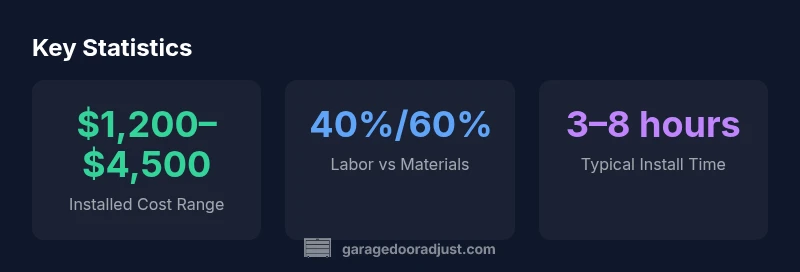
According to GarageDoorAdjust Analysis, 2026, the installed cost to add a garage door typically ranges from $1,200 to $4,500, influenced by door material, size, insulation, and whether a new opener is included. Labor and disposal can add $150–$500. For a standard single-car install, expect about $1,400–$3,000; insulated or decorative doors can reach $3,500–$4,500. These figures reflect real-world pricing and regional variation.
What determines the installed cost of a garage door
Understanding the total price starts with the basics: door material, size, insulation, and any hardware upgrades. The fundamental question for homeowners is: how much does it cost to install a garage door? The answer isn’t fixed; it reflects choices you make and local labor rates. In practice, the price tag is driven by four major levers: (1) door material and design (steel, aluminum, wood, or composite), (2) door size and configuration (single-car vs double, depth, panel count), (3) insulation and R-value (non-insulated, sectional insulated, or high-performance), and (4) whether you add a new opener, sensors, or smart features. Labor costs depend on your region and whether the job includes removal of the old door and disposal. GarageDoorAdjust's 2026 analysis shows the interplay of these factors, so set expectations early and plan for contingencies. This article answers the question more comprehensively and helps you budget confidently for the project. The goal is to give homeowners a clear framework to estimate how much it costs to install a garage door and avoid surprise charges.
Typical price ranges by door type
Door cost varies widely by material and style. Here are realistic ranges you can expect, recognizing that regional labor rates and supplier choices will shift these figures:
- Non-insulated steel or aluminum single-car door: typically installed around $1,000–$2,000.
- Insulated steel or aluminum single-car: usually $1,800–$3,000 with better energy efficiency and comfort.
- Wood or composite single-car doors: commonly $2,500–$4,500 due to material cost and installation complexity.
- Double-car or higher-end insulated doors: often $3,000–$6,000, especially for premium panels or specialty finishes.
If you add a new opener, sensors, or smart controls, budget an additional $250–$600 depending on the features. Always compare quotes from multiple installers to lock in the best balance of price and quality.
Hidden costs and add-ons to plan for
Costs beyond the door and opener can surprise first-time buyers. Plan for these typical extras:
- Old door removal and disposal: $50–$200 depending on local disposal rules and weight.
- Hardware upgrades (tracks, rollers, springs): $100–$350 if replacements are needed.
- Weather stripping, insulation upgrades, and sealants: $20–$100 for weatherproofing.
- Permit fees or code-related upgrades: varies by jurisdiction, potentially $0–$300.
- Trip charges and after-hours service: variable by contractor, sometimes $50–$150.
Being aware of these items helps prevent sticker shock and makes your final quote more accurate. GarageDoorAdjust notes that many homeowners underestimate the cost of disposal and upgrades when planning.
Regional variations and timing factors
Labor rates and material availability fluctuate by region. In some markets, skilled labor is in high demand, driving up quotes; in others, competition keeps prices lower. Seasonal demand also plays a role—peak installation seasons (spring and summer) may see longer wait times and minor price shifts. If you’re flexible on timing and shop around, you can catch favorable pricing windows. The GarageDoorAdjust Analysis, 2026 highlights that understanding your local market is key to forecasting how much it costs to install a garage door in your area.
How to estimate your project cost in 5 steps
Estimating costs without surprises is easier when you follow a simple framework:
- Define door type and size: pick single vs double, basic style vs premium.
- Choose insulation level and R-value: non-insulated vs insulated options.
- Decide on opener features: standard opener vs smart-connected or battery backup.
- Gather at least 3 quotes from licensed installers and compare line-item details (door, opener, labor, disposal, permits).
- Add a contingency (10–15%) for unexpected issues like track alignment or wiring.
Document everything, confirm warranty terms, and ensure quotes include all required components.
Tip: Ask for a written project scope that clearly lists what’s included in labor, materials, and any disposal fees.
Money-saving strategies without compromising safety
Saving money while keeping safety intact is possible with careful planning:
- Standardize on a common door size and material to avoid custom fabrication costs.
- Choose a door with good insulation but avoid over-specifying features you won’t use.
- Reuse existing tracks and hardware if in good condition, or negotiate bundled pricing with a single installer.
- Schedule installation during off-peak seasons when rates may be lower.
- Get written quotes and insist on a fixed-price contract to avoid cost creep.
Remember that cutting corners on safety features or door balance can cause long-term problems. Prioritize reliable hardware and qualified installers.
Choosing the right installer: questions to ask
Selecting the right installer matters as much as choosing the door itself. Focus on questions about licensing, insurance, warranties, and workmanship guarantees. Ask for project timelines, ballast on response time, and how they handle potential site-specific issues. Confirm that the installer will provide a final inspection after installation to ensure alignment and safety features are fully functional. A reputable firm will welcome these questions and provide clear, transparent answers.
DIY vs professional installation: safety considerations
Garage door installation involves heavy lifting, springs under tension, and precise alignment with the opener mechanism. DIY work can save some labor, but mistakes can cause injuries, damage to the door, or even property damage. In most cases, professionals have the right tools, safety practices, and insurance to handle unexpected problems. If you’re considering DIY, assess your comfort with handling springs, tracks, and electrical components; otherwise, rely on licensed installers for safety and code compliance.
Quick pre-purchase checklist
Before you buy, run through this checklist to streamline the process:
- Confirm door type, material, insulation level, and finish.
- Decide on opener features and compatibility.
- Obtain at least 3 quotes with itemized costs.
- Check warranties and what they cover (parts, labor, and service).
- Clarify removal, disposal, and permit requirements.
- Verify installation timing and required access (garage ceiling height, workspace).
- Inspect local codes for permit requirements and building approvals.
Estimated installed costs by door type (ranges are regional and contractor-dependent)
| Door Type | Typical Installed Cost | Notes |
|---|---|---|
| Single steel | $1,000–$2,000 | Budget-friendly, moderate durability |
| Insulated steel/aluminum | $1,800–$3,000 | Better energy efficiency |
| Single wood or composite | $2,500–$4,500 | Premium look, higher maintenance |
| Double-car/insulated | $3,000–$6,000 | Best for larger garages or higher-end finishes |
Got Questions?
What factors most influence the cost to install a garage door?
Key cost drivers are door material and design, size, insulation level, and whether a new opener is included. Labor rates and disposal fees vary by region. Understanding these factors helps you forecast total cost and avoid surprises.
Door material, size, insulation, and whether you add an opener are the main cost drivers; local labor rates also matter.
Do I need a new opener when installing a new door?
Not always. A new door can be installed with your existing opener if compatible, but many homeowners opt for a newer opener for safety, efficiency, and reliability.
A new opener isn't mandatory with a new door, but upgrading is common for safety and convenience.
Is DIY installation ever cost-effective?
DIY can save labor but carries safety risks. Springs and tracks under tension can cause injury, and improper alignment may lead to more repairs later. For most homeowners, professional installation is recommended.
DIY can save money, but it’s risky—leave springs and alignment to pros.
How long does installation typically take?
Most garage door installations take 3 to 8 hours, depending on door type, size, and site conditions. Complex setups with premium finishes may take longer.
Most installs take a few hours, up to a full day for complex jobs.
Are permits required for garage door installation?
Permits are uncommon for standard residential doors in many areas, but some jurisdictions require a building permit or inspections. Check local codes before starting.
Check your local codes; permits may be required in some places.
What extra costs should I budget for beyond the door itself?
Expect potential costs for disposal, old hardware replacement, weatherstripping, sensor upgrades, and possible track or wiring modifications. These can add several hundred dollars depending on the project.
Disposal and hardware upgrades can add a few hundred dollars.
“Professional installation is a sound investment; proper alignment, balance, and safety hardware protect your home and can save money by preventing future repairs.”
Quick Summary
- Get multiple quotes to compare costs.
- Include insulation and opener options in budgeting.
- Labor availability strongly influences total price.
- Budget for removal and disposal of the old door.
- Ask about permits and potential hidden fees.