Cost to Install a New Garage Door: 2026 Budget Guide
A comprehensive look at realistic price ranges for installing a new garage door, including materials, labor, openers, permits, and hidden fees. Practical budgeting tips from GarageDoorAdjust.


The cost of new garage door installed varies by material, size, insulation, and hardware. In 2026, costs range from budget steel to premium wood, plus installation, permits, and opener upgrades. This quick answer highlights the main price drivers and how to budget before requesting quotes. Understanding these components helps homeowners plan effectively and avoid surprises.
Understanding the Cost Landscape
Prices for a new garage door installed are not a single figure. They reflect a combination of door material, overall size, insulation level, hardware choices, and whether you include a new opener. In 2026, homeowners encounter a broad spectrum from basic budget doors to premium designer options, with labor, disposal of the old door, and permits factored in. The cost of new garage door installed can be influenced by regional labor markets, supply chain conditions, and the level of customization chosen. By breaking down the components, you can estimate total project cost and compare quotes on a like-for-like basis.
Key Cost Drivers
The most influential drivers are material, size, insulation, and hardware. Other factors include window inserts, color and finish, track type, and weather sealing. Regional labor rates and disposal/hauling costs also push totals up or down. When you request quotes, ensure each item line reflects door price, installation, and any add-ons so you can identify hidden fees early.
Material Options and Price Ranges
Different materials carry different price points and durability profiles. Broad ranges (all-inclusive) commonly seen in 2026 are:
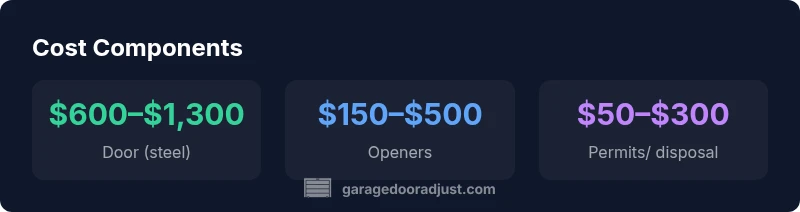
- Budget steel: roughly $600–$1,300 for a basic, single-layer door with standard hardware.
- Mid-range steel/aluminum: about $1,300–$2,700 depending on size and insulation.
- Composite or insulated steel: roughly $1,800–$3,800 for better energy efficiency.
- Wood (painted or stained): typically $2,500–$6,000, driven by species, design, and finish.
- Premium insulated wood/steel hybrids: often $4,000–$9,000 for high-end designs with features.
Notes: These ranges include the door, standard hardware, and basic installation. Materials with large windows or custom carvings can push costs higher.
Labor, Permits, and Hidden Fees
Labor is the second major component after the door itself. Installation usually runs a few hours to a full day, depending on compatibility with existing framing and whether new tracks or springs are required. Some regions require permits for structural work or electrical updates when upgrading openers; permit costs vary widely by locale. Hidden fees can include disposal of the old door, the cost of removing old hardware, and temporary electrical work if you upgrade the opener.
Openers, Smart Features, and Upgrades
A new opener adds meaningful convenience and energy efficiency. Basic chain-drive openers are typically more affordable, while belt-drive models are quieter and often more expensive. Smart features (wi-fi connectivity, app control, battery backups) add to the price but can improve daily use and security. If you’re upgrading to a smart opener, budget for installation time and any required wiring or smart-home integration.
Installation Scenarios and Typical Budgets
To give you a frame of reference, consider three common scenarios. A budget setup prioritizes price and may use steel with minimal insulation and a basic manual or standard opener. A mid-range option balances materials and insulation with a reliable opener and upgraded hardware. A premium scenario includes premium materials (wood or composite with enhanced insulation), larger windows, high-end hardware, and a top-tier opener with smart features. Across these scenarios, total installed costs typically span a broad range depending on your choices and local labor rates.
How to Estimate Your Project
Start by measuring rough opening dimensions for accuracy, and decide on material and insulation level. Ask for itemized quotes that separate door price, labor, removal, permits, and opener costs. Compare quotes on a like-for-like basis, noting any optional add-ons or warranties. Don’t forget to request a clear timeline for completion and a post-install inspection plan to ensure the job meets safety standards.
Financing and Long-Term Savings
If upfront cash flow is a concern, explore financing options or phased projects. Insulated doors can offer energy savings that reduce heating and cooling costs over time, potentially offsetting higher upfront costs. Also consider maintenance costs in the years ahead; investing in quality weatherstripping and regular lubrication helps extend door life and performance.
Estimated cost by component for a typical residential garage door installation
| Cost Component | Low Range | Mid Range | High Range | Notes |
|---|---|---|---|---|
| Door material | 600 | 1800 | 4000 | Typical door price with standard hardware |
| Labor and installation | 200 | 900 | 2000 | Professional install and removal of old door |
| Opener and accessories | 100 | 450 | 800 | Smart features add cost |
| Permits/inspections | 50 | 150 | 300 | Local requirement varies by area |
Got Questions?
What is the typical installed cost range for a new garage door?
Installed costs vary by material, size, and added features. Expect a broad range from budget doors to premium options, with labor and disposal included in most quotes. Always get an itemized quote to compare components.
Costs vary a lot depending on material and size—get quotes that break down materials, labor, and disposal.
Are permits required for garage door installation?
Permit requirements depend on local codes; many areas require a building permit for a new door or structural changes. Check with your local building department before starting.
Permits vary by location, but many places require them for a new door or structural work.
How long does installation take?
Most residential installs take a few hours to half a day, depending on door type, whether a new opener is included, and any structural adjustments.
Usually a few hours, up to a half day.
Is it cheaper to replace the opener at the same time?
Bundling opener replacement with the door installation can reduce labor trips and total cost, especially if wiring or controls are adjusted.
Yes—combining them can save on labor.
What maintenance costs should I budget after installation?
Plan for annual lubrication, weatherstripping checks, and occasional spring or roller service as needed to maintain performance and safety.
Budget for annual maintenance and occasional part replacements.
“A transparent, itemized cost breakdown helps homeowners avoid surprises. Our team at GarageDoorAdjust emphasizes comparing materials, labor, and hardware across multiple quotes to ensure value and durability.”
Quick Summary
- Budget for materials first, then add labor and hardware.
- Expect wide price ranges based on door type, size, and insulation.
- Obtain itemized quotes to compare inclusions and avoid surprises.
- Consider insulation and smart-openers for long-term savings.
- Include permits and disposal costs in your total budget.