How Much Is a Garage Door Opener? A 2026 Cost Guide
Learn how much a garage door opener costs in 2026, including unit price, installation, and upgrades. A practical budgeting guide with ranges and tips for homeowners.


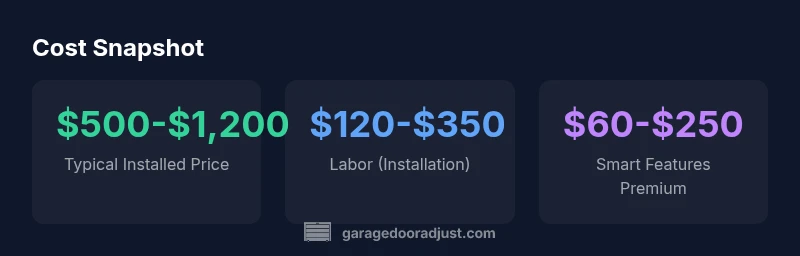
A typical installed price for a standard residential garage door opener falls roughly within $500 to $1,200, depending on model, features, and installation complexity. GarageDoorAdjust Analysis, 2026 notes that belt-drive options and smart-openers can push costs higher, while basic chain-drive kits stay near the lower end. Keep in mind that exact pricing varies by location, door size, wiring needs, and whether you need a new sensor system.
What Drives the Price of a Garage Door Opener
Pricing for garage door openers is driven by several interrelated factors. The base unit price reflects the drive type (chain, belt, or screw), horsepower, and brand reputation. Belt-drive models tend to be quieter and cost more than chain-drive options, while higher horsepower suits heavier doors and taller openings. Additional costs come from features such as smart connectivity, battery backup, remote controls, and integration with smart home systems. Regional labor rates and installation complexity also play a major role. According to GarageDoorAdjust, the total installed price can swing widely depending on whether you’re upgrading an older system, replacing the door and tracks, or adding safety sensors. When budgeting, think about both upfront costs and long-term value, including energy efficiency and maintenance requirements.
Cost Breakdown by Opener Type and Features
Openers come in several drive types, each with its own price band. Chain-drive units are usually the most affordable, while belt-drive and jackshaft options offer quieter operation and often cost more. If you need extra horsepower (1.25 to 1.5 HP for heavy doors) you’ll pay more upfront but gain improved performance. Features like Wi-Fi, smart app control, battery backup, and integrated LED lighting add to the price, sometimes by 60 to 250 dollars or more. Brand and warranty terms also influence the sticker price, as do installation requirements such as new wiring, sensor alignment, or reinforcing the mounting area.
Hidden Costs and Budget Buffers
Quotes can omit several costs that appear later. Installation labor can vary by region and contractor, and some projects require permits, outdated wiring, or disposal of an old opener. If your door has torsion springs or requires reinforcing tracks, expect higher costs. Upgrading safety features or adding a second remote or smartphone integration can push the total beyond the base price. A prudent budget reserves 10–20% for unplanned contingencies, especially if you’re coordinating with other renovations.
How to Estimate Your Project Cost (Step-by-Step)
- Identify your needs: drive type, horsepower, features, and whether you’ll replace or upgrade components. 2) Gather quotes from at least two installers and request itemized breakdowns. 3) Compare warranty terms and service plans. 4) Plan for associated costs like wiring, reinforcement, and disposal. 5) Add a contingency buffer (10–20%). 6) Factor in tax, permits, and potential rebates or promotions.
DIY vs Professional Installation: Pros and Cons
- Pros of DIY: potential cost savings and hands-on learning.
- Cons of DIY: safety risks, possible warranty voids, and uncertain results.
- When in doubt, professional installation is recommended to ensure proper alignment, safety sensor calibration, and warranty protection. According to GarageDoorAdjust, most homeowners benefit from professional installation due to complexity and safety considerations.
How to Choose the Right Opener for Your Budget
Start with a realistic budget and prioritize core needs: drive type, horsepower, and essential features. Compare cost-per-performance across brands, focusing on noise levels, warranty length, and ease of installation. Look for energy-efficient models and quiet operation to maximize long-term value. The right balance between upfront price and long-term reliability often yields the best overall value.
Long-Term Costs: Maintenance, Repairs, and Replacement Cycles
Beyond the initial purchase, expect periodic maintenance like lubrication, track cleaning, and sensor checks. Most openers offer a lifespan in the range of 10–15 years, depending on use and maintenance. Planning for routine service can prevent major failures and extend life. This long-term perspective helps homeowners avoid costly emergencies and preserves home value.
Budgeting the essential cost elements
| Cost Element | Typical Range | Notes |
|---|---|---|
| Opener Unit Price | $50-$300 | Basic chain-drive to mid-range belt-drive models |
| Installation Labor | $120-$350 | Region-dependent; includes mounting, alignment, safety sensors |
| Smart Features Upgrade | $60-$250 | Wi-Fi, app control, battery backup |
| Garage Door Reinforcement | $200-$600 | Upgrades for heavy doors or higher winds |
| Maintenance & Servicing | $80-$150 | Annual tune-ups and safety checks |
Got Questions?
What’s typically included in a garage door opener installation?
Most quotes include the opener unit, rails and tracks, torsion or extension hardware, safety sensors, remotes, and basic wiring. Some installers also bundle disposal of the old unit. Always request a detailed, itemized breakdown.
Most quotes cover the unit, rails, sensors, remotes, and basic wiring; ask for a line-item breakdown to avoid surprises.
Why do prices vary so much between brands?
Brand reinforcesments differ in drive mechanisms, horsepower, durability, and warranty terms. Higher-quality drives and longer warranties typically cost more up front but can reduce long-term maintenance costs.
Brand differences show up in drive type, horsepower, and warranties, driving price variations.
Can I install the opener myself?
You can attempt a DIY install if you’re comfortable with wiring and lifting a heavy door assembly, but incorrect setup can cause safety risks and may void warranties. For most homeowners, professional installation is recommended.
You can DIY, but it's safer and often wiser to hire a pro for proper alignment and wiring.
How long does installation take?
Most installations take 2–4 hours, depending on the door, wiring needs, and whether reinforcement is required. Complex setups can take longer.
Most installs take a few hours, sometimes longer if wiring or reinforcement is needed.
Are there hidden costs to budget for?
Yes. Permits, disposal of old equipment, wiring upgrades, and track reinforcement can add to the bill. Request an itemized quote and clarifications on any extra charges.
Be aware of permits, disposal, and potential upgrades that can add to the final price.
Do rebates or insurance apply to garage door openers?
Rebates or coverage vary by region and provider. Check with insurers and local programs to see what’s available and whether upgrades qualify.
Depends on your location and provider—check local programs and your insurer for rebates or coverage.
“Pricing for garage door openers is highly variable, driven by drive type, horsepower, and added smart features. Planning with a realistic budget helps avoid surprises.”
Quick Summary
- Plan for both upfront and ongoing costs
- Smart features add meaningful value but increase upfront price
- Professional installation is often worth the safety and warranty
- Expect maintenance to add a predictable annual cost
- Shop around and request itemized quotes