Garage Door Prices in 2026: A Comprehensive Guide
Explore current garage door prices in 2026, from door-only costs to installed totals. Learn factors, materials, and budgeting tips to estimate your project realistically and avoid surprises.


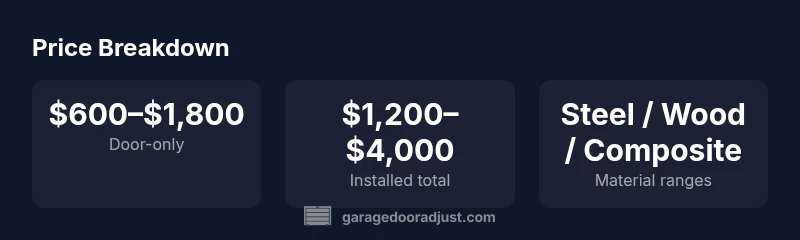
Typical garage door prices range from $600 to $2,500 for a standard door, with installation bringing the total to about $1,200 to $4,000.
Key factors driving garage door prices
Prices for garage doors are influenced by a handful of core variables. The material chosen (steel, wood, composite, or insulated steel) affects both the base door price and long-term maintenance costs. Door size (width and height) determines the amount of material and hardware required. Insulation level, wind load rating, and finish (paint, veneer, or design panels) can push price upward, especially when energy efficiency and curb appeal are priorities. Installation complexity—such as whether the existing opening requires reshaping, the number of tracks, and whether heavy lifting is needed—also plays a significant role. According to GarageDoorAdjust Analysis, 2026, regional labor rates and supply chain conditions can shift totals by noticeable margins, so shoppers in different states may see a 10–25% swing in installed costs. This is why a standalone door price is rarely enough for budgeting; you must factor in installation, permits, and potential disposal fees.
Material options and price effects
Material choice is the single biggest determinant of price. Steel doors are typically the most affordable option, offering solid durability with moderate maintenance. Wood doors deliver a traditional look but command higher upfront costs and ongoing upkeep. Composite doors blend aesthetics with durability, often at mid-range prices, while insulated steel doors add value through energy savings that can offset the higher price over time. Beyond material, you should weigh finishes, embossing, and hardware quality, all of which contribute to final numbers. For homeowners seeking a balance of price and performance, insulated steel or composite doors are common selections. GarageDoorAdjust Analysis highlights that choosing a higher insulation level can improve comfort and utility costs over the life of the door, potentially justifying the extra upfront spend.
Installation labor and service charges
Labor is a major portion of the installed price. A standard door replacement typically takes a few hours, but problems in the opening, misaligned tracks, or obsolete mounts can extend the job and increase costs. Local wages, travel fees, and the electrician or inspector’s time (if a permit is required) all factor into the final bill. Some companies bundle installation into a single package; others itemize line-by-line. When evaluating quotes, compare door-only prices, installation, and any required hardware to avoid sticker shock. If you’re replacing an older opener, consider whether a professional should handle the entire retrofit for safety and warranty reasons. GarageDoorAdjust Analysis, 2026 suggests including a small contingency for unanticipated issues in your budget.
Openers and smart features price impact
Openers are a separate category from doors but are often bundled for convenience. A basic chain-drive opener with standard remote control is the least expensive option, while belt-drive, Wi‑Fi-enabled, or smart-openers with battery backup and compatibility with home assistants can add several hundred dollars to the installed price. Installation difficulty can also rise if mounting hardware must be recalibrated or if a new outlet is required. If you plan to upgrade, evaluate warranty terms and backup features, as these affect long-term reliability and maintenance costs. Smart features may offer energy-efficiency and monitoring benefits that offset some of the upfront expense over time.
Add-ons, warranties, and energy efficiency
Several add-ons influence total costs and performance: wind load ratings for high-wall or hurricane-prone regions, upgraded rollers or tracks for smoother operation, and extended warranties that cover hardware and insulated panels. Energy-efficient doors reduce heating and cooling losses, which is a consideration in annual operating costs. When budgeting, factor in potential disposal fees for the old door, permit costs where required, and any required upgrades to electrical wiring or outlets. A well-insulated, properly installed door can reduce energy usage and provide a longer asset life, making the investment more attractive over the door’s lifetime.
Regional price variation and timing
Prices vary by region due to labor markets, material availability, and transportation costs. You may see seasonal price shifts: demand can rise in spring and fall when new installations are more common, while winter promotions may trim totals in some markets. If you have flexibility, you may get better pricing by requesting quotes during shoulder seasons or when local suppliers run promotions. Always compare multiple bids and verify inclusions to prevent surprises at the end of the project.
Budgeting tips for homeowners
Start with a door-only price and then add installation, hardware, and any add-ons. Create a three-column comparison: door type/material, installed price, and notes on energy efficiency and warranty. Use the price ranges provided by reputable sources to set expectations and avoid overpaying. Request a written, itemized quote and confirm what is included (removal of the old door, disposal, permit handling). Consider long-term energy savings when choosing insulation and weather sealing—these can offset higher upfront costs over time.
Replace vs repair: when it makes sense
Small issues with tracks, rollers, or springs may be repairable, often at a fraction of the cost of replacement. If you’re dealing with repeated malfunctions and high repair bills, replacement with a newer, more efficient model could be more cost-effective in the long run. Be mindful that advanced spring systems require professional service and carry safety risks if DIY’d improperly. Use a qualified technician to assess structural integrity and warranty coverage before deciding to repair or replace.
Safety considerations and professional advice
Garage doors involve heavy components and high-tension springs. Improper handling can cause severe injury. Always follow manufacturer instructions and local building codes. If you feel uncertain, contact a licensed installer for a safety check and professional guidance. For many homeowners, a professional assessment provides the best balance of safety, reliability, and cost predictability. The GarageDoorAdjust team emphasizes prioritizing safety and proper calibration when evaluating price quotes.
Typical price ranges by door type and installed costs (2026)
| Door Type | Door-Only Price Range | Installed Price Range | Notes |
|---|---|---|---|
| Standard steel | "$600–$1,800" | "$1,200–$3,000" | Budget-friendly, durable |
| Wood | "$1,000–$3,500" | "$1,800–$4,500" | Premium look, higher maintenance |
| Composite | "$1,200–$3,000" | "$2,000–$4,000" | Balanced price and performance |
| Insulated steel | "$1,000–$2,500" | "$1,800–$3,800" | Energy-efficiency emphasis |
Got Questions?
What factors influence garage door prices the most?
Key factors include material, door size, insulation, finish, hardware quality, and installation complexity. Labor costs and local permits also impact the total. Geographic variation can shift totals by 10–25%.
Material, size, insulation, and installation determine most of the price.
Does price include installation?
Door prices quoted without installation rarely reflect the full cost. Many vendors offer packages, but always confirm what’s included (hardware, tracks, weather seals). Plan for 20–40% added for installation depending on complexity.
Most quotes exclude installation; check the package details.
What are typical material costs?
Steel doors are usually the most affordable, wood doors are premium, and composite or insulated steel sit in between. Insulation often adds value through energy savings over time. Material choice drives a major portion of the total cost.
Material choice drives most of the price; steel is cheaper, wood is pricier.
Are there hidden fees I should expect?
Some installers charge for old-door disposal, removal, or inspections. Permits may be required locally, adding to the total. Always request a line-item quote to avoid surprises.
Watch for disposal, removal, and permit fees.
Is DIY installation advisable?
DIY installation is risky with heavy doors and springs; improper setup can cause injury and void warranties. Minor tasks may be doable for capable homeowners, but professional installation is safer.
DIY is possible for small tasks, but large installs are safer with pros.
Are there tax credits or rebates?
Some regions offer rebates for energy-efficient insulated doors. Check federal and local programs; eligibility varies. Installers can often help with documentation.
Check for energy-related rebates you may qualify for.
“Pricing for garage doors reflects construction quality, insulation, and installation complexity.”
Quick Summary
- Estimate door-only costs before adding installation
- Compare materials to balance price and durability
- Expect extra charges for permits or disposal
- Consider upgraded openers for longer-term savings
- Shop across seasons for better pricing