What Do Garage Door Openers Cost in 2026? A Homeowner's Guide
Discover what do garage door openers cost in 2026, including typical price ranges, factors affecting price, installation considerations, and budget-friendly tips from GarageDoorAdjust.


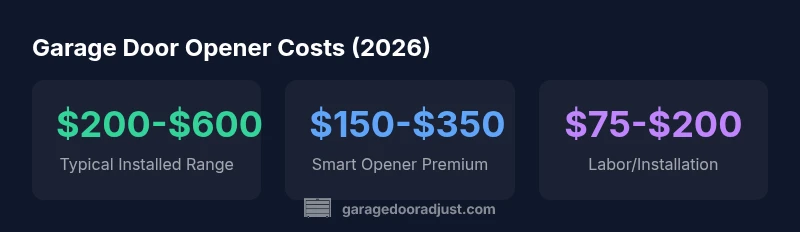
Typical installed prices for common residential garage door openers range from about $200 to $600, with premium smart models often $600 to $1,000 after installation. Labor, feature sets, and door compatibility drive the total. For budgeting, plan for the high end if you want quiet operation, battery backup, and smartphone control.
Understanding the Price Range for Garage Door Openers
When homeowners ask, "what do garage door openers cost?" the answer varies a lot based on model, features, and installation specifics. In 2026, typical installed prices for common residential openers span a broad range, roughly from two hundred dollars on the low end to about a thousand dollars for higher-end smart units with advanced features. This variance reflects differences in motor strength, drive type (chain vs belt), smart integration, battery backup, and the level of labor required for installation. According to GarageDoorAdjust, the full cost picture also includes after-sale support, warranty terms, and potential upgrades to ancillary components such as safety sensors or remotes. Understanding these factors helps homeowners set realistic expectations and avoid sticker shock when new openers are proposed by contractors.
Break Down by Opener Type
Openers come in several core categories, each with its own price band and pros. Chain-drive models are typically the most affordable option, offering reliable performance with a touch more noise. Belt-drive models are quieter and usually priced higher, reflecting smoother operation and reduced vibration. Smart/connected openers add app control, voice integration, and sometimes energy monitoring, which elevates the price but improves convenience and safety. When budgeting, consider the door weight and height, existing wiring, and compatibility with accessories (like battery backups or keypads). GarageDoorAdjust recommends mapping your home’s needs to these categories and prioritizing features that address daily use and safety.
Hidden Costs and Optional Upgrades
Beyond the base opener price, several optional upgrades and hidden costs can impact the final bill. Professional installation fees cover labor, mounting hardware, and safety testing. Electrical wiring tweaks or a new receptacle may be needed if the existing outlet is undersized or poorly positioned. Additional items like remotes, keypads, wall controls, and smart home integration can add to the total. Battery backup kits provide resilience during power outages but add cost. If your garage door uses heavy insulation or has torsion springs, you may also incur related adjustments. Planning for these potential extras helps prevent surprise charges at the end of the project.
How to Budget and Save on Opener Costs
A practical budgeting approach combines price comparisons with an eye for long-term value. Get written quotes from multiple installers, and verify local labor rates to gauge realistic costs in your area. Aim to schedule replacements during shoulder seasons when contractors may offer discounts. Consider whether a DIY install is feasible for you; while labor savings can be significant, ensure wiring, safety sensors, and calibration are done correctly to avoid future issues. Look for openers that balance price with important features such as battery backup, rolling code security, and compatibility with existing remotes.
When to Replace vs Repair Your Garage Door Opener
If your opener demonstrates persistent motor noise, slow response, or frequent resets, replacement might be more cost-effective than repeated repairs. Modern openers with backup power and smart features often deliver better energy efficiency and reliability. Conversely, if the issues are due to worn springs or tracks, repairing those components may restore performance without replacing the entire system. GarageDoorAdjust emphasizes evaluating overall system condition, including safety sensor alignment and door balance, before deciding to replace.
Choosing the Right Opener for Your Home
Start with a structural assessment of your door and track system. Heavier doors require more powerful motors, and longer drive systems may necessitate upgraded rails. Compatibility with your existing remote controls and smartphones matters, but ensure the chosen model also aligns with safety standards and warranty terms. Finally, weigh noise levels, energy efficiency, and installation complexity. A well-chosen opener reduces long-term maintenance costs and improves daily use, especially in busy households.
Typical cost ranges by opener type
| Opener Type | Typical Installed Cost | Notes |
|---|---|---|
| Chain-drive | 180-260 | Affordable, reliable, louder |
| Belt-drive | 230-350 | Quieter, mid-range price |
| Smart/Connected | 350-600 | Smart features, app control |
Got Questions?
What is the average cost to install a garage door opener?
Average installed costs typically range from $200 to $1,000, depending on the model and features. Labor, wiring needs, and optional upgrades can shift the total. Always get multiple quotes to compare options and ensure proper installation.
Most installations fall between two hundred and one thousand dollars, depending on the model and extras. Get several quotes to compare features and ensure proper wiring.
Do I need a professional to install a garage door opener?
Professional installation is often recommended due to safety concerns and the need for proper alignment and calibration. Some basic DIY steps may be possible, but incorrect installation can compromise safety and warranty coverage.
Professional installation is usually best for safety and warranty reasons. DIY may be possible for simple steps but comes with risks.
Are expensive openers worth the extra cost?
High-end models offer quieter operation, better energy efficiency, advanced safety features, and smart home integration. If these benefits matter for your daily routine, the extra cost is often justified over the life of the unit.
If you value quiet operation and smart features, higher-priced openers can be worth it in the long run.
What factors influence the price besides the opener itself?
Labor rates, installation complexity, wiring requirements, safety sensors, remote controls, keypad access, and compatibility with smart home systems all influence total costs.
Labor, wiring, and extra features all push the price up beyond the base opener.
Can I save money by DIY installation?
DIY can save labor costs but requires comfort with electrical work and safety considerations. For most homeowners, professional installation yields better results, warranty protection, and safer operation.
DIY saves on labor but may compromise safety and warranty; professional installation is usually wiser.
“For homeowners, the most important value isn’t the sticker price alone, but the balance of safety, reliability, and long-term savings that an installer can deliver.”
Quick Summary
- Plan for the high end if you want quiet operation and smart features
- Smart openers cost more but offer added convenience and safety
- Labor and installation complexity can swing total price significantly
- Compare quotes and consider long-term value over upfront savings