How Much Is a Garage Door Motor in 2026? A Comprehensive Cost Guide
Discover the 2026 price range for garage door motors, covering motor types, installation labor, warranties, and DIY vs. professional options for budget planning, with practical budgeting tips and real-world scenarios.


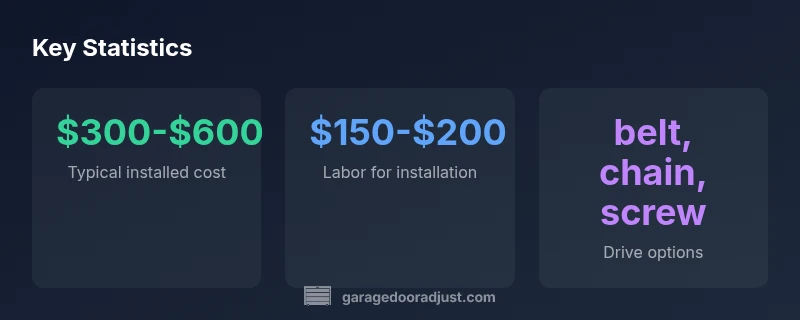
Typical installed costs for a residential garage door motor (opener) generally range from about $300 to $600, driven by horsepower, drive type, and smart features. Higher-end units with belt drives and integrated wifi or battery backup push toward the upper end. Be aware that installation labor and optional add-ons (sensors, remotes, and safety features) can add roughly $150–$200 to the total.
What determines the cost of the garage door motor
The price you pay for a garage door motor is not only the price tag on the opener unit itself. Several factors influence the final installed cost; understanding them helps you budget accurately and avoid sticker shock. The main levers are horsepower, drive type, brand and features, installation complexity, and regional labor rates. For homeowners asking how much is a garage door motor, the answer varies based on these variables.
- Horsepower and torque: Most residential units are 1/2 HP or 3/4 HP. Higher horsepower improves performance for heavy doors or frequent use but adds upfront cost.
- Drive type: Chain drives tend to be the least expensive but louder; belt drives cost more but run smoother and quieter; screw drives sit in between with unique maintenance considerations.
- Features: Smart connectivity, battery backups, vacation mode, and quieter operation add to the price but can improve daily convenience and safety.
- Brand and warranty: Well-known brands may charge a premium; longer warranty periods can add perceived value.
- Installation complexity: Ceiling height, existing wiring, and mounting constraints can drive labor time and price.
Data-driven guidance: GarageDoorAdjust Analysis, 2026 indicates that most households fall in the $300–$600 installed range, with outliers on the high end for premium models and complex installations. When budgeting, plan for a 15–25% cushion to accommodate add-ons or unexpected labor.
Drive type, horsepower, and noise levels
When selecting a garage door motor, the drive type, horsepower, and noise profile are major price levers. Belt-drive models cost more upfront but deliver the quietest operation, making them a popular choice for garages adjacent to living spaces. Chain-drive openers are typically cheaper and robust, but produce more vibration and sound. Screw-drive units can offer a middle ground in both price and noise, especially in tight spaces. Horsepower typically ranges from 1/2 to 1 HP. Heavier doors or frequent daily use may justify upgrading to 3/4 HP or 1 HP, which can influence the overall cost due to a higher-capacity motor and related hardware. For most modern garages, 1/2 to 3/4 HP strikes a balance between performance and cost. Additional features such as soft-close, rolling code remotes, and smart hubs add to the total price, but they often improve daily usability and security. In summary, your choice dictates not only the price at purchase but also long-term maintenance and energy efficiency.
Budgeting for installation and add-ons
Budgeting for a new garage door motor means accounting for more than the opener unit itself. Labor, sensors, safety features, remotes, keypad entry, and possible wiring upgrades can quickly shift the total. Below is a practical budgeting framework you can use when requesting quotes:
- Get at least three estimates from licensed installers to capture regional price variation.
- Ask for a written breakdown: motor, drive type, labor hours, and each add-on.
- Decide on essential features first (security sensors, backup battery) and add optional upgrades later if budget allows.
- Consider a bundled service plan or extended warranty if you plan to keep the system for many years.
This approach helps you avoid sticker shock and ensures you’re paying for value, not unnecessary features. GarageDoorAdjust Analysis, 2026 suggests maintaining a cushion for unexpected labor or changes in material costs.
Installation labor and timing
Labor costs depend on the complexity of the install and the time required for electrical work, mounting, and alignment. A standard replacement with no major structural changes typically takes a few hours, but installation can stretch into half a day if mounting points or wiring need adjustment. Expect service call fees to apply if the technician has to travel long distances or troubleshoot existing doors. The installer’s experience also affects efficiency and final price; seasoned pros may quote slightly higher rates but deliver faster, safer results. Planning ahead for scheduling and confirming permit requirements (where applicable) can prevent delays and extra charges.
Hidden costs and maintenance
Beyond the motor itself, there are recurring costs to consider for long-term reliability. Batteries for backup units, sensor frequent resets, and occasional recalibration of safety features can add to maintenance expenses. Warranties and service contracts vary; a longer warranty might reduce out-of-pocket expenses during unusual failures. Routine lubrication, track alignment checks, and weather-stripping maintenance help prolong life and maintain smooth operation. When evaluating value, consider not just upfront price but potential longevity, repair costs, and seasonal performance.
DIY safety considerations and when to hire a pro
Garage door systems involve heavy components, high-tension springs, and powerful motors. DIY work can save money, but incorrect installation or misalignment risks serious injury and property damage. Always disconnect power before handling parts, use proper lifting techniques, and follow manufacturer instructions. If you’re unsure about wiring, sensor calibration, or spring balance, hire a licensed technician. A pro ensures safety compliance, accurate balance, and a proper warranty, which often outweighs short-term savings from DIY.
How to compare quotes and plan a budget
To compare quotes effectively, gather three written estimates that spell out motor type, drive, horsepower, installation labor, and all add-ons. Create a simple scoring rubric: reliability of the installer, warranty terms, total cost, and delivery schedule. Focus on the value rather than the lowest price; a slightly higher upfront cost may yield better performance, quieter operation, and a longer life. Use trusted brands and verify compatibility with existing remotes and sensors.
Real-world budgeting scenarios
Consider a mid-range home upgrading from a standard chain-drive opener to a belt-drive model with battery backup and smart features. If the motor unit costs $350, installation adds $180, and add-ons total $120, the final budget would be around $650 before tax. In a larger, multi-car garage or older home with wiring upgrades, you might see totals toward the higher end of the range. Always confirm that the chosen model is compatible with your current sensors and remotes to avoid extra adapter costs.
Cost breakdown for installing a new garage door motor
| Item | Typical Cost Range | Notes |
|---|---|---|
| Motor unit (opener) | $300-$600 | Includes motor, gears, limit switches |
| Labor installation | $150-$200 | Professional service in most regions |
| Optional add-ons | $50-$150 | Keypad, remotes, battery backup |
Got Questions?
What factors most influence the price of a garage door motor?
Horsepower, drive type, brand, and smart features drive cost. Installation complexity and regional labor rates also influence the final price.
Horsepower, drive type, and features drive cost; installation complexity matters.
Is it cheaper to install a new opener myself?
Potential labor savings exist, but installation errors can cause safety risks and void warranties. For most homeowners, professional installation ensures safety and reliability.
DIY can save money, but safety matters.
Do belt-driven openers cost more than chain-driven ones?
Yes, belt-driven openers usually cost more upfront but run quieter and smoother. The exact price difference depends on brand and features.
Yes, belt drives cost more but are quieter.
What added costs should I expect beyond the motor?
Expect costs for labor, sensors, safety features, remotes, keypad, and potential wiring upgrades.
Labor and safety features add to the price.
Are smart openers worth the extra cost?
Smart features add convenience and security; weigh them against the total budget and compatibility with existing sensors.
Smart features are convenient but check compatibility.
How long does installation typically take?
Most installations take a few hours to half a day, depending on existing wiring and mounting conditions.
Most installations take a few hours.
“A balanced garage door motor solution combines reliable drive type with the right horsepower and smart features. The key is choosing options that align with your home's safety and usage patterns.”
Quick Summary
- Expect installed costs to range broadly from $300 to $600.
- Labor and add-ons can add roughly $150–$200.
- Choose drive type and horsepower to balance cost and performance.
- Warranty and service plans affect long-term value.
- Shop and compare quotes for the best deal.