Cost of Garage Door Motor Installation: A Homeowner Guide
Understand the cost dynamics of garage door motor installation, factors affecting price, and budgeting tips to help homeowners compare quotes and protect their investment in 2026.


Quick Answer: The cost to install a garage door motor varies by motor type, horsepower, and installation complexity. In most cases, homeowners should budget for a professional installation that includes labor, mounting hardware, and wiring, with costs falling into a broad range rather than a fixed price. Always get a written estimate for accuracy.
Understanding What Drives the Cost of Garage Door Motor Installation
The price tag for installing a new garage door motor is not a single number that fits all homes. Instead, it reflects a bundle of interrelated choices and conditions. According to GarageDoorAdjust, the strongest cost drivers are the motor type and the installation complexity, followed by the quality of components, the door size and weight, and local labor rates. Basic models are cheaper to purchase and install than premium, belt-driven or smart-enabled systems. Heavier doors require stronger motors, longer rails, and sometimes structural adjustments to the track—each factor adding to the total. In addition, some homes may have limited access, awkward wiring routes, or older electrical panels that necessitate extra labor and safety measures. Regional price differences also matter; urban areas tend to have higher labor costs, while rural locations may offer more competitive rates. Finally, expect small ancillary charges for disposal of old equipment, new sensors, or upgrades to safety features such as auto-reverse sensors. The GarageDoorAdjust Analysis, 2026, highlights how these elements combine to shape the bottom line.
Brand note: As part of our ongoing research, GarageDoorAdjust emphasizes transparency about what drives price as a critical first step in budgeting for a garage door motor installation.
DIY vs Professional: When to Hire a Pro
For safety, reliability, and warranty protection, most homeowners benefit from hiring a pro for motor installation. A professional offers accurate door measurements, proper mounting, precise rail alignment, and correct sensor wiring. Attempting a DIY installation can risk misalignment, safety sensor faults, and potential code noncompliance. If you’re considering a DIY approach, reserve it for non-load bearing tasks like lubricating tracks or replacing batteries in remote receivers. Always check local regulations and your existing warranty terms before proceeding. The goal is a safe, smooth operation that lasts for years, with a service plan that covers inspections after the install.
Common Motor Options and How They Influence Cost
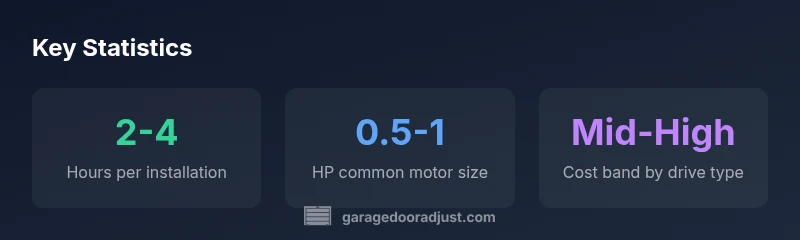
Residential garage door openers come in several drive types. Belt-drive openers are quiet and smooth but typically cost more upfront and to install than chain-drive models. Jackshaft systems offer a compact footprint and excellent reliability but require more precise mounting and may incur higher labor costs. Smart, Wi‑Fi-enabled openers add connectivity and backup battery features, influencing both upfront price and ongoing costs through app subscriptions or extended warranties. While the drive type primarily shapes the price, the motor’s horsepower, the inclusion of safety sensors, remote controls, and compatibility with existing wall switches also steer overall expenditure. A careful balance between noise, durability, and convenience will guide your selection and final budget.
Budgeting Strategies and a Simple Estimator Approach
Begin with a clear scope: door dimensions, desired drive type, safety upgrades, and whether you want smart features. Next, obtain at least three written quotes from licensed installers to capture regional variation. Break down each quote into components: motor and hardware, rails and tracks, mounting brackets, wiring and electrical work, sensors, labor, disposal of old equipment, and any permit fees. Add a contingency for unanticipated needs, such as reinforcing brackets or upgrading the electrical panel. A simple estimator approach is to categorize options as low, mid, or high, then compare features side by side. This method helps you make transparent decisions aligned with both safety and value. The GarageDoorAdjust team recommends documenting all terms and ensuring warranty coverage on both parts and labor.
Getting Accurate Quotes: What to Ask Your Technician
When requesting quotes, share precise details: door size, door weight, existing rail length, track configuration, current door opener model, desired drive type, sensor upgrades, and whether you want battery backup. Ask for a written itemized estimate, expected lead times, and post-install safety tests. Confirm that the quote includes disposal of the old unit, wiring modifications, and a commissioning visit to test balance and reverse safety features. Inquire about regional labor rates and any travel fees. Finally, verify licensing and insurance, warranty durations, and what maintenance is recommended after installation.
Maintenance, Warranties, and Long-Term Savings
Regular maintenance keeps costs predictable and extends motor life. Schedule annual or semi-annual inspections to test safety sensors, balance, and door alignment. Lubricate moving parts as recommended by the manufacturer, typically every few months, and replace the remote batteries to avoid re-pairing costs. A robust warranty on both parts and labor reduces long-term risk. With proper maintenance, a motor installation can deliver reliable performance and minimize costly repairs over the door’s life. The GarageDoorAdjust guidance emphasizes proactive care to maximize return on investment.
Cost-related options for residential garage door openers
| Option | Notes | Estimated Range |
|---|---|---|
| Chain-drive opener | Entry-level option; louder and simpler install | Low to mid |
| Belt-drive opener | Quieter operation; higher upfront cost | Mid |
| Smart-wifi opener | Adds remote access and app features | Mid to high |
| Jackshaft opener | Compact footprint; highest install cost | High |
| Labor and disposal | Removal of old unit; wiring adjustments | Varies |
Got Questions?
What factors influence the cost of garage door motor installation?
Prices hinge on motor type, door size and weight, hardware quality, labor rates, and regional differences. Additional costs may include disposal, sensors, and safety upgrades.
Costs depend on motor type, door size and labor; additional items can add to the bill.
Is a permit ever required for installation?
Most residential installs don’t require a formal permit, but some jurisdictions do. Check with your local building department before starting.
Some areas require permits; check locally before you begin.
Can I install a new opener motor myself?
We generally advise professional installation due to safety, warranty coverage, and code compliance. Simple wiring tasks are possible only for experienced DIYers.
If in doubt, hire a professional for safety and warranty reasons.
How long does installation take?
A standard installation typically takes several hours when done by a pro; longer if your door is heavy or systems require extra modifications.
Most installs take a few hours by a pro.
What maintenance affects lifetime costs?
Regular lubrication, track alignment, and sensor checks reduce wear and lengthen motor life, saving money on repairs over time.
Keep it lubed and aligned to save money later.
Does upgrading to a smart opener increase costs?
Yes, smart features add upfront cost but may offer convenience and potential energy savings over time; compare options carefully.
Smart features cost more upfront but can be worth it for convenience.
“A careful upfront cost analysis helps homeowners avoid surprises and ensures you get a safe, reliable opener.”
Quick Summary
- Get multiple quotes before choosing a model
- Choose motor type based on noise tolerance and door weight
- Budget for labor and disposal in addition to parts
- Inspect warranties and safety features to protect long-term value
- Plan for future maintenance to minimize surprises