Need a New Garage Door: A Homeowner's Step-by-Step Guide
Learn how to decide if you need a new garage door, compare repair vs replacement, explore materials and features, and plan a safe installation with practical steps and expert tips from GarageDoorAdjust.


This guide helps homeowners decide if a new garage door is necessary and outlines a practical, safety-minded plan to inspect, compare options, and plan installation. You’ll learn how to recognize wear, evaluate repair vs replacement, and choose a door that fits your budget and climate needs.
Is a New Garage Door Necessary? Signs You Might Need One
If you’re wondering whether you need a new garage door, start with a clear inventory of signs that point toward replacement. Look for structural damage such as large dents, cracked panels, or rust that compromises strength. Note if insulation has degraded, causing energy losses and noticeable temperature swings inside the garage. Listen for persistent, loud noises or grinding sounds that don’t improve after lubrication, and observe if the door’s opening/closing feels slow or unbalanced. Misaligned tracks, binding rollers, or a door that frequently stalls can indicate a failed drivetrain that may justify replacing the unit rather than endlessly patching it up. In many cases, homeowners report that the total cost of repeated repairs begins to approach or exceed the price of a new door and opener. According to GarageDoorAdjust Team, when multiple signs occur across panels, balance, and insulation, replacement often becomes the more cost-effective and reliable solution in the long run. This is especially true if your door is more than 15 years old or uses an aging opener that can’t meet modern safety standards. If you note several of these issues together, it’s wise to bring in a professional for a precise assessment and a repair-or-replace plan tailored to your home and climate.
Repair vs Replacement: Making the Right Choice
Deciding between repairing a garage door and replacing it hinges on safety, reliability, and value. Start by calculating repair costs for problem areas like springs, cables, or rollers, then compare to the price of a new door with installation. If the required repairs would power through a significant portion of a new- door’s cost, replacement is often the smarter option because it offers improved energy efficiency, updated safety features, and reduced maintenance. Real-world guidance from the GarageDoorAdjust Analysis, 2026, suggests that a door suffering chronic misalignment, recurrent sensor or opener issues, and insulation degradation tends to deliver better long-term value when replaced rather than repeatedly repaired. Consider your home’s value and resale potential: a modern, energy-efficient door can improve curb appeal and thermal performance, which matters more in some markets than others. A well-chosen replacement also gives you a reliable opener with updated safety features such as automatic reversing mechanisms and rolling-code remotes.
Understanding Door Materials and Insulation
Garage doors come in steel, aluminum, wood, and composite materials, each with distinct durability, maintenance needs, and appearance. Steel doors offer robust protection and low maintenance, while aluminum is lighter and less prone to rust but can dent. Wood doors provide classic aesthetics but require ongoing upkeep against warping and weathering. Composite doors blend materials to reduce warping and heat gain. Insulation matters: insulated doors with polyurethane cores deliver better energy efficiency, quieter operation, and improved temperature control for garages attached to living spaces. If your climate experiences extreme temperatures, prioritize doors with higher R-values and weather seals. In all cases, choose a door that matches your home style and local weather conditions, and ensure hardware such as tracks, rollers, and springs is rated for the door’s weight.
Safety Considerations Before You Replace
Garage door replacement involves heavy components and high-tension springs. Do not attempt to disengage or adjust torsion springs yourself; mishandling can cause serious injury. Always shut off power to the opener at the outlet and disconnect the manual release only if you are trained. If you notice frayed cables, cracked tires on rollers, or damaged tracks, stop and consult a licensed professional. When possible, plan the replacement to occur with a helper and use safety gear such as eye protection and gloves. Remember that improper installation can void warranties and compromise fire and intruder safety features. As you prepare, verify that all local permits are understood and that your contractor has proper licensing and insurance.
Choosing a New Door: Options and Features
Begin with standard door sizes and available materials, then layer on features that fit your needs. For many homeowners, an insulated steel or composite door delivers the best balance of price, durability, and energy savings. Consider panel designs, window inserts, and color options that coordinate with your home’s exterior. Upgraded tracks, weather seals, and torsion systems improve longevity and reduce noise. Modern openers bring convenience with smart features, battery backups, and programmable remotes. If your garage doubles as a workshop or living space, prioritize higher insulation and quiet operation. Always ensure compatibility with your existing opener or plan for a compatible replacement.
Budgeting and Value: What to Expect
A new garage door involves the door itself, hardware, insulation, and professional installation. Costs vary widely based on size, material, insulation level, and optional features, ranging from budget-friendly to premium configurations. In many markets, installation is a substantial portion of the total expense, so compare quotes from licensed installers that include disposal of the old door, insulation upgrades, and warranty terms. A quality insulated door can reduce heating and cooling costs over time, potentially offsetting some of the upfront cost. While price is important, also consider energy efficiency, warranty length, and service availability when evaluating options.
The Installation Process: What to Expect If You Hire Pros
Professional installation involves removing the old door, installing the new door and tracks, wiring the opener, and testing balance, travel, and safety features. A typical job will include inspection of springs, cables, and hinge hardware, and replacement of weather seals to prevent drafts. Most installations take several hours, depending on door size and complexity, with a final safety test ensuring the door reverses on contact and the opener operates smoothly. Prepare your driveway and access for the installation crew, and coordinate a time slot that minimizes disruption to your daily routine. Ask your installer about warranties on parts and labor and whether they offer post-install maintenance checks.
Maintenance After Installation: Longevity Tips
To extend the life of your new door, perform regular maintenance on a schedule that matches local conditions. Lubricate moving parts with a light garage-door lubricant every 3-6 months, inspect balance and spring tension annually, and replace weatherstripping as needed to maintain insulation. Clean the door surface to prevent corrosion or decay, and check the tracks for obstructions yearly. If you notice uneven gaps, unusual noises, or slow operation, address them promptly to avoid bigger problems. A well-maintained door protects your home, improves energy efficiency, and preserves curb appeal.
Tools & Materials
- Safety glasses(ANSI Z87.1 rated)
- Work gloves(Grippy, cut-resistant preferred)
- Wrench set(Combination and socket wrenches)
- Screwdrivers (Phillips and flat-head)(Assorted sizes)
- Socket wrench with sockets(Metric and SAE sizes)
- Tape measure(Minimum 8 ft)
- Ladder(Stable and tall enough for tracks)
- C-clamps(Help hold tracks during install)
- Soft mallet(Gentle adjustments to avoid dents)
- New garage door kit or door panels(Based on door style; includes panels and hardware)
- Level and carpenter’s square(Ensure precise alignment)
- Smart opener (optional)(If upgrading, check compatibility)
Steps
Estimated time: 4-8 hours
- 1
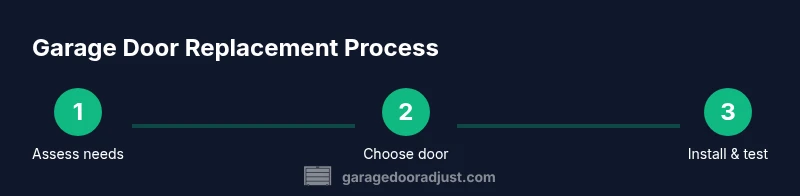
Assess needs and safety
Survey visible damage, insulation, and operation; identify unsafe components and note if a full replacement is warranted. Document issues with photos for quotes.
Tip: Take measurements of the door opening and existing tracks to confirm fit for a new door. - 2
Decide repair vs replacement
Estimate repair costs for springs, cables, rollers, and tracks. Compare with a full door kit including installation to gauge value.
Tip: If repair costs approach or exceed replacement, choose the latter for reliability. - 3
Choose door type and insulation
Select material (steel, wood, aluminum, composite) and insulation level based on climate and energy goals. Decide on window options and panel designs.
Tip: Insulated doors reduce energy loss in attached garages. - 4
Get quotes and verify permits
Request written bids from licensed installers and confirm required permits with local authorities.
Tip: Ask about warranty terms and scheduling flexibility. - 5
Prepare the space
Clear the driveway, disconnect power to the opener, and secure pets and people during installation.
Tip: Have a helper ready to assist with heavy lifting and alignment. - 6
Install and inspect
The pros will install tracks, springs, panels, and the opener, then test balance, travel, and safety features.
Tip: Request a post-install safety check and a demonstration of remote controls.
Got Questions?
How do I know if I need a new garage door or just a repair?
If multiple wear signs persist and repairs approach the cost of replacement, a new door is often the better value. Safety concerns or outdated materials also favor replacement.
If you see ongoing issues and high repair costs, consider replacing the door for reliability and safety.
What should I budget for a new garage door and installation?
Prices vary by material, insulation, and size; expect a broad range across basic to premium configurations. Always obtain written quotes that include disposal and warranty terms.
Prices vary widely; get several quotes and compare warranties.
Can I install a new door myself?
DIY is possible for simple doors, but springs and heavy components are high-risk. If unsure, hire licensed professionals to avoid injury and warranty voiding.
You can DIY in some cases, but springs are dangerous—consider a pro.
What maintenance helps extend the life of a new garage door?
Regular lubrication, annual balance checks, track inspection, and weather-stripping replacement keep the door operating smoothly and efficiently.
Keep it lubricated, balanced, and sealed for longevity.
How long does a typical garage door last?
With proper maintenance, modern doors last many years; life expectancy varies with climate, use, and maintenance practices.
A well-maintained door can last many years.
Watch Video
Quick Summary
- Assess multiple signs to justify replacement.
- Weigh repair costs versus replacement value.
- Choose material and insulation for climate efficiency.
- Hire licensed pros for safety and warranty protection.
- Plan maintenance to extend door lifespan.