Complete Guide to Installing a New Garage Door System
This comprehensive guide helps homeowners plan, install, and maintain a new garage door system for safety, reliability, and energy efficiency in 2026. Learn about tools, steps, budgeting, and maintenance with practical, homeowner-friendly guidance.


Upgrading to a new garage door system helps improve safety, reliability, and energy efficiency. You’ll need a plan, basic DIY skills (or hire a pro for safety), and a compatible door and opener kit. This guide walks homeowners through a practical, step-by-step path to a smooth, dependable replacement in practice.
Why Upgrade to a New Garage Door System
A new garage door system isn't just about curb appeal. It affects daily safety, energy efficiency, and reliability. If your door creaks, sticks, or fails to latch, you may be risking property security or personal injury. Upgrading to a modern system reduces noise, increases insulation, and improves opener performance with smart features that help you monitor and control access from your phone. According to GarageDoorAdjust, homeowners who upgrade report fewer nuisance door closures and more consistent operation over time. The GarageDoorAdjust Team notes that a well-planned replacement can lower maintenance needs and give you better peace of mind. In 2026, many modular systems provide modular panels, better weather sealing, and compatibility with belt-drive openers that reduce vibration. Before you start, define your goals: safety, quiet operation, energy savings, or remote access. Then check the size of your opening, the door material you prefer, and whether you want a powered opener with battery backup. This guide uses practical, homeowner-friendly language and avoids jargon, so you can compare options without getting overwhelmed. The bottom line: a thoughtful upgrade pays off through years of smoother operation, lower maintenance costs, and improved home value. The following sections walk you from assessment to kickoff, with real-world steps you can follow this weekend.
Assessing Your Current Setup
The first step in planning a new garage door system is a clear assessment of your existing hardware. Look for obvious wear on tracks, rollers, weather seals, and hinges. If tracks are bent or rollers are worn, that will affect alignment and opening force. Torsion springs (if present) are under high tension; do not attempt removal unless you have training and the right equipment. This section helps you decide whether to replace only certain components or upgrade the entire system. Note the insulation level of the door; older doors often suffer from drafts that raise heating costs in winter and summer. Measure your rough opening height and width, then confirm the new unit’s compatible size range. Check the existing opener model: is it a chain, belt, or screw-drive? Modern openers may be quieter and more reliable with battery backup. If you have a smart home or a Wi-Fi thermostat, ensure the opener supports remote access and integration. Take photos of how everything is assembled now, especially hinge placement and track routing, so you can recreate a clean layout with the new door. This audit helps you avoid surprises during installation and provides a baseline for deciding on a professional installation vs. a DIY approach. Remember safety comes first, so consider calling a pro for any step involving springs or wiring.
Key Features in Modern Garage Door Systems
A modern garage door system offers several improvements over older setups. First, the door itself is typically better insulated, with R-values that reduce heat transfer and help keep your garage comfortable. Materials range from steel to aluminum to composite and wood-look options, each with a different balance of durability, maintenance, and aesthetics. Second, the opener technology has advanced: belt-drive units run smoothly with low vibration and minimal noise, while chain-drive units remain affordable but louder. Battery backups ensure you can access your space during a power outage, an important feature during storms or emergencies. Third, smart connectivity is no longer a luxury. Today’s openers can be controlled from a smartphone, integrated with voice assistants, and monitored for status alerts. Firmware updates are often simple, expanding safety features such as auto-reverse sensitivity and obstacle detection. Fourth, safety and security have improved with modern sensors that detect motion and prevent garage doors from closing on people, pets, or vehicles. Finally, installation kits frequently emphasize traceability and code compliance, including proper anchoring, weather sealing, and insulation. GarageDoorAdjust Analysis, 2026 highlights improvements in curb appeal, energy efficiency, and reliability with modern garage door systems. When selecting components, prioritize compatibility, warranty coverage, and ease of maintenance. For many homeowners, a modular approach combining a stronger door with a belt-driven opener, insulated sections, and smart features provides the best balance of value and long-term performance. Consider your local climate and your tolerance for DIY versus professional installation as you compare options.
Planning Your Budget and Schedule
Upgrading to a new garage door system is an investment, but many homeowners find the long-term savings worthwhile. Start with a simple budget that separates materials, hardware, and labor. Material costs vary by door type, insulation level, and finish. In general, you can expect a broader range for a complete system upgrade, depending on the door height, width, panel style, and opener features. If you’re considering professional installation, obtain multiple quotes and ask about permit requirements, disposal of the old door, and warranty terms. For DIY enthusiasts, price ranges exist for components and tools, but remember that certain steps may pose serious risks and may require a licensed technician. A practical approach is to stage the project: purchase the door and opener first, then plan for a weekend where you can tackle tracks, weather sealing, and testing. Schedule a contingency day for unexpected alignment issues, and set aside funds for potential upgrades such as better insulation or stronger tracks. Weather conditions also influence your timeline; a cold, windy day can complicate seal installation and adhesive curing. Finally, document all receipts and warranty documents in case you need service down the road. GarageDoorAdjust Analysis, 2026 suggests focusing on reliability and long-term cost savings rather than chasing the latest gadgetry. The goal is a system that’s easier to operate, safer to use, and better suited to your home and climate.
Step-By-Step: Planning to Installation (overview)
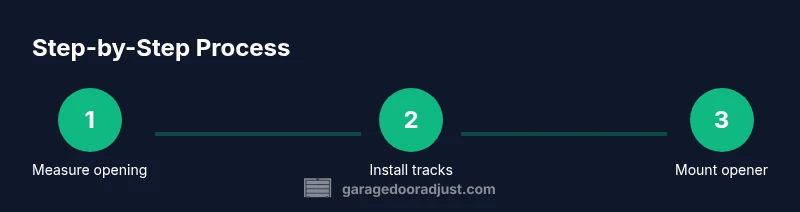
This section provides a high-level walk-through of the process to help you plan effectively. For homeowners choosing to DIY, the emphasis is on measurements, alignment, and safety considerations; for others, use this as a checklist to brief your installer. 1) Verify that your opening dimensions match the new system’s requirements and confirm compatibility with the chosen opener. 2) Prepare the workspace: disconnect power to the existing opener, remove any loose hardware, and clear the garage floor of obstacles. 3) Remove the old door sections in a staged manner, starting from the bottom panel, while supporting panels to prevent sudden falls. 4) Install new tracks, rollers, and hinges, ensuring perfect vertical and horizontal alignment before hanging door panels. 5) Mount the new opener and connect safety sensors, following manufacturer instructions and local codes. 6) Wire the system, program remotes, and test auto-reverse and obstacle-detection features. 7) Perform a balance test and adjust tension carefully, then lubricate moving parts and verify door travel limits. 8) Reconnect power, run multiple cycles, and confirm smooth operation with door fully opened and closed. 9) Verify weather seals and insulation, and finalize safety checks. Time estimates vary by door size and whether a full replacement or partial upgrade is performed. If anything feels risky, pause and hire a pro. This overview complements the detailed STEP-BY-STEP section that follows.
Safety and Maintenance Considerations
Safety cannot be overstated when upgrading a garage door system. Torsion springs and high-tension components can cause severe injury if mishandled. If you are not trained or equipped with the proper tools, hire a professional for spring work and electrical connections. Always disconnect power before working on the opener and use a blocked doorway to prevent accidental movement. For maintenance, set a regular schedule: inspect tracks for bends, verify roller wear, lubricate moving parts with a silicone-based spray, and test the auto-reverse function monthly. When sealing your door, select weather-stripping that matches your climate and re-check seals after heavy seasonal changes. Noise reduction can be achieved by installing a belt-driven opener and ensuring proper track alignment. If you live in a flood-prone area, consider adding back-up power and reinforcing the door with stronger anchors. Safety sensors should be aimed and tested so they consistently stop the door when an obstacle is detected. As you install the new system, keep a simple log of parts replaced and service dates. The key is to maintain the balance of the door and avoid over-tightening springs during initial setup. A small amount of patience early on reduces squeaks and misalignments later. GarageDoorAdjust’s engineers emphasize ongoing safety checks and periodic lubrication as essential habits for extending system life.
Authority Sources and Further Reading
For homeowners who want to dive deeper into standards and best practices, consider the following credible sources. OSHA provides general safety guidelines for power tools and elevated work, and it’s wise to review any local safety requirements before lifting heavy components. The U.S. Department of Energy’s energy.gov pages discuss insulation strategies for garage areas and how efficient doors can cut heating and cooling loads. The National Institute of Standards and Technology (NIST) offers resources on standard measurements and load ratings for building components, which can be informative when evaluating a new system. These sources are valuable references to complement hands-on guidance in this article. For a broader context, review manufacturer manuals and local building codes. Always rely on manufacturer instructions for installation steps, torque values, wiring diagrams, and safety features. By following reputable sources and using proper tools, you can complete a reliable upgrade that stands up to the climate and daily demands of your home. GarageDoorAdjust’s approach emphasizes safety first, transparent budgeting, and practical testing—ensuring the upgrade adds value and peace of mind. Based on GarageDoorAdjust Analysis, 2026, homeowners who invest in quality components and professional support tend to achieve longer-term reliability and fewer service calls.
Tools & Materials
- Cordless drill(18V minimum with a #2 Phillips bit)
- Assorted drill bits(Include 1/8", 3/16", 1/4" sizes)
- Wrench set (SAE and metric)(Adjustable wrench plus combination wrenches)
- Tape measure(At least 10 ft)
- Torpedo level(For precise alignment)
- Ladder (8 ft or taller)(Stable, non-slip feet)
- Safety glasses(Impact resistant)
- Work gloves(Grip and protection)
- Door tracks and hardware kit(Includes tracks, rollers, hinges, mounting brackets)
- Caulk gun(For weather sealant applications)
Steps
Estimated time: 6-9 hours
- 1
Verify opening compatibility
Measure the rough opening width and height and confirm the new system fits within the existing frame. Check header clearance, track alignment, and opener compatibility with your door type. A misfit here will cause binding and misalignment later.
Tip: Double-check header clearance and hinge spacing before purchasing components. - 2
Power down and prepare the workspace
Disconnect power to the existing opener at the wall switch and unplug the unit. Clear the driveway and garage floor of obstacles to prevent trips during removal and to provide a safe workspace for handling heavy panels.
Tip: Lockout the power source to avoid accidental energizing during work. - 3
Remove old door panels and hardware
Starting from the bottom panel, unbolt and lift panels away while keeping support to prevent sudden drops. Remove tracks, rollers, and brackets in a controlled sequence. Do not force components through tight gaps.
Tip: Keep a helper handy for supporting panels during removal. - 4
Install new tracks and alignment
Mount vertical tracks first, then horizontal tracks ensuring true plumb and level. Use a level to verify each section remains square as you progress. Correct any bowing or misalignment before moving on.
Tip: Take multiple reference measurements to ensure consistent gaps. - 5
Hang door sections and hinges
Attach hinges to door panels and hang sections onto the tracks in a staged, bottom-up sequence. Secure each panel before installing the next. Ensure even spacing and smooth travel along the tracks.
Tip: Support panels during lifting to prevent pinching your fingers. - 6
Mount the opener and connect safety sensors
Position the opener unit per manufacturer instructions. Install safety sensors on each side of the doorway at specified height. Confirm wiring matches the diagram and test sensor operations.
Tip: Avoid bending sensor wiring; secure with zip ties to protect from foot traffic. - 7
Wire, program remotes, and test
Connect power, pair remotes, and program the wall keypad if used. Test auto-reverse and obstacle detection across several cycles. Observe door travel limits to stop at the correct fully closed and fully open positions.
Tip: Test with a light object under the door to ensure auto-reverse triggers properly. - 8
Balance, lubricate, and seal
Balance the door by adjusting spring tension (only if you are trained and equipped). Lubricate rollers, hinges, and track rails with a silicone-based lubricant. Recheck weather seals and sealant integrity around the frame.
Tip: Apply lubricant sparingly to avoid attracting dirt and grime. - 9
Final safety check and documentation
Perform a final full-system test, verify door is level, and document model numbers, warranty, and service dates. Store manuals and receipts in a dry place for future reference.
Tip: Keep a spare set of remotes and sensor batteries for emergencies.
Got Questions?
Do I need to hire a professional for a new garage door system?
Hiring a pro is strongly advised for torsion spring replacements and electrical connections. A trained technician ensures safety, proper calibration, and code compliance.
A professional is recommended for spring work and electrical connections to ensure safety and proper setup.
How long does installation usually take?
Time varies with door size and complexity, but expect several hours to a full day for a complete upgrade when DIY. A professional installation is typically completed more quickly with less risk.
The time depends on the door size and the setup, but plan for several hours to a full day if you DIY.
What is the difference between belt and chain driven openers?
Belt drives are quieter and smoother and ideal for attached living spaces, while chain drives are usually more affordable but louder. Choose based on noise sensitivity and budget.
Belt drives are quieter and smoother; chain drives are louder but cheaper.
How should I choose insulation for a garage door?
Insulation improves energy efficiency and comfort. Look at R-values and climate suitability, and select a door with appropriate insulation for your local weather.
Pick insulation with a suitable R-value for your climate to improve comfort and energy use.
Are there safety standards I should follow?
Yes, follow manufacturer instructions and local building codes. Ensure sensors, auto-reverse, and other safety features are properly installed and tested.
Follow manufacturer guidelines and local codes; test safety features before use.
What maintenance will a new system require?
Regularly inspect tracks, lubricate moving parts, test sensors, and reseal weather seals as seasons change. Keep a maintenance log.
Inspect tracks, lubricate parts, test sensors, and reseal seals seasonally.
Watch Video
Quick Summary
- Plan with a compatibility check before buying.
- Safety first—spring and wiring work should be handled by pros if uncertain.
- Choose a system with insulation and smart features for long-term value.
- Test thoroughly and keep good maintenance logs.