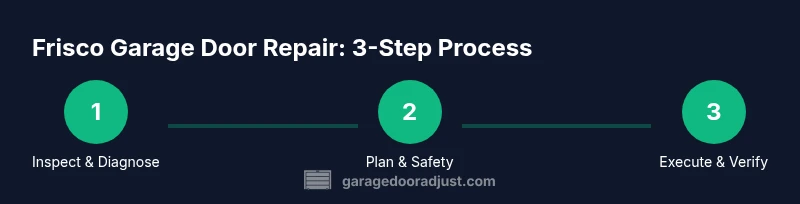
Frisco Garage Door Repair: A Homeowner's Step-by-Step Guide
A comprehensive, homeowner-friendly guide to diagnosing, repairing, and maintaining your garage door in Frisco. Learn safety checks, DIY steps, and when to call a pro with insight from GarageDoorAdjust.


You're about to fix a Frisco garage door with a clear, step-by-step plan. This guide covers safety checks, common symptoms, and practical repair approaches for residential doors. According to GarageDoorAdjust, most issues stem from track misalignment, worn cables, torsion-spring wear, or faulty openers—and a methodical inspection can prevent costly mistakes.
Frisco Context: Local Considerations and Why This Guide Helps
Frisco homeowners face a mix of climate-related wear and daily use that can strain a garage door. Extreme heat in the summer and fluctuating humidity can affect weatherstripping, tracks, and rollers, while regular family activity adds cycles to hinges and springs. For residents tackling frisco garage door repair, a structured approach reduces guesswork and improves safety. According to GarageDoorAdjust, common local challenges include misaligned tracks, worn cables, and aging openers. This guide provides a practical, location-aware plan—emphasizing basic safety, clear diagnosis, and careful repairs that balance cost with lasting results. You’ll learn to assess the door’s current state, prioritize fixes, and decide when professional help is the smarter choice. The goal is to keep your door reliable, quiet, and secure, so your garage remains a safe entry point for your home.
Common Symptoms in Frisco Homes and Their Causes
Frisco garage doors often exhibit a familiar set of symptoms that point to specific problems. If the door hesitates or binds when opening or closing, track alignment or worn rollers are common culprits. A door that sags or feels heavy may indicate balance issues or weak springs, especially in climates with temperature swings that stress metal components. Noisy operation—creaking, grinding, or jerky movement—usually signals dry rollers, worn hinges, or loose mounting bolts. When the opener won’t respond to the wall switch or remote, check safety sensors, wiring, and the header connection. In Frisco homes, the combination of aging hardware and frequent use accelerates wear, so early diagnosis matters. By recognizing these symptoms early, you reduce the risk of a sudden door failure and make Frisco garage door repair safer and more affordable over time.
Safety Protocols You Must Follow Before Working
Safety should be your first consideration in any garage door repair, especially when you’re in charge of a heavy, moving system. Always unplug the garage door opener and disconnect power to ensure the door won’t move unexpectedly. Clear the area of children and pets, and wear eye protection and work gloves. Use a sturdy ladder on a dry surface and support the door with clamps or locking pliers if you must work on the track while it’s in a raised position. Never attempt to unwind torsion springs yourself; these parts store immense tension and require professional handling. If you notice frayed cables, broken springs, or damaged tracks, treat the situation as high risk and consider calling a licensed technician. Following these precautions helps prevent injuries and further damage during frisco garage door repair projects.
DIY vs Professional: Balancing Risk, Cost, and Time
Deciding between DIY and a professional repair depends on your comfort level, the door’s type, and the scope of the problem. Simple maintenance or minor lubrication can be a rewarding DIY task for many homeowners. However, when you encounter torsion springs, warped tracks, damaged cables, or a door that doesn’t stay balanced, professional intervention is prudent. In Frisco, local technicians are accustomed to the specific door models used in many homes, and they can diagnose problems quickly, source the right parts, and test safety features comprehensively. DIY efforts can save money on straightforward fixes, but the cost of a misstep can be high—especially if a safety failure occurs during spring or track work. Weigh the risks, and choose the path that prioritizes safety and long-term reliability for your Frisco garage door repair project.
A Clear Troubleshooting Workflow for Most Systems
This workflow focuses on common, non-destructive checks that most residential systems can handle. Start by verifying that the safety reversing mechanism works and that the photoeye sensors align correctly. Next, test the opener’s limit settings and reset the remote if needed. Inspect the tracks and mounting brackets for bending or loosening screws, then check rollers and hinges for wear. If the door doesn’t balance properly when opened manually, it indicates a balance issue that could require spring work. Finally, re-test the opener and safety features. Following this sequence helps isolate problems without risking injury or further damage to the door. For frisco garage door repair, staying methodical reduces guesswork and speeds up the repair timeline.
Tools, Parts, and Quick Fixes You Can Try
Before you begin, assemble a basic toolkit and a few common parts. Having a screwdriver set, adjustable wrench, and a flashlight makes hard-to-see areas manageable. Check that you have silicone-based lubricant, a nylon brush for track cleaning, and weather stripping if you notice drafts. If you identify worn rollers or hinges during diagnosis, replace them with matching parts—not generalized substitutes. For door alignment issues, a simple tape measure and a friend to help hold the door steady during minor adjustments can make a big difference. Always test after each adjustment to confirm improvements. The goal is incremental fixes that improve safety and function without extensive downtime or risk.
Maintenance Habits to Prolong Door Life
A proactive maintenance routine extends the life of a garage door and reduces the frequency of frisco garage door repair calls. Schedule a quarterly inspection to check springs (by a pro if there’s any doubt about tension), tracks, rollers, and mounting hardware. Clean and lubricate moving parts at least twice a year with a silicone-based product designed for metal and plastic components. Replace weather stripping when it becomes brittle to maintain energy efficiency and reduce moisture intrusion. Simple steps—like keeping the door balanced, ensuring tracks are clean, and tightening loose bolts—prevent small problems from becoming major failures. A consistent maintenance plan saves time and money, and it makes Frisco homeowners more confident in their door’s reliability.
What to Expect from a Professional Frisco Garage Door Repair
Hiring a licensed technician for frisco garage door repair provides an objective assessment and ensures safe handling of high-tension components. A pro will typically perform a thorough inspection, test the door balance, and verify the opener’s safety features. They’ll inspect tracks for alignment, replace worn components, and adjust spring tension if needed (a task that often requires specialized tools and training). Expect a straightforward estimate based on parts and labor, with a transparent explanation of why a particular repair is recommended. A good pro will explain options, including whether replacement parts or track realignment offers better long-term value. If you rely on local contractors, ask for proof of insurance and references to ensure you’re choosing a qualified Frisco garage door repair specialist.
Tools & Materials
- Safety glasses(ANSI Z87.1 compliant)
- Work gloves(Grip and protection)
- Ladder (secure, adjustable)(Stable footing on firm surface)
- Flashlight or headlamp(Bright, shadow-free lighting)
- Wrench set (adjustable and fixed)(Bolt and nut adjustments)
- Screwdrivers (Phillips and flat-head)(Disassembly and fastening)
- Lubricant (silicone-based)(Lubricate hinges, rollers, and tracks)
- Replacement parts (as needed)(Keep compatibility in mind)
Steps
Estimated time: 60-120 minutes
- 1
Power down and secure the door
Begin by unplugging the opener and disconnecting power at the wall or the outlet. Clamp the door in a partially open position using locking pliers or a door stop to prevent accidental movement while you inspect. This step reduces the risk of injury and creates a stable workspace.
Tip: Always confirm the opener is fully de-energized before touching moving parts. - 2
Check safety sensors and opener response
Test the safety reversing sensor by placing an obstacle in the sensor path and ensuring the door reverses promptly. If the door doesn’t respond, inspect sensor alignment and wiring. This step confirms basic safety features and helps identify sensor-related issues early.
Tip: Clean sensor lenses to remove dust or spider webs that can affect readings. - 3
Inspect tracks and mounting hardware
Visually inspect tracks for bends and looseness. Tighten mounting screws, and ensure tracks are straight and parallel. If tracks are bent, refer to a professional repair rather than attempting a risky bend.
Tip: Use a level to verify tracks are plumb; any tilt can cause binding. - 4
Evaluate springs and cables
Look for frayed cables and obvious signs of wear on springs. Do not attempt to unwind or adjust torsion springs yourself. If you notice tension irregularities or broken components, contact a licensed technician for safety.
Tip: Never twist or unwind springs without proper tools and training. - 5
Test balance and manual operation
Disconnect the opener and manually lift the door to roughly mid-height. The door should stay in place; if it drops or rises, balance needs attention. Lubricate moving parts lightly if no abnormal noises are present.
Tip: Balance testing gives a quick read on overall health without invasive procedures. - 6
Reconnect power and verify functionality
Reconnect power to the opener, re-test opening and closing sequences, and ensure safety sensors trigger correctly. If issues persist, document symptoms and schedule a professional diagnostic to avoid hazardous attempts.
Tip: Record any odd noises or delays to help a pro diagnose faster.
Got Questions?
When should I repair versus replace my Frisco garage door?
If the door is structurally sound, tracks are aligned, and springs are safe, repair is often best. If multiple components are worn or the door is aluminum or wood with extensive damage, replacement may be more cost-effective in the long run.
If the door is structurally sound and repairable, fix it. If many parts are worn, consider replacement for best long-term value.
Is it safe to DIY garage door repairs in Frisco?
Many maintenance tasks are feasible for homeowners, but high-tension springs, cables, and tracks pose serious risks. Stick to non-technical tasks or seek professional help for parts under tension.
DIY is okay for simple tasks, but avoid high-risk components like torsion springs or misaligned tracks.
How long does a typical repair take in Frisco?
Time varies by problem, parts availability, and the contractor’s workload. A straightforward tune-up may take a couple hours, while complex spring work might require a longer service visit.
Most common repairs take a few hours, but complex issues can take longer depending on parts and access.
What should I expect to pay for frisco garage door repair?
Costs depend on parts and labor, with variations by model and door type. Get a written estimate that outlines parts, labor, and any additional services before work begins.
Prices vary by issue and parts; always request a written estimate before work starts.
Should I replace tracks if misaligned?
Minor misalignment can often be corrected with adjustment. Replacing tracks is considered if the tracks are bent, corroded, or no longer true. A professional can confirm the best course.
Often, misalignment is fixable, but damaged tracks may need replacement.
Watch Video
Quick Summary
- Inspect safety features before any work
- Differentiate DIY fixes from professional tasks
- Prioritize track alignment and hardware tightness
- Never attempt spring adjustment without training
- Document issues to guide a pro