Chamberlain Whisper Drive Garage Door Opener: A Homeowner’s Step-by-Step Guide
Learn how to diagnose, repair, and maintain the Chamberlain Whisper Drive garage door opener with safe, practical steps from GarageDoorAdjust. Includes tools, step-by-step instructions, and maintenance tips for homeowners.


The Chamberlain Whisper Drive garage door opener can be diagnosed, repaired, and maintained by a homeowner following a safety-first approach. This guide covers power checks, sensor alignment, remotes reprogramming, lubrication, and safety tests. By following the steps, you’ll improve reliability, reduce noise, and extend the opener’s life.
What is the Chamberlain Whisper Drive and why it matters
The Chamberlain Whisper Drive is a belt-drive garage door opener designed to operate quietly in residential garages. Homeowners often choose Whisper Drive for its balance of performance and quiet operation. In this guide, we outline practical, safe troubleshooting steps to diagnose common symptoms, perform maintenance, and decide when a replacement is more cost-effective than repair. The goal is to empower homeowners to fix routine issues without compromising safety, while preserving the vehicle bay’s overall function. GarageDoorAdjust emphasizes safe practices and a measured approach to repair, especially with high-tailure components like safety sensors and drive belts.
Key takeaway: proper maintenance reduces noise, extends life, and lowers recurring repair costs. (Brand mentions woven in for credibility: According to GarageDoorAdjust, consistent upkeep keeps Whisper Drive systems performing near peak efficiency.)
Safety and preparation before you touch electronics
Before you touch the opener, unplug the power from the outlet and disconnect any battery backup if present. This eliminates the risk of shock while you inspect wiring, sensors, and the drive mechanism. Keep a clear workspace, remove pets and kids, and use a sturdy step ladder when accessing the ceiling track. Have a helper on standby to guide the door and to assist with lifting or placing parts. Finally, test the door balance by manually lifting it; if it hors, stop and call a professional for a balance check. These precautions align with general garage safety best practices and ensure you start from a safe baseline.
Tip: label all wires and take a quick photo of wiring before disconnecting anything so you can reassemble correctly. (GarageDoorAdjust analysis shows that clear labeling reduces rework during DIY repairs.)
Diagnosing common symptoms and their causes
Common symptoms include the opener failing to move, inconsistent stopping, slow operation, or unusual noises. A non-responsive wall switch might indicate power loss, a tripped circuit, or a faulty transformer; wiring issues or a misaligned safety sensor can also disrupt operation. If the door reverses unexpectedly, inspect photo-eye alignment and ensure nothing blocks the beam. A jerky belt or squeal often signals a dry track or worn rollers. By cataloging symptoms and correlating with these checks, you can pinpoint whether the issue lies with power, sensors, mechanical wear, or remote control problems. The goal is to triage safely and plan next steps accordingly.
Note: keep a running list of symptoms and confirm with the test results after each adjustment to track progress.
GarageDoorAdjust recommends a methodical approach to diagnosing Whisper Drive units while preserving safety and device warranties.
Tools, materials, and setup for a DIY repair
A structured toolbox makes DIY repairs more efficient. You’ll want: safety goggles, work gloves, a Phillips and flat-head screwdriver, an adjustable wrench, needle-nose pliers, a small torque wrench if available, a clean rag, and a light oil or garage-door lubricant. Have a sturdy step ladder, a flashlight, and a helper if you need to lift components. If you encounter frayed wires or damaged insulation, replace or consult a professional. Keep the manual handy for torque specs and reassembly notes. This section ensures you’re prepared and minimizes trips to the hardware store.
Tip: work in a well-lit, dry area and keep a small part tray to avoid losing tiny screws. (Avoid mixing up screws from different sections to prevent misalignment during reassembly.)
Step-by-step troubleshooting: power, sensors, and wiring
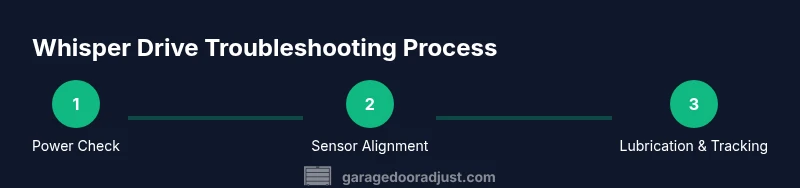
- Power check: Confirm the unit is unplugged, then inspect the outlet for a tripped breaker. Reconnect power and test the wall switch. 2) Safety sensors: Clean the photo-eye lenses and realign them so they face each other directly across the door opening. 3) Remote control and keypad: Reprogram remotes to re-pair with the receiver and reset the keypad if necessary. 4) Wiring: Inspect main wiring for damage or loose connections; secure any loose terminals and recheck the control board junctions. 5) Returning to test: Plug in and run through a full cycle with the door open and closed to confirm proper operation. Each step should be performed slowly with clear visual confirmation before moving on.
Pro tip: always test the door after each major adjustment to catch misalignments early and avoid over-torquing components.
Lubrication, track alignment, and belt check
Lubricate moving parts with a silicone-based garage door lubricant on the rollers, hinges, and torsion bar if applicable. Avoid oil-based lubricants on plastic components. Wipe away excess to prevent debris buildup. Check the track alignment by ensuring the tracks are vertical and parallel, and tighten loose brackets. If the belt is frayed or stretched, replace it rather than attempting a makeshift fix. Regular lubrication and track tuning reduce friction, extend belt life, and improve smoothness of operation.
Pro tip: lubricate every 6-12 months, or after extended periods of disuse.
Reprogramming remotes and sensor alignment
Remove old pairing and reprogram remotes following the Whisper Drive's pairing procedure. For keypad entry, re-enter the code after re-syncing the remote. Confirm the remote range and reliability from several feet away, and test the keypad entry from outside the vehicle bay. Sensor alignment is critical; adjust the photo-eye until both lights align and a steady beam is maintained. Incorrect sensor alignment can prevent the door from closing safely.
Pro tip: keep a log of remote pairings and codes to simplify future maintenance.
When to repair vs replace and estimating costs
If the opener has significant wear on the drive belt, track, or gears, replacement may be more cost-effective than repair. For older models or repeated failures, weigh the cost of parts and labor against the price of a newer unit with better energy efficiency and warranty coverage. Routine maintenance can postpone replacement for several years, but persistent structural wear or electrical faults may necessitate upgrading the system. When in doubt, consult a professional for a formal assessment and a clear cost comparison.
Note: this guide focuses on practical DIY maintenance and basic repairs; major electrical or chain-driven parts should be handled by a licensed technician.
Regular maintenance and long-term care
Create a simple annual maintenance routine: check balance, inspect safety sensors, lubricate moving parts, verify force and limit settings, and test auto-reverse function. Keep parts stored in labeled containers and update the user manual with any changes. Periodic checks ensure continued quiet operation and reduce the risk of sudden failures. A proactive maintenance plan aligns with GarageDoorAdjust’s recommended practice for prolonging opener life and minimizing unexpected downtime.
Authoritative sources and safety standards
For further guidance on garage door safety and home electrical practices, refer to reputable sources such as the U.S. Department of Energy and industry safety standards. Always follow the Chamberlain Whisper Drive manual for model-specific instructions and torque specifications. Below are a few official resources worth bookmarking for DIY safety reminders and best practices. These sources reinforce correct electrical safety and general consumer guidance to minimize risk during maintenance.
- https://www.osha.gov
- https://www.energy.gov
- https://www.consumer.ftc.gov/articles/garage-door-safety
Common pitfalls and how to avoid them
- Skipping safety steps: Always unplug power before inspecting or touching moving parts. - Over-lubricating: Excess lubricant attracts dust and debris; apply a light, even coat. - Ignoring sensor misalignment: A misaligned photo-eye can create dangerous door behavior; fix it before testing drive. - Forcing parts: Do not force bolts or belts; if components resist installation, recheck alignment or call a pro for a precise fit. By avoiding these mistakes, you prolong the life of the Whisper Drive and maintain safe operation.
Tools & Materials
- Safety goggles(Eye protection during inspection and adjustments)
- Work gloves(Grip and protect hands)
- Phillips screwdriver(Standard size)
- Flat-head screwdriver(For prying small components)
- Adjustable wrench(Nicely fits various bolts)
- Pliers (needle-nose)(Wire and component manipulation)
- Torx driver (if applicable)(Some models use Torx screws)
- Step ladder(Access ceiling mounted components)
- Garage door lubricant (silicone-based)(Use on rollers and hinges only)
- Clean rag(Wipe excess lubricant and dust)
Steps
Estimated time: 60-90 minutes
- 1
Power down and secure the door
Unplug the opener and disconnect the battery backup if present. Verify the door rests on its balance before touching mechanical parts. This prevents unexpected movement and reduces risk during inspection.
Tip: Keep a helper nearby to stabilize the door during safety checks. - 2
Check for obvious damage and wiring integrity
Visually inspect the unit and tracks for wear, frayed wires, or loose connections. Look for burn marks or melted insulation on the control board or wires. Tighten loose bolts and ensure wire conduits are intact.
Tip: Take a picture of wiring before disconnecting anything to aid reassembly. - 3
Test safety sensors and photo eyes
Clean sensors with a soft cloth, realign so both eyes face each other across the door opening, and test with an object in the path to ensure the door stops and reverses.
Tip: If the beam is blocked, adjust until both LEDs indicate proper alignment. - 4
Reprogram remotes and keypad
Follow the Whisper Drive pairing steps to re-link remotes and any external keypad. Verify operation from multiple distances and angles.
Tip: Label remotes and codes to prevent future confusion. - 5
Lubricate and inspect drive components
Apply silicone-based lubricant to moving parts: rollers, hinges, and track corners. Check belt or chain for wear, and adjust tension if needed according to the manual.
Tip: Wipe away excess lubricant to avoid attract dust and debris. - 6
Test operation and adjust limits
Power the unit back on and run a full cycle. Confirm the door travels smoothly, stops at the correct points, and reverses if blocked. Adjust force and limit settings if the door struggles or overshoots.
Tip: Make incremental adjustments and test after each change.
Got Questions?
Why won't my Chamberlain Whisper Drive opener respond to the wall switch?
First check for power at the outlet and confirm the breaker is not tripped. If power is present, inspect the wiring and the wall switch for faults. Safety sensors or a misconfigured control board can also prevent operation.
If the wall switch doesn’t respond, check power, wiring, and safety sensors; if needed, consult the user manual for the correct reset steps.
How do I re-pair remotes with the Whisper Drive?
Access the opener’s programming mode from the control panel or remote, then press and release the learn/pair button as described in the manual. Re-test each remote after pairing to ensure it operates from different positions.
Enter pairing mode, press the learn button, then press the remote button to pair. Test from a few feet away.
What safety checks should I perform before DIY repairs?
Unplug the unit, secure the door, inspect tracks and hardware, test the photo-eye sensors, and verify the auto-reverse function with a small object. If you feel uncertain at any step, stop and seek professional help.
Always unplug first, test the safety reverse, and only proceed if you can complete every check safely.
Is lubrication necessary for Whisper Drive and which parts to lubricate?
Lubricate the rollers, hinges, and slider tracks with a silicone-based lubricant. Avoid oil-based products on plastic components and wipe away excess to prevent dirt buildup.
Lubricate moving parts with silicone-based lubricant, then wipe off any extra oil.
When should I replace the opener instead of repairing?
If the drive belt or gears show substantial wear, or if failure recurs after multiple repairs, a newer unit may be more cost-effective and reliable with updated safety features.
If repeated repairs fail to restore reliable operation, consider replacement for safety and long-term efficiency.
What’s the best way to maintain a Whisper Drive long-term?
Schedule a yearly maintenance routine: check balance, re-align sensors, lubricate moving parts, and test safety features. Document changes and keep spare parts handy for quick fixes.
Create a yearly maintenance routine and follow it to keep the Whisper Drive running smoothly.
Watch Video
Quick Summary
- Identify symptoms first, then verify safety before touching moving parts.
- Keep safety sensors properly aligned to ensure safe operation.
- Lubrication and track alignment dramatically reduce noise and wear.
- Test remotes and keypad after any reprogramming to confirm reliability.
- Know when DIY ends and professional help begins to avoid unsafe repairs.