Chamberlain Garage Door Opener Repair: Step-by-Step DIY
Learn safe, proven steps to diagnose and repair Chamberlain garage door openers. This expert guide covers common issues, tool lists, and maintenance tips from GarageDoorAdjust.


With the right safety precautions, you can diagnose and repair common Chamberlain garage door opener issues such as misaligned sensors, a stuck trolley, or a noisy chain. Start by unplugging the unit and checking the fault codes in the manual. This guide will walk you through a safe, step-by-step approach to restore operation.
Why Chamberlain garage door opener repair matters
Chamberlain garage door openers are among the most common residential systems due to reliability and convenience. For homeowners pursuing chamberlain garage door opener repair, a methodical approach saves time and reduces risk. According to GarageDoorAdjust, proper diagnosis before replacing parts is more effective than guessing. In this guide, we discuss typical symptoms, model-specific quirks, and safe strategies to restore operation without compromising warranty or safety. You’ll learn to differentiate sensor problems from mechanical wear, verify power and safety features, and decide whether DIY fixes are appropriate for your situation. By the end, you’ll have a clear, step-by-step framework that you can apply to most Chamberlain units. This section also reflects the insights from GarageDoorAdjust Team as we walk through practical, model-aware checks that homeowners can perform with common tools.
Safety first: essential precautions
Safety should be your first priority when tackling chamberlain garage door opener repair. Always unplug the opener from the wall outlet and disconnect the emergency release before touching any moving parts. Wear protective eyewear and gloves, and keep children and pets away from the workspace. Work on a dry surface and avoid standing on wet concrete. Read and follow your Chamberlain model’s manual for specific warnings and torque specs. If you encounter high-voltage components, a licensed electrician is the safer option. This approach minimizes the risk of electric shock, falls, or unintended door movement. The GarageDoorAdjust Team emphasizes patience: rushing a repair increases the chance of wrong wiring or misadjustment that could damage the opener or cause injury.
Common problems and quick diagnoses
Chamberlain openers fail for a range of reasons, but several issues occur most frequently. A misaligned safety sensor often prevents the door from closing, while a worn or loose drive belt or chain can cause slipping, jerks, or noise. The antenna or remote receiver can lose pairing, causing intermittent operation. Debris on tracks or rollers can impede movement, creating resistance. In some cases, the limit switches or force settings become out of spec after a bounce or impact. GarageDoorAdjust Analysis, 2026 shows that sensor misalignment and track obstructions are among the most common DIY repair topics, while electrical faults tend to need professional attention. Use the following decision tree: test power, test the wall control, inspect safety sensors, clear tracks, and then address drive train wear if present.
Tools and preparation for repair
Before you start chamberlain garage door opener repair, gather the following essentials: a screwdriver set (Phillips #2 and flathead), an adjustable wrench, a stepladder, a surface-safe lubricant (silicone spray), a clean rag, a multimeter for electrical checks, spare safety sensors or limit switches if you suspect wear, and the owner’s manual for your specific model. Have a smartphone or camera handy to document settings before you adjust anything. Keep a dedicated work area free of clutter and ensure the door is in the down position when you begin. If your opener uses a belt drive, inspect the belt condition and tension; a frayed belt is a common and treatable issue, but replacement may be necessary. This prep ensures you work methodically and safely through the repair process.
Step-by-step overview of the repair flow
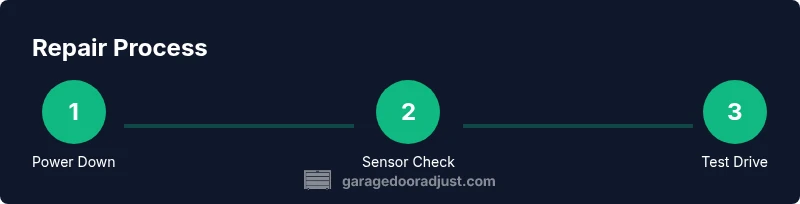
This overview outlines the sequence you’ll follow when performing chamberlain garage door opener repair: 1) safely power down and gain access to the opener; 2) verify that safety sensors are clean, aligned, and communicating; 3) test door travel limits and force settings; 4) inspect the drive mechanism (belt/chain) and tension; 5) perform a safety-reverse test and adjust if needed; 6) reassemble, reconnect power, and run multiple cycles. The goal is to correct root causes rather than apply temporary fixes. If at any point you feel unsure, consult the manual or contact a professional; safety is paramount and mistakes can cause injury or equipment damage.
Tools & Materials
- Screwdriver set (Phillips #2 and flathead)(Keep small screws organized; take photos before removal)
- Adjustable wrench(Useful for nuts on mounts and tensioners)
- Stepladder(Stable, dry surface; 2-3 feet tall)
- Multimeter(Check voltage and continuity on safety circuits)
- Silicone lubricant spray(Avoid lubricants on belts or pulleys unless recommended)
- Replacement safety sensors or limit switches(Only if existing parts are visibly damaged or faulty)
- Cloth rag and cleanup solution(Clean sensor lenses and tracks before testing)
- Owner’s manual for your Chamberlain model(Model-specific instructions and torque specs)
Steps
Estimated time: 45-75 minutes
- 1
Power down and access the opener
Unplug the unit at the outlet and pull the emergency release to disengage the door from the opener. Remove the exterior case screws to access the drive components. Take photos of wiring and labeling before you disconnect anything.
Tip: Label wires and take a reference photo; you’ll thank yourself later when reassembling. - 2
Check safety sensors and alignment
Inspect the infrared safety sensors on either side of the door track. Wipe lenses clean, check for misalignment, and ensure both LEDs behave as expected when the beam is interrupted. Realign brackets if needed and test LED indicators after adjustment.
Tip: Aim to align sensors so the beams are level and the LED is steady, not flickering. - 3
Test and adjust travel limits
Locate the limit adjustment screws or dip switches on the opener. Make small adjustments (¼ turn at a time) and cycle the door until travel ends smoothly without binding. Record the starting settings for reference.
Tip: Make slow, incremental changes; over-adjustment can cause the door to close too tightly or bounce. - 4
Inspect drive train for wear
Check the belt or chain for fraying, slack, or misalignment. Ensure the gear and trolley are intact and that the belt/pully runs true in the track. Replace worn components if you notice visible damage.
Tip: Do not lubricate the belt unless the manufacturer specifies; most wear is due to slack or misalignment, not lubrication. - 5
Test safety reversal and force settings
Place a small object on the floor under the door and test the safety reversal with the opener’s remote and wall switch. If the door does not reverse on contact, adjust the force or travel limits and re-test until reversal is reliable.
Tip: Ensure a clear safety margin so the door stops before hitting objects. - 6
Reconnect power and run final tests
Reattach the cover, restore power, and perform multiple cycles with remote and wall control. Listen for unusual noises and observe door travel. Verify the door closes fully and reopens when blocked.
Tip: Test at different speeds if your model offers variable speed; confirm consistent operation across cycles.
Got Questions?
Is it safe to repair a Chamberlain garage door opener myself?
DIY repairs are feasible for basic maintenance and safe adjustments when you follow proper safety steps: unplug power, test sensors, and use manufacturer guidelines. For high-voltage or critical components, consult a professional.
Yes, for basic maintenance you can DIY, but avoid high-risk tasks and follow safety steps. Seek a pro for electrical or spring work.
What are the most common causes of opener failure for Chamberlain models?
Sensor misalignment, track obstructions, and worn drive belts or chains are frequent culprits. Remote pairing issues and faulty limit switches also pop up. Diagnosing sensors and tracks often resolves many issues.
Most failures come from misaligned sensors, blocked tracks, or worn belts; check these first.
How do I realign the safety sensors on a Chamberlain opener?
Wipe lenses clean, loosen the mounting brackets, and re-align so both LEDs are steady when the beam is unobstructed. Retest after tightening mounts.
Clean the lenses, adjust the brackets, and verify the LED indicators stay steady.
How long does a typical repair take?
A basic diagnostic and adjustment can take about 30-60 minutes. More complex fixes, such as drivetrain wear or sensor replacements, may require longer or professional service.
Most simple fixes take under an hour; complex repairs can take longer.
When should I replace rather than repair?
If multiple major components are worn, the door shows persistent instability, or safety tests fail after adjustments, replacement may be more cost-effective and safer.
If many parts are worn or safety tests fail, replacement may be the safer choice.
Where can I find model-specific manuals for Chamberlain openers?
Check Chamberlain’s official site and your model’s insert for wiring diagrams, torque specs, and safety notes. Manufacturer manuals provide the most accurate guidance.
Look up your exact model on Chamberlain’s site for the manual.
Watch Video
Quick Summary
- Diagnose before replacing parts to save time and money.
- Unplug power and test sensors before adjusting drive hardware.
- Small, incremental adjustments prevent over-correction.
- Keep safety at the center of every repair—no shortcuts.
- Know when to call a pro for high-risk tasks.