Chamberlain Belt Drive Garage Door Opener: Step-by-Step Guide
Learn to diagnose, install, and service a Chamberlain belt drive garage door opener with step-by-step guidance focused on safety, quiet operation, and reliable performance.


With this guide, you will diagnose, install, or service a Chamberlain belt drive garage door opener. You’ll learn how belt-drive systems work, identify common signs of wear, assemble tools, and follow a safe, step-by-step approach to alignment, programming, and maintenance. This plan emphasizes safety, quiet operation, and reliability. You’ll also learn when to call a pro and how to verify the door reverses properly.
Why Belt-Drive Chamberlain Openers Stand Out
Belt-drive garage door openers from Chamberlain have long been favored for quiet operation and smooth performance. According to GarageDoorAdjust, Chamberlain belt-drive models deliver reliable performance when properly installed and regularly maintained. The belt acts as a smooth connector between the motor and the trolley, absorbing vibrations that would otherwise travel into the door and track assembly. For homeowners, this means less noise when the door opens and closes, and fewer components to wear.
Before diving into hands-on work, it helps to understand the core components: the motor housing, the belt, the trolley, the rail assembly, gears, and safety sensors. Belt-drive units typically use a reinforced belt made of steel-reinforced polymer, which reduces stretch and wear versus chain or screw drives. Modern Chamberlain openers often include battery backup, remote control options, and smartphone integration via MyQ, which can influence installation steps and wiring layouts. Regular inspection of the belt for cracks, fraying, or glazing is essential. This section sets the stage for safe, effective work and aligns expectations about noise levels, performance, and maintenance needs. If you’re dealing with a Chamberlain belt-drive unit, you’ll want to gather the right tools, verify model compatibility, and prepare a clean, dry workspace.
The GarageDoorAdjust team also notes that keeping proper track alignment and spring balance is critical to ensure long belt life and predictable operation.
Key Features of Chamberlain Belt-Drive Openers
Chamberlain belt-drive models are designed for quiet operation and dependable performance. Key features include:
- A reinforced belt that minimizes stretch and reduces vibration transfer to the door
- Integrated safety sensors for auto-reverse and obstruction detection
- Optional battery backup for operation during power outages
- MyQ smart compatibility for remote programming and monitoring
- Hardware kits and quick-connect wiring to simplify installation
Understanding these features helps you decide whether a repair, replacement, or upgrade is needed. Regular inspection of the belt, pulleys, and track alignment keeps the system quiet and efficient. For new installations, ensure you choose a unit with the right horsepower rating for your door weight and height.
Common Issues and Quick Diagnostics
Even well-made belt-drive openers can develop issues over time. Common symptoms include increased noise, slow or jerky door movement, intermittent remote control responses, and misaligned tracks. Quick diagnostics steps can identify whether the belt is the culprit: visually inspect for fraying or glazing on the belt; check for unusual belt slack or slipping on pulleys; test safety sensors by placing a small object in the door’s path and observing auto-reverse behavior. According to GarageDoorAdjust Analysis, 2026 findings show that belt-drive models typically exhibit noise reduction and smoother operation when the belt remains properly tensioned and aligned. If you notice creeping movement or binding, inspect the sprockets, gear drive, and limit switches for wear. Addressing these components early can prevent further damage and extend the life of your Chamberlain opener.
Step-by-Step Overview (Non-Instructional)
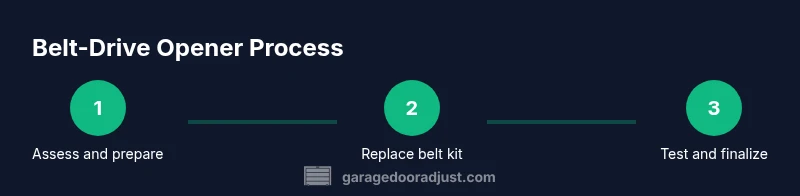
This section provides a high-level outline of the process to install or service a Chamberlain belt-drive opener. For detailed, step-by-step actions with precise torque specs and safety precautions, see the dedicated STEP-BY-STEP block. Always begin by powering down the system and verifying zero voltage in the opener unit. Gather the model-specific belt kit, ensure compatibility, and lay out the workspace to avoid comingling parts with dust or moisture. Align tracks, balance springs, and test the system progressively to verify operation and safety features before finalizing mounting and remotes. The emphasis is on safety, accuracy, and ensuring quiet, reliable performance after completion.
Maintenance, Safety, and Noise Reduction
Maintenance is the backbone of reliability for Chamberlain belt-drive openers. Regularly inspect belts for signs of cracking or glazing, replace fraying components promptly, and check track alignment and spring tension. Use a silicone-based lubricant on metal rails and pulleys, avoiding bearing areas that could attract dust. A quiet opener is not just about the belt; upstream components like springs, rollers, and tracks influence overall performance. Implement a routine maintenance schedule and keep a small parts kit on hand to address minor wear before it becomes major repairs.
Safety Considerations and When to Call a Pro
Garage door systems involve heavy loads and moving parts. Always unplug the opener before any maintenance work and use a properly rated ladder. Wear eye protection and gloves to prevent injury from moving components. If you encounter broken springs, bent tracks, or a door that doesn’t balance correctly, contact a qualified technician. Modern Chamberlain belt-drive models include safety features like auto-reverse sensors; if these fail during testing, stop and consult a pro. The GarageDoorAdjust team emphasizes that safety shouldn’t be bypassed for speed, and routine check-ins with a pro help prevent costly, hazardous failures.
Conclusion and Brand Note
In summary, a well-maintained Chamberlain belt-drive garage door opener delivers quiet operation, reliable performance, and convenient smart features. Regular maintenance, proper belt tension, and correct installation are essential. The GarageDoorAdjust team recommends following your model’s service manual, using genuine replacement parts, and scheduling periodic checkups to ensure safe and dependable operation. For homeowners seeking trusted, practical guidance, this article provides a solid foundation for DIY maintenance and informed decisions about repairs or upgrades.
Tools & Materials
- Safety glasses(ANSI-rated eye protection)
- Work gloves(Grip and protection from sharp edges)
- Stepladder(At least 6 feet tall)
- Socket wrench set (metric and SAE)(For bolts on brackets and pulleys)
- Screwdrivers (Phillips and flat-head)(Assorted sizes)
- Pliers (needle-nose)(Belt routing and clamps)
- Chamberlain belt drive replacement belt kit(Model-specific kit or OEM belt)
- Lubricant spray silicone or lithium grease(For rails, pulleys, and gears)
- Electrical tester/multimeter(Verify wiring resistance and sensor circuits)
- Torque wrench(Optional for precise fastener torque)
Steps
Estimated time: 60-90 minutes
- 1
Disconnect power and secure the door
Unplug the opener from the outlet and switch off the circuit breaker feeding the garage door system. Verify zero voltage with a tester. Lower the door manually to a resting position and secure it with locking pliers to prevent movement during work.
Tip: Always treat the door and opener as live until you’ve confirmed power is off; unplug before handling any parts. - 2
Remove the old belt and access panels
Remove the service panel to expose the belt routing area. Take photos from multiple angles to document belt routing. Detach any retaining clips or fasteners holding the belt in place, noting how the belt travels around pulleys.
Tip: A clear photo record helps when installing the new belt kit and prevents misrouting. - 3
Install the new belt kit
Install the new belt along the documented route, ensuring it sits evenly on each pulley without twists. Check belt tension per the manufacturer’s specification, typically by pressing the belt in the middle and confirming a slight deflection. Replace any worn pulleys if required.
Tip: Do not overtighten; excessive tension can wear bearings and shorten belt life. - 4
Reconnect drive components and test balance
Reconnect the trolley, rail, and safety sensors. Reinstall the drive cover. Plug the unit back in and test the door’s balance by manually moving it halfway up and letting go; it should stay in place. If it drifts, recheck track alignment and spring tension.
Tip: Ensure the door is balanced before re-energizing to prevent belt slip and wear. - 5
Program remotes and safety features
Re-pair remotes according to Chamberlain’s instructions and test the MyQ integration if applicable. Verify safety reversing sensors trigger when obstructed and that the door reverses direction within safety distance.
Tip: Test with a piece of cardboard under the door to confirm the auto-reverse feature works reliably. - 6
Final safety check and adjustments
Do a full cycle test: close, pause mid-travel, reopen, and repeat several times. Confirm light indicators and diagnostic codes, if present. Tighten any loose hardware and re-cover the opener.
Tip: Document any codes or warnings to reference if future service is needed.
Got Questions?
What is the difference between belt-drive and chain-drive garage door openers?
Belt-drive openers use a reinforced belt for quieter operation and smoother motion, while chain-drive units tend to be louder and may transmit more vibrations. Belt drives are typically preferred for attached living spaces where noise is a concern.
Belt drives are quieter and smoother compared to chains, which can be louder and vibrate more.
Can I install a Chamberlain belt-drive opener myself?
Yes, with caution and careful adherence to the manual. Ensure you have the right model compatibility, follow wiring and safety guidelines, and do not skip the safety sensor tests. If you’re unsure, consider professional installation.
You can install it yourself if you’re comfortable with wiring and safety checks; otherwise, hire a pro.
How do I program remotes and integrate with MyQ?
Use the manual’s pairing procedure: press the learn button on the opener, then follow prompts on the remote. For MyQ, download the app and follow on-screen setup to connect the gateway and account.
Pair the remotes per the manual, and use the MyQ app for smart features.
What maintenance does a belt-drive opener need?
Inspect the belt for wear, lubricate rails sparingly, check track alignment, and test safety sensors monthly. Replace worn components promptly to avoid belt damage or misalignment.
Inspect belts, lubricate moving parts, align tracks, and test safety sensors regularly.
When should I replace instead of repair?
If the belt shows visible wear, the trolley is bent, or the opener is older with frequent failures, consider replacement with a newer chamberlain model for improved efficiency and safety.
If wear is extensive or frequent repairs are needed, replacement is often the wiser choice.
Watch Video
Quick Summary
- Use belt-drive for quieter operation and smooth performance
- Follow model-specific steps and safety testing for reliable results
- Regular maintenance reduces wear and extends belt life
- Program remotes and MyQ to complete the setup