Can Garage Doors Freeze Shut: Urgent Troubleshooting Guide
Urgent, step-by-step troubleshooting for a garage door that won’t open in cold weather. Learn thawing, safety checks, prevention, and when to call a pro.


To answer quickly: yes, a garage door can freeze shut in cold, damp weather as ice forms on tracks, weatherstrips, and hinges. A safe, fast fix is to thaw the ice, remove moisture, and test the opener's safety sensors without forcing the door. If the door remains stuck, follow a careful diagnostic flow to identify the cause and decide whether to repair or call a pro.
Why can garage doors freeze shut
In winter, can garage doors freeze shut? Yes, especially in damp, cold conditions where moisture freezes around the jambs, weatherstripping, and rollers. When ice forms on the bottom seal, track, or hinges, the door becomes physically glued to the floor or jammed by binding parts. Even a lightly lubricated door can freeze if a slight misalignment exists and cold air condenses along the frame. The effect is more pronounced if you park a vehicle inside overnight, blocking air movement and collecting condensation.
From a practical perspective, the problem is rarely a single frozen spot. Ice can accumulate along the bottom bracket, on extension springs, or on the overhead tracks, creating friction that prevents the door from moving. For homeowners, understanding that can garage doors freeze shut is not a superstition but a physical reality in freezing climates. The GarageDoorAdjust approach emphasizes safety first: do not hammer or pry, do not attempt to forcibly lift a stuck door, and always check power and sensors before manual intervention. According to GarageDoorAdjust analysis, winter maintenance reduces this risk when you combine good weatherstripping with clean tracks.
Temperature, moisture, and mechanical stress
Cold air thickens lubricants and makes metal parts stiff. When moisture condenses and freezes on rollers, hinges, or tracks, the door can bind and resist movement even when the opener is healthy. The term can garage doors freeze shut is rarely mystical—it's a physical jam caused by ice and friction. In practical terms, the prevention is simple: keep the moving parts clean, lubricated, and free of standing ice, especially along the bottom seal. GarageDoorAdjust recommends checking the door's balance and the condition of weatherstripping as part of winter maintenance because poor seals contribute to moisture intrusion that leads to freezing.
Common frozen-ward culprits you should inspect first
Ice on the bottom seal, ice along the tracks, or ice around hinges and brackets is the most common reason a door resists movement. Misaligned photo-eye sensors or dirty sensor lenses can report a blockage, making the opener refuse to operate. Worn weatherstripping lets cold air in and increases condensation that freezes. A bent track or binding rollers will also jam the door. Start with the simplest things: clear ice, wipe sensors, and verify simple mechanical alignment before you suspect a motor fault.
Safe checks you can perform without tools
Before touching heavy components, ensure you disconnect power to the opener and set the manual release to allow you to inspect the door safely. Check for visible obstructions in the track and clear ice from the bottom seal using lukewarm water and a plastic tool. Wipe down the photo-eye sensors to remove snow or ice, and look for obvious misalignment or bent tracks. Do not hammer, pry, or yank the door; these actions can cause damage or injury.
Diagnostic pointers you should consider
If thawing hasn’t resolved the issue, consider whether ice is still present along the lower edge or tracks, whether the door binds at a specific height, and whether the opener responds inconsistently. Listen for grinding or squeaking that could indicate stiff components or low lubrication. Check whether the springs feel balanced and whether the door offers significant resistance at any point in the travel. A methodical approach helps you distinguish ice-related jams from worn components.
Step-by-step fixes you can try before calling a pro
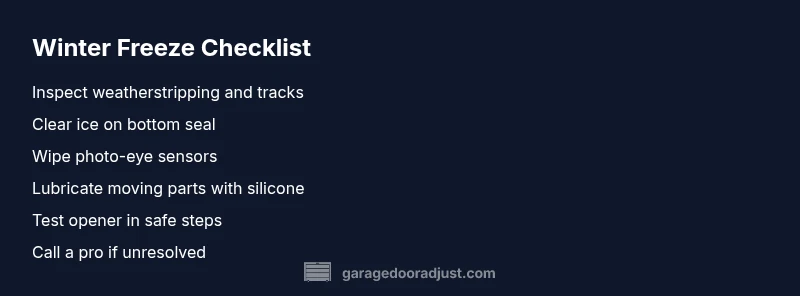
A measured approach reduces risk when dealing with a frozen door. Thaw ice around the bottom seal, then re-test. Clean and align the sensors, lubricate moving parts with a silicone-based product, and test in staged moves. If the door still won’t move, do not force it—document observations and contact a professional with details about what you tried.
Safety tips and mistakes to avoid
Safety first: disconnect power before inspection, wear gloves, and avoid electrical or hydraulic attempts without proper training. Never use heat sources to melt ice from tracks; this can warp components. Do not remove safety devices or bypass the opener. Incorrect repairs can lead to serious injury or further damage.
Prevention: keep doors from freezing in future winters
Regular maintenance reduces freezing risk. Replace worn weatherstripping, keep tracks clean, and lubricate moving parts seasonally with a silicone spray. Store the opener remote in a dry place and check sensors for alignment before winter storms. A proactive approach now saves time and expense later.
When to call a professional and what to expect
If thawing and basic checks don’t restore function, or if you notice damaged tracks, bent brackets, frayed or detached cables, or a malfunctioning sensor, contact a qualified technician. A pro can safely diagnose the system, realign tracks, inspect springs, and verify opener safety features. Expect a safety-first assessment and a repair plan with a transparent estimate.
Steps
Estimated time: 30-45 minutes
- 1
Power down and assess safety
Turn off the garage door opener and disconnect the hand-held remote. Check that there are no obstructions and that the environment is safe to inspect.
Tip: Keep a clear path and wear gloves. - 2
Gently thaw visible ice
Use lukewarm water on ice around the bottom seal and tracks, not hot water which can damage components. Dry the area after thawing to prevent immediate re-freezing.
Tip: Do not use heat sources like a torch. - 3
Inspect sensors and tracks
Wipe feet and photo-eye sensors with a dry cloth. Look for bent tracks or misalignment that could bind the door.
Tip: Inspect rollers as well. - 4
Lubricate moving parts
Apply silicone lubricant to the hinge pivots, roller bearings, and track joints after thawing. Wipe away excess to prevent dirt buildup.
Tip: Use a light touch; over-lubrication attracts dust. - 5
Test operation in stages
Reconnect power and run the opener slowly. If it moves smoothly in the open/close cycle, observe for unusual noises or resistance.
Tip: Do not slam the door or force it. - 6
Reassess and plan next steps
If the door still sticks, record what you observed (ice, sensor misalignment, binding) and contact a pro with details.
Tip: Take photos to share with a technician.
Diagnosis: Garage door won't open or is stuck frozen shut in cold weather
Possible Causes
- highIce buildup on tracks or door components
- mediumFrozen or misaligned safety sensors
- lowLow lubrication or stiff rollers due to cold
- lowIce on springs or cables causing binding
Fixes
- easyGently thaw the area with warm water or a warm towel, then dry and wipe away moisture; power off the opener first
- easyCheck safety sensors: clean the photo-eye, ensure alignment, and straighten any mispointed components
- easyApply a silicone-based lubricant to moving parts when dry and warm; avoid petroleum-based lubricants in cold conditions
- mediumDo not force the door; if still stuck after thawing and checks, contact a professional quickly
Got Questions?
What causes a garage door to freeze shut?
Ice buildup on the tracks, weather seals, and sensors is a common cause. Cold humidity can also bind components, preventing movement.
Ice on the tracks and sensors is usually the culprit, especially in damp cold. First thaw, then inspect.
Is it dangerous to force a frozen garage door?
Yes. Forcing can damage tracks, springs, or the opener and create a safety hazard. Always shut off power and inspect gently.
Forcing a door can cause serious damage. Stop and check safety first.
Can weatherstripping prevent freezing in winter?
Yes, good weatherstripping reduces moisture intrusion and ice buildup under the door. Replace worn seals before winter's peak.
Good weatherstripping helps keep moisture out and ice from forming under the door.
Should I use heat to thaw a frozen door?
Avoid using open flames or heaters that can damage insulation or springs. Use lukewarm water and gentle drying to thaw cautiously.
No open heat sources—stick with warm water and dry thoroughly.
When should I call a professional for a frozen door?
If thawing and basic sensor/track checks don’t restore function, contact a garage-door technician for a safe repair plan.
If it still won’t move after thawing and checks, it's time to call a pro.
Watch Video
Quick Summary
- Inspect ice buildup first, not parts to blame.
- Never force a frozen door; thaw and test safely.
- Keep weatherstripping and tracks clean.
- Lubricate after thawing with silicone-based product.
- Call a pro if unresolved after basic steps.