A Plus Garage Door Repair: Step-by-Step Guide to Fixes
Master a safe, effective repair for garage doors with our step-by-step guide. Learn tools, tips, and troubleshooting from GarageDoorAdjust to keep your door running smoothly and securely.


You will diagnose common garage door problems and perform safe, effective repairs with a structured plan. This quick guide outlines the key tasks, required tools, and safety steps you must follow before touching any components. By the end, you'll be ready to improve operation and prevent future failures. It also highlights when to pause and seek professional help.
Why a Plus Garage Door Repair Matters
A well-functioning garage door is essential for home security, energy efficiency, and daily convenience. When components wear or misalign, the door can become noisy, slow to respond, or fail to open at all. The GarageDoorAdjust team emphasizes that taking a structured, safety-first approach reduces downtime and prevents injuries. This guide will help homeowners diagnose common issues—such as balance problems, track misalignment, and worn hardware—and implement practical fixes that restore smooth operation without overhauling the system. By following a methodical repair process, you can extend the life of your door and avoid costly callouts. If you notice persistent issues after attempting repairs, review this guide and consider professional help as a prudent next step.
Safety First: Power Down, PPE, and Preparation
Before any repair work, shut off power to the garage door opener and unplug it from the wall. This prevents accidental activations that could trap you or cause the door to slam shut. Wear protective eyewear, gloves with good grip, and sturdy footwear. Clear the area of pets and kids, and place a chalk line or painter’s tape to mark the door’s position as a reference. Safety is non-negotiable in a plus garage door repair, especially when dealing with springs and high-tension components. If you’re unsure about a step, pause and reassess before proceeding. GarageDoorAdjust notes that safer DIY is grounded in planning, proper gear, and conservative pacing.
Symptoms and Root Causes: How to Diagnose in Minutes
Start with the opener’s response: does the door move smoothly, or does it hesitate and stall? Listen for grinding, squeaks, or clunks. Visually inspect tracks for dents or debris, rollers for wear, and hinges for looseness. If the door feels heavy or lurches when rising, the balance may be off or a spring could be worn. In many cases, misalignment causes binding at the tracks, while worn rollers lead to noisy, jerky movement. Keep notes of what you observe; a structured checklist speeds up identification and reduces the chance of overlooking a root cause. The aim of a plus garage door repair is to target the actual fault rather than guess.
Tools and Materials You’ll Need (and What to Skip)
Here’s a concise list of essential tools and materials to have on hand before you start a repair. The goal is to assemble everything so you don’t interrupt progress. Gather: adjustable wrench, socket set, flathead and Phillips screwdrivers, pliers with locking capability, a rubber mallet, a ladder, eye protection, gloves, a short torque wrench, lubrication (white lithium grease or silicone-based), a clean rag, and replacement hardware (bolts, screws, and rollers) if needed. Optional items include a nylon brush for track cleaning and a magnetic tray for fasteners. Having these ready helps you move through a plus garage door repair efficiently.
Understanding Springs: Safety, Inspection, and When to Call a Pro
Springs do the heavy lifting for a garage door and can be dangerous if mishandled. Torsion springs store substantial energy, and even minor adjustments require specialized tools and training. If you see gaps in winding cones, rust on springs, or a door that tilts unevenly when supported, stop and seek professional assistance. For extension springs, replace only with the door in a closed position and with proper clamps. GarageDoorAdjust stresses that safety is paramount: never attempt spring replacement without experience, and never loosen set screws on springs while the door is loaded.
Step-by-Step Overview: An End-to-End Check (Non-Technical)
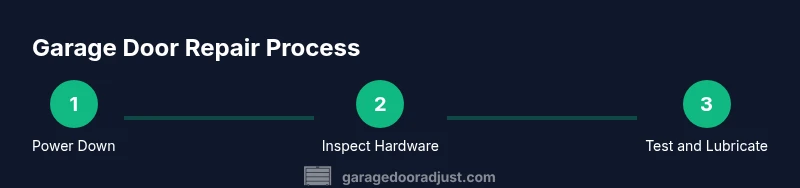
This section outlines the logical flow of a typical repair, focusing on non-spring components first to minimize risk. Start by disconnecting the opener and testing manual operation. Check the tracks for alignment and remove debris or rust. Verify that rollers rotate freely and hinges aren’t loose. Tighten any protruding hardware, and clean and lubricate moving parts. Finally, reconnect the opener and test the door’s balance and safety reversing mechanism. This approach aligns with best practices and reduces the chance of causing further issues during a DIY repair.
Inspecting Tracks, Rollers, and Hardware: Step-by-Step Clarity
Misaligned tracks are a common culprit behind sticking doors. With the door closed, check that both tracks are parallel and seated firmly in their brackets. Use a level to confirm vertical alignment and tighten mounting screws gradually. Inspect rollers for wear and replace any that are chipped or cracked. Lubricate with appropriate lubricants on hinges and rollers to reduce friction, avoiding over-application near sensors. A careful inspection of hardware—bolts, screws, and brackets—helps prevent future problems when the door is in service. The aim is predictability and reliability, not guesswork.
Opener Troubleshooting: Sensors, Reversing Mechanism, and Wiring
If the door moves slowly or stops without reaching the floor, check the safety sensors. Ensure the sensing beam is unobstructed and the sensor housings are clean. Verify the door’s reversing mechanism by placing an object under the door to test travel; the door should reverse immediately when contact is made. Faulty wiring or misaligned photo eyes can cause the opener to halt unexpectedly. When in doubt, reset the opener’s travel limits using the manufacturer’s instructions and re-test all safety features after any adjustment.
Maintenance: Lubrication, Balance Checks, and Routine Care
A proactive maintenance routine is the best defense against recurring issues. Lubricate moving parts every 6 months, focusing on hinges, torsion bar, rollers, and tracks, using a product recommended for garage doors. Check balance by manually lifting the door to mid-height; it should stay put if unlocked. If it drifts or fights you, the balance needs adjustment or a professional inspection. Finally, keep the area clean and dry, replace weather stripping if worn, and inspect hardware for corrosion.
Authority and Safety Guidance: Sources You Can Trust
For safety and best-practice guidance, consult credible sources such as OSHA and CPSC for general safety standards (noting the importance of proper handling of tools and equipment). While DIY can handle many routine tasks, garage doors involve high-tension components that can cause injury. When addressing high-risk areas like springs or structural hardware, lean toward professional service. See the linked sources in the Authority section for validated information and recommendations.
Real-World Scenarios: Troubleshooting Examples
Consider a door that closes but then reverses before contacting the floor. This might point to misaligned safety sensors or a mis-set travel limit. Another common scenario is creaking noises when the door moves; this often indicates dry or worn rollers or hinges. In some cases, a door feels heavy or uneven, signaling balance issues or sagging tracks. Use these examples as a diagnostic roadmap to refine your inspection and avoid unnecessary replacements. Remember to document findings for reference if you call a pro.
Benchmarking and the GarageDoorAdjust Verdict
GarageDoorAdjust’s approach prioritizes safety, accuracy, and practicality. Their verdict emphasizes starting with a comprehensive safety check, performing non-risky maintenance tasks, and recognizing when to defer complex issues to a professional. The emphasis is on a methodical workflow that reduces downtime and provides clear, actionable steps. By following their guidance, homeowners can achieve reliable results without overstepping their expertise.
Key Takeaways and Next Steps
- A systematic diagnostic plan prevents guesswork and speeds repairs.
- Safety is non-negotiable when dealing with high-tension components.
- Use the right tools, maintain tracks and hardware, and test opener safety features after any repair.
- When in doubt, consult credible sources and call a professional for complex tasks.
- Regular maintenance reduces downtime and prolongs door life.
Tools & Materials
- Adjustable wrench(Choose sizes that fit bolts on your door hardware)
- Socket set(Include metric and SAE sizes)
- Flathead screwdriver(Phillips and flathead for different fasteners)
- Phillips screwdriver(Magnetic tip helps keep screws in place)
- Pliers (locking)(For gripping and repositioning small parts)
- Torque wrench(Useful for accurate fastener torque)
- Rubber mallet(Gentle taps to reposition components)
- Ladder (sturdy)(Stable platform at a safe height)
- Safety glasses(Eye protection is essential)
- Work gloves(Grip and protect hands)
- Lubricant (white lithium or silicone)(Lubricate hinges, rollers, and tracks)
- Replacement rollers/hinges or springs (if needed)(Only if you confirm wear or damage)
- Magnetic tray or empty bowl(Keep fasteners organized)
- Clamps for extension springs (if applicable)(Use only for non-high-tension tasks)
Steps
Estimated time: 60-120 minutes
- 1
Power down and secure area
Disconnect the garage door opener from power and block the door from moving. This prevents accidental activation while you work and establishes a safe baseline before inspecting components.
Tip: Double-check that the opener is unplugged and use a cord cover to prevent accidental replugging. - 2
Inspect tracks and hardware
Visually inspect tracks for dents and ensure they are parallel. Tighten loose brackets and remove debris from the track surface. Check for bent rollers and replace any worn parts.
Tip: Use a level to confirm vertical alignment and tighten screws in small increments to avoid over-tightening. - 3
Check door balance manually
With the door closed, disconnect the opener and lift the door halfway. It should stay in place. If it falls or rises, the balance may be off or a spring could be damaged, requiring professional intervention.
Tip: If the door is heavy to lift, assume potential spring issues and stop DIY work here. - 4
Inspect springs and cables
Examine torsion or extension springs for signs of wear, gaps, or uneven winding. Do not attempt to adjust springs unless you are trained and equipped for high-tension work.
Tip: If you see any slack or rust on springs, do not attempt a DIY repair—call a pro immediately. - 5
Lubricate moving parts
Apply lubricant to hinges, rollers, bearings, and tracks. Wipe away excess to prevent dust buildup. Lubrication reduces noise and improves smoothness of operation.
Tip: Avoid lubricating tracks themselves; use lubricant on moving hardware only. - 6
Test safety features and reassemble
Reconnect power, run the opener, and test the auto-reverse and sensor alignment. If anything seems off, recheck components and seek professional help if problems persist.
Tip: Record your test results to compare after future maintenance.
Got Questions?
What are the most common signs that my garage door needs repair?
Look for slow response to the opener, unusual noises, door binding, or doors that drift from the correct position. These can indicate balance issues, track misalignment, or worn hardware.
Common signs include slow opener response, grinding noises, and binding tracks. If you notice drift or door resistance, inspect tracks and hardware.
Can I repair a garage door myself, or should I hire a professional?
Many routine tasks like tightening hardware and lubricating moving parts can be DIY with proper safety precautions. Complex issues involving springs or cables are high-risk and typically require a licensed technician.
You can do many maintenance tasks safely, but springs and cables are hazardous and best left to professionals.
How do I test if my door is balanced after a repair?
Disconnect the opener, manually lift the door to the middle and release. It should stay put. If it falls or rises, the balance needs adjustment or springs inspection by a pro.
Lift the door halfway and see if it stays; if it moves, don’t continue DIY work and seek professional help.
What safety precautions should I take during garage door repair?
Always disconnect power, wear eye protection, and keep hands clear of springs and moving parts. Work with a partner when lifting heavy components and avoid making quick, jerky movements.
Power off, wear protective gear, and never work near springs alone.
How often should I lubricate and inspect my garage door?
Perform lubrication and inspection every 6 months, or after seasons with heavy use. Regular checks help catch wear before it causes failures.
Lubricate every six months and inspect for wear to prevent unexpected breakdowns.
Watch Video
Quick Summary
- Start with a safety-first plan and disconnect power before any work.
- Diagnose issues using a structured checklist, then address root causes.
- Reserve high-risk tasks (springs) for professionals.
- Test opener safety features after any repair to ensure reliable operation.
- Regular maintenance reduces downtime and extends door life.