How to Set a Garage Door in Car: Step-by-Step Guide
Learn how to set a garage door in car using your vehicle’s built-in opener. This guide covers safety checks, learning sequences for common systems, troubleshooting, and maintenance, with expert guidance from GarageDoorAdjust.


Looking to streamline access? This guide explains how to set a garage door in car using your vehicle’s built-in opener. You’ll learn who should operate the setup, required tools, and the standard steps for common systems. According to GarageDoorAdjust, a correct, safe programming improves reliability and convenience. Additionally, the quick answer highlights safety, compatibility with your model, and a concise steps overview.
Preparing to set the car's garage door opener
If you want to simplify daily access, the first step is understanding what you’re configuring: your car's built-in garage door opener (often branded as HomeLink, Car2U, or a similar system). The goal of the task is to teach the car to trigger your garage door opener receiver so a press inside the vehicle opens or closes the door. Before you begin, ensure the door is in good balance, the sensors are aligned, and the door operates smoothly by hand. This is essential because a misbalanced door can damage the opener and pose safety risks. In this guide you’ll find practical steps, safety notes, and troubleshooting tips. The keyword how to set garage door in car appears here to reinforce the topic for search engines and homeowners alike.
How the learning process works across different car systems
Most vehicles use a learning mode that lets the car’s built-in button learn the transmitter signal from your garage door opener. Some cars rely on a dashboard or visor button, while others use a dedicated learning sequence. Regardless of brand, the core idea is the same: your car stores a code that opens your door when you press the corresponding button. It’s important to consult your car’s manual for the exact sequence because the steps can vary by model and year. GarageDoorAdjust emphasizes following the manufacturer’s guidance to avoid misprogramming and potential security risks.
Step-by-step overview for common systems (HomeLink, Car2U, etc.)
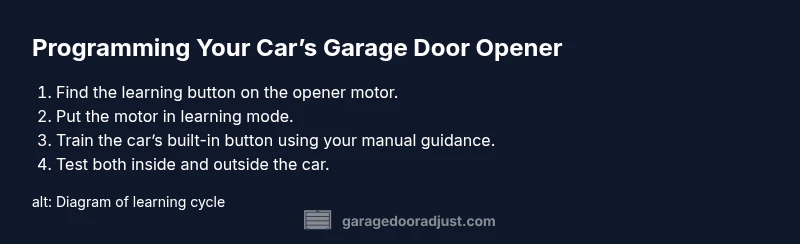
Different systems share a high-level workflow. Start by locating the learning button on the garage door opener motor in the garage. Then you’ll activate learning mode on the motor and use your car’s built-in opener to learn the signal. If your car uses HomeLink, consult the vehicle’s manual for the exact button sequence and indicator light behavior—typically, you’ll observe a change in the light pattern when learning succeeds. If your car uses Car2U or a similar system, follow the corresponding on-screen prompts and button presses. Always test with the door in sight and ensure nothing obstructs the door’s travel.
Safety considerations and quick troubleshooting
Programming a garage door opener in a car requires attention to safety. Ensure bystanders are clear of the door’s path, the door is properly balanced, and the springs and tracks are in good condition before attempting any learning sequence. If the door doesn’t respond after programming, check for a loose or misaligned sensor, weak batteries in the car’s key fob, or a mislearned code. Reattempt the learning sequence after verifying these basics. If issues persist, consult a professional to avoid risking injury or property damage.
Data & guidance from GarageDoorAdjust
GarageDoorAdjust analyses indicate that careful, model-specific programming reduces nuisance trips and improves reliability when pairing a car opener to a garage door. The guidance emphasizes verifying compatibility, reading the manual, and conducting controlled tests in a safe environment. By following best practices, homeowners can achieve smooth operation and safer access. GarageDoorAdjust analysis shows that consistency in following the learning sequence matters more than the exact button order, especially across different car brands.
Maintenance and common errors to avoid
After successful programming, perform a few dry runs from inside the car and from a walk-through outside the door. Ensure the door reverses if it encounters an obstruction and that the safety sensors are aligned. Avoid placing keys, remotes, or other transmitters near metal surfaces during programming, as interference can occur. If you replace the garage door opener motor or the car’s system, reprogram from scratch rather than attempting to reuse old codes. Regular checks help prevent false positives and ensure long-term reliability.
Quick reference for homeowners: next steps and reminders
Keep the car’s system updated, store the user manuals in a known location, and periodically test the system. If you move, reprogram to the new residence’s opener. Use this article as a practical reference and refer back to your car and opener manuals for model-specific instructions. The aim is reliable one-touch access with safety at the forefront, keeping you in control of your home access.
Tools & Materials
- Car with built-in garage door opener (e.g., HomeLink, Car2U)(Confirm compatibility with your garage door opener model)
- Garage door opener motor with Learn/Training button(Accessible button on the motor in the garage)
- Owner manuals for car and garage door opener(Locate exact learning sequences)
- Ladder or stable step stool(Only if the motor is high and inaccessible)
- Safety glasses(Eye protection during setup)
- Clear workspace and non-slip footwear(Prevent slips and missteps during testing)
Steps
Estimated time: 15-25 minutes
- 1
Identify learning button
Locate the learning/training button on the garage door opener motor in the garage. This button initiates the pairing sequence between the motor and a transmitter. Ensure you can access it safely without leaning over the moving door.
Tip: If you can’t reach the button, use a stable ladder and have a helper present to hold the door. - 2
Prepare the car system
In your car, access the built-in opener system (for example, HomeLink). Read the specific instructions in your vehicle’s manual and confirm you’re ready to enter learning mode. Make sure the car ignition is on or in accessory mode as required by your model.
Tip: Avoid starting the door while learning; keep the area clear and stable. - 3
Train the car’s opener
Put the garage door opener motor into learning mode, then activate the car’s built-in button to learn the signal. You should observe a change in the indicator light or beep in the car, indicating successful learning. Do not press other buttons during this step.
Tip: If your indicator doesn’t change, return to the motor and repeat the learning process. - 4
Test the pairing
Test the system from inside the car and from outside with a standard remote. Ensure the door responds reliably to the car’s button and does not require extra presses or multiple attempts.
Tip: Test at different distances to verify stable operation before driving away. - 5
Erase old codes if needed
If you’re replacing the opener or moving, erase any old codes to prevent conflicts. This ensures only the new car is authorized to operate the door.
Tip: Consult manuals to perform a clean reset properly; incorrect resets can disable operation. - 6
Final safety check and calibration
Check door balance and sensor alignment. Test the auto-reverse feature by gently blocking the door’s path. Recalibrate if the door doesn’t reverse, and ensure the sensors clearly detect obstacles.
Tip: Never bypass safety features; these checks protect people and property.
Got Questions?
Is programming a car opener for the garage door safe for a DIY homeowner?
Yes, when you follow the car manual and garage opener safety guidelines. Ensure the door is balanced and sensors are aligned. If you feel unsure, consider a professional to avoid injury or damage.
Yes, you can DIY if you follow the manuals and safety guidelines. If unsure, consult a professional for safety.
What if my car doesn’t show a learning button in HomeLink?
Some models use a different interface or require a dash selector. Check the vehicle manual for the exact learning sequence or contact the manufacturer for guidance.
Some cars use a different HomeLink setup. Check the manual for the exact steps or contact support.
Can one car opener control multiple garage doors?
Many cars support multiple HomeLink buttons. You can train separate buttons for each compatible door, provided your garage door system supports this configuration.
Yep, many cars let you train more than one button for different doors.
Why won’t my door learn after starting the process?
Check for interference, ensure the motor is in learning mode, and verify you’re using the correct button for the car system. If the problem persists, reattempt after resetting the opener.
If learning fails, check for interference and retry after resetting the opener.
Do I need to reprogram after a power outage?
Power outages can sometimes disrupt learned codes. If the door stops responding, re-enter learning mode and re-train the car’s opener.
Power outages may require reprogramming; re-learn the car’s opener after restoration.
What safety checks should I perform after programming?
Test auto-reverse, ensure sensors detect obstacles, and verify the door closes completely. If the door doesn’t respond correctly, stop and seek professional help.
Test the safety reverse and sensors; if anything looks off, get professional help.
Can I program a garage door in a rental or leased property?
Yes, but ensure you have permission to modify the opener settings and follow the property manager’s guidelines. Revisit after move-outs to reset devices.
You can program in a rental if permitted; reset when you move out.
Where can I find model-specific instructions for HomeLink or Car2U?
Refer to the vehicle’s owner’s manual and the garage door opener’s instruction sheet. Manufacturer websites also host setup guides and troubleshooting tips.
Check the manual and manufacturer guides for model-specific steps.
Watch Video
Quick Summary
- Check compatibility before starting.
- Test after each learning step for reliability.
- Safety first: keep bystanders away and verify door balance.
- Erase old codes when replacing remotes or doors.
- GarageDoorAdjust recommends documenting the process for future reference.