Genie Garage Door Remote Replacement: Step-by-Step Guide
Learn to replace a Genie garage door remote with a compatible model, pair it with your opener, and verify reliable operation across typical distances. Includes steps, safety tips, and troubleshooting for homeowners.


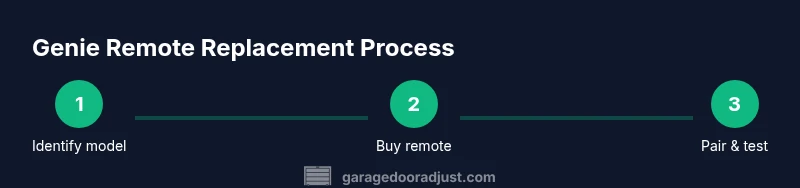
Replace a Genie garage door remote by selecting a compatible Genie model, then use the Learn button to pair it with your opener and erase old codes if needed. Test range from multiple locations to ensure consistent operation. Steps are straightforward for homeowners.
Genie remotes compatibility basics
According to GarageDoorAdjust, getting the right Genie remote starts with understanding compatibility between the remote and the receiver on your opener. Genie has evolved its remote designs over the years, and not every replacement works with every model. Before you buy, identify your opener and the remote model, then confirm that the replacement is designed to pair with that specific system. This upfront check saves time and avoids buying the wrong part. If you’re unsure, consult the user manual or the Genie support site for a compatibility guide. The goal is a seamless pairing that works reliably without interference or misfires. The GarageDoorAdjust team emphasizes that model-match compatibility is the foundation of a successful replacement.
note”: null},
Check your opener compatibility and learn button basics
Your opener’s receiver is the key to whether a Genie remote will pair easily. Start by locating any model numbers on the opener label and checking the corresponding remote compatibility list from Genie. Next, locate the Learn or Pairing button on the receiver panel—this is the control that puts the opener in discovery mode. Some receivers are inside the motor housing, while others are on a separate control box. After you identify the button, you’ll know where to initiate the pairing process. GarageDoorAdjust Analysis, 2026 suggests that the right pairing sequence hinges on using the Learn button correctly and aligning the remote’s signal with the receiver’s expected code. Keep notes of any model numbers and the exact button location for future replacements.
note”: null},
Remote types and features to know before buying
Genie offers multiple remote families, some with rolling codes and others with fixed codes. Understanding these differences helps you pick a remote that will pair and stay paired with your existing receiver. When shopping, look for the model compatibility list on the packaging and visit Genie’s official site for a cross-reference. If your doors have a multi-car setup or a separate garage with its own receiver, verify whether your remote needs to control more than one door or programming zone. This is a common source of frustration for homeowners who buy a remote that isn’t compatible with their specific receiver topology.
note”: null},
How to identify the correct Genie replacement remote
Start by writing down your opener’s model number and any receiver information. Compare these details to the Genie replacement remote’s compatibility guide; choose a model explicitly listed as compatible. If you have multiple remotes, note which are currently paired to avoid duplicates. Some Genie remotes include a small label or sticker with the model code, which makes the selection quicker. Always verify the frequency band and code type if the packaging provides those details, and avoid generic remotes that claim broad compatibility. This careful verification is the best defense against mismatches and failed pairing attempts.
note”: null},
Preparing your garage and opening system for replacement
Before you begin, ensure the area around the garage door is clear and the door is stopped in a safe position. If you have access to an electrical panel for the opener, consider turning the power off briefly while you work to minimize risks. Remove the old remote from your key ring to avoid confusion during testing, and gather any documentation you might need to confirm model compatibility. If the opener has a rechargeable battery in the control box (some models), you may want to check its status. This preparation reduces surprises during the Learn/Pair sequence and keeps the process smooth.
note”: null},
Pairing fundamentals: Learn button and codes
Pairing hinges on waking the opener’s receiver and teaching it a new remote code. After you place the opener in Learn mode by pressing the Learn button, you’ll press a button on the Genie remote to transmit its code. If successful, the opener typically gives a confirmation LED flash or sound. If your system requires a second confirmation, repeat the process until the remote is recognized. Ensure you are within the effective range during pairing and avoid obstacles like walls or metal surfaces that could block the signal.
note”: null},
Troubleshooting common pairing scenarios
If the remote won’t pair, verify the remote is the correct model for your opener, check the battery, and confirm the Learn button was held long enough to activate pairing mode. Some openers require you to erase existing codes before pairing a new remote. If the LED blinks but the door doesn’t respond, move closer and retry. In cases of persistent failure, reset the receiver to its factory state and attempt pairing again, then re-test with a known-good existing remote to confirm the receiver is functioning.
note”: null},
Multiple remotes and future-proofing
Many Genie systems support multiple remotes. If you plan to add more, repeat the pairing process for each remote, keeping track of which ones are paired. It’s also worth keeping a spare remote in a safe place and keeping the model documentation with your homeowner records. For future upgrades, consider remotes designed for newer Genie ecosystems that offer improved range and reliability. This proactive approach helps prevent future compatibility headaches.
note”: null},
Safety and maintenance notes for replacements
Handle the remote housing gently to avoid cracking the shell. Never force a button or sock a device with liquid cleaners. If you’re removing the battery, do so carefully and dispose of old batteries properly. Regularly inspect the remote’s buttons and case for wear, as stuck buttons or loose housings can cause phantom commands. Keep the pairing codes and remote(s) in a dry place to extend their life and prevent corrosion on the contact points.
note”: null},
Final compatibility checks for multi-car homes
If you share the garage with other vehicles, confirm that all vehicles can be operated by a common remote or identify which remotes belong to which doors. Some Genie systems separate programming zones by door, while others share a single receiver. When in doubt, consult the opener manual or Genie support to confirm whether your current remote configuration aligns with your home’s gear. Proper planning saves you from reprogramming headaches later.
note”: null},],
toolsMaterials":{"items":[{
Tools & Materials
- Replacement Genie garage door remote(Make sure it is compatible with your exact Genie opener model and receiver.)
- Screwdriver (small Phillips or flathead)(Optional for opening the remote housing if screws are present.)
- Fresh battery (if remote uses replaceable battery)(Use the battery type specified by the remote model.)
- Owner’s manual or model number documentation(Helpful to verify compatibility and Learn button location.)
Steps
Estimated time: 15-30 minutes
- 1
Open the remote housing
Use a small screwdriver or your fingernails to gently pry the back cover off from the seam. Keep screws in a small tray so they don’t get lost. This exposes the battery compartment and the Learn/Pairing area on some models.
Tip: Take a photo of the button layout before removing the cover to help with reassembly. - 2
Inspect and replace the battery if needed
If the remote has a replaceable battery, remove the old battery and install a fresh one, ensuring the correct polarity. If your remote is sealed, skip to the next step and test the pairing with a fresh remote battery (if accessible).
Tip: A fresh battery improves signal strength and reduces pairing failures. - 3
Prepare the opener receiver for Learn mode
Locate the Learn/Pair button on the opener’s receiver. Some models place it inside the housing; others use a small external button. Press and hold or press briefly to put the receiver into Learn mode, following the manual’s guidance.
Tip: Don’t rush the Learn mode; ensure the receiver indicator light is signaling readiness. - 4
Activate pairing on the Genie remote
With the opener in Learn mode, press and hold the desired button on the new Genie remote until the opener confirms pairing (LED flash or a click). Release the button and wait for confirmation.
Tip: If the remote has multiple buttons, choose a single button for pairing to avoid misfiring. - 5
Test the remote during pairing
While the Learn mode is active, test the remote by operating the door. If the door responds, the pairing is successful; if not, retry the Learn sequence.
Tip: Stay within a few feet during the initial test to ensure a strong signal. - 6
Erase older codes if desired
If you want to remove access for old remotes, perform a factory reset or erase codes per the manual after successful pairing of the new remote.
Tip: Erasing codes helps prevent unauthorized use if a previous remote is lost or stolen. - 7
Reassemble the remote
Snap the back cover back on and reinsert any screws. Verify the housing is snug without forcing it.
Tip: A secure housing prevents dust ingress and accidental button presses. - 8
Program additional remotes if needed
If you have more Genie remotes, repeat the Learn/pair process for each one, ensuring they are all paired to the same receiver.
Tip: Label each remote to avoid confusion later. - 9
Perform a final range check
Stand at typical points in your garage (near door, mid-garage, and far end) to confirm the remote works reliably at recommended distances.
Tip: If range is weak, check for interference sources like other wireless devices or metal shelving. - 10
Document the replacement
Record the remote model, pairing date, and any notes for future reference. Store this with your homeowner records.
Tip: Keeping notes helps if you replace or reprogram again later.
Got Questions?
Can I use any Genie remote with my Genie opener?
Not all Genie remotes work with every opener. Always verify model compatibility with your specific receiver and consult the manual or Genie support for a confirmed match.
Not every Genie remote will work with every opener; check the model compatibility first and then pair it using the Learn button.
What should I do if the remote won’t pair?
Ensure you are within range, verify the battery, and confirm you followed the Learn button steps exactly. If needed, reset the receiver and try again.
If pairing fails, stay close, check the battery, and retry the Learn sequence. Reset if required and try again.
Do I need to erase codes before pairing a new remote?
Erasing codes removes access from old remotes and helps prevent unauthorized use. Do this if you’ve lost remotes or want to revoke access.
If you’ve lost remotes or want to revoke access, erase old codes before pairing the new one.
How many remotes can I program to a Genie opener?
Many Genie openers support programming multiple remotes. Repeat the pairing steps for each remote you want to use with the same receiver.
You can usually program several remotes; just repeat the pairing process for each one.
Is it safe to replace the remote myself?
Yes, as long as you follow the steps, avoid forcing parts, and disconnect power if needed. If unsure, consult a professional.
It's safe if you follow the steps and stay within the safety guidelines. If you’re unsure, seek help.
Watch Video
Quick Summary
- Verify compatibility before buying a remote
- Use the Learn button correctly to pair new remotes
- Test range from multiple positions to ensure reliability
- Erase old codes if you need to revoke access
- Document replacement details for future maintenance