Extreme Garage Door Opener: The Complete DIY Guide
Learn to diagnose, repair, and install an extreme garage door opener with safe, step-by-step guidance from GarageDoorAdjust. Includes safety checks, tools, troubleshooting, and maintenance tips.


By following this guide, you will diagnose, safely repair, and install an extreme garage door opener. You’ll learn how to test power, review safety sensors, verify rail alignment, and perform basic belt or chain adjustments without risking injury. This step-by-step approach is designed for homeowners who want reliable performance and safer operation from high-torque openers, while preserving door balance and track integrity.
What makes an extreme garage door opener different
An extreme garage door opener is not a gimmick; it describes high-torque, fast-moving units designed for heavy doors or frequent use. In everyday terms, these openers deliver more force and speed than standard models, which improves convenience but also increases the stakes for safety and installation quality. The GarageDoorAdjust team notes that homeowners should treat them with specialized care: verify mounting strength, ensure proper rail alignment, and respect safety-reverse testing. Before you dive into service, understand that a high-torque system can magnify misalignment and binding, so small errors become big issues. The goal is a smooth, quiet operation that maintains balance, avoids overloading the door spring system, and prevents track wear. When you observe unusual behavior—strange noises, jerky movements, erratic stopping—start with a basic diagnostic that checks power supply, sensor alignment, and bracket integrity. The first principle is data-driven safety: power off before touching anything, keep hands clear of the drive mechanism, and confirm door is balanced by manual lifting. GarageDoorAdjust's guidance emphasizes deliberate, methodical work rather than quick fixes.
Safety first: essential precautions before work
Before touching any part of an extreme garage door opener, turn off power at the main breaker and unplug the unit when possible. Safety sensors, springs, and high-torque drives can cause serious injury if engaged unexpectedly. Wear protective eyewear and gloves; keep children and pets away from the workspace. Use a sturdy ladder and never stand directly under a moving door. Record the door height and opening travel to reference during testing. Check the opener's manual for model-specific safety features, and verify that the emergency release is functioning in a controlled, static environment. When in doubt, pause and consult a professional—this kind of opener amplifies risk if misused. According to GarageDoorAdjust, meticulous safety planning reduces the chance of crushing injuries and equipment damage during extended maintenance sessions in 2026.
Tools, parts, and workspace you’ll need
To safely service an extreme garage door opener, assemble a dedicated workspace with ample lighting. Gather essential tools: safety gear (gloves and goggles), a voltage tester, locking pliers, a wrench set, screwdrivers, a level, a tape measure, a sturdy ladder, and a reliable lubricant. Have a spare belt or chain kit on hand if your model uses a belt or chain drive, and include a work light for shadowed corners. Keep a permanent marker to note alignment references and a small container to organize fasteners. Optional but helpful: a cordless drill with appropriate bits, a portable magnet tray, and a timing device for test cycles. Having everything ready prevents mid-task trips to the garage and helps maintain a safe, orderly environment. Remember: never skip safety gear when working on extreme garage door openers.
Assessing compatibility with your door and existing tracks
Before choosing a repair or install approach, verify that the extreme garage door opener is rated for your door weight, height, and track configuration. Check whether your door uses torsion springs or extension springs and whether the mounting brackets, rails, and rollers are in good condition. Assess the track alignment and confirm that the opener’s rail length and mounting height will accommodate the door’s travel without binding. If your door is older or has non-standard dimensions, consider whether upgrades to tracks or mounting hardware are warranted. A mismatch between opener torque and door geometry can cause uneven wear, accelerate spring fatigue, and create noisy operation. In practice, align the opener with the door’s centerline and recheck balance after any adjustment. As noted by GarageDoorAdjust, compatibility is the foundation of a safe, long-lasting installation.
Diagnosing common symptoms and their meanings
Extreme garage door openers can exhibit a range of symptoms that tell you where to start. A door that opens slowly or stops midway may indicate binding in the tracks, weak springs, or insufficient motor torque. A grinding or squealing noise often points to dry or worn moving parts, misaligned pulleys, or a loose drive belt. If the door reverses suddenly or stops before closing, recheck the safety sensors and ensure the beam is continuous and correctly positioned. If the opener strains or stalls during operation, inspect the carriage, trolley, and gear assembly for obstructions or wear. Document any warning lights or audible codes from the operator’s console, then consult the manual for model-specific diagnostics. In all cases, exercise caution, especially when testing under tension. GarageDoorAdjust emphasizes recording observations to track patterns over time.
Common pitfalls and how to avoid them
A frequent mistake is attempting to shortcut torque-heavy repairs without fully relieving tension in springs and cables. Never bypass safety devices or disable auto-reverse tests to speed things up. Misaligning rails or misadjusting brackets can amplify noise, reduce life span, and void warranty terms. Another pitfall is over-lubricating moving parts, which attracts dust and creates a gummy coating that impedes smooth operation. When replacing parts, always use manufacturer-approved components and follow torque specifications exactly. Finally, avoid mixing old and new parts; compatibility matters for extreme openers just as it does for standard units. By pausing to verify each connection and performing gradual tests, you minimize risk and extend the life of your system.
Maintenance routines to extend the life of an extreme opener
Regular maintenance keeps an extreme garage door opener running smoothly and safely. Schedule lubrication of moving parts, with attention to rollers, hinges, and the drive chain or belt every few months or after heavy use. Inspect mounting hardware for signs of loosening and re-torque screws and bolts as needed. Check the track alignment and balance the door manually to confirm even weight distribution. Test the safety reversing mechanism and ensure the sensors remain properly aligned. Keep the remote control and wall console batteries fresh and note any changes in remote range. Finally, create a simple maintenance log to track service dates and parts replaced. Following these practices reduces the likelihood of unexpected failures and preserves performance over many cycles. GarageDoorAdjust also highlights the importance of recording maintenance history for reliability.
Quick troubleshooting checklist before a test run
Before powering the system back on, review this checklist: confirm the power is on, ensure no one is near the door, verify sensors are clean and unobstructed, check that the door is fully balanced by lifting it manually, firm up any loose hardware, verify rails are free of debris, and verify remote and keypad codes match the opener’s memory. After the initial test run, observe the travel to ensure there is no binding, unusual pause, or misalignment. If you see anything off, pause and recheck the steps rather than forcing the opener to run. This approach minimizes risk and helps you identify issues early.
Safety and final testing before reassembly
Return the door’s hardware to its original state if you had disassembled anything, reattach covers, and resecure the emergency release. Restore power and perform a controlled test by opening and closing the door several times at low speed. Watch for smooth motion, listen for abnormal sounds, and monitor door alignment with the ground. Confirm the auto-reverse triggers properly by testing with a small object on the floor. Finally, document results and schedule future maintenance. The GarageDoorAdjust team recommends ongoing checks to keep an extreme garage door opener safe and dependable.
Tools & Materials
- Safety gear (goggles and gloves)(Eye protection and hand protection required when testing springs and power)
- Voltage tester(Use to verify power at the disconnect point)
- Locking pliers(Secure components during adjustments)
- Wrench set (adjustable)(Torque and tighten mounting hardware)
- Screwdrivers (Phillips and flathead)(Small fasteners and covers)
- Level(Ensure rails and brackets are plumb)
- Tape measure(Reference alignment and travel)
- Sturdy ladder(Access mounting points safely)
- Lubricant (white lithium or silicone)(Apply to moving parts sparingly)
- Replacement opener parts (belt/chain kit, sensors)(Only if you are performing part replacement per manual)
- Work light(Improve visibility in shadowed areas)
- Marker for alignment references(Label reference points)
- Spare fastener kit(Keep a few extra screws/bolts handy)
Steps
Estimated time: 45-60 minutes
- 1
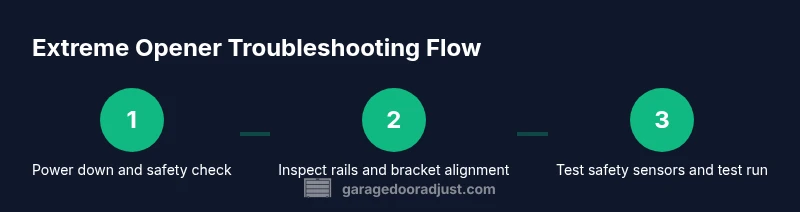
Power down and secure area
Turn off power at the breaker and unplug the opener if accessible. Confirm the door is completely stationary before touching any components. Use locking pliers or clamps to secure moving parts and maintain a safe work zone.
Tip: Always verify power is fully disconnected before handling springs or the drive train. - 2
Inspect mounting and tracks
Check mounting brackets for tightness and inspect tracks for bends, dents, or debris. Use a level to confirm rails are plumb and parallel. Realign if necessary and re-tighten all fasteners to spec.
Tip: Tiny misalignments become amplified with extreme torque—don’t skip this step. - 3
Test safety sensors and auto-reverse
Clean sensor lenses and ensure the beam is uninterrupted. Use the opener’s test function and invite a soft obstacle in the path to confirm reverse action.
Tip: If reversal fails, do not proceed with further testing. - 4
Check drive belt/chain and trolley
Inspect for wear, fraying, or looseness. Replace any worn components and verify the belt/chain has proper tension per the manual.
Tip: Do not over-tighten; excessive tension increases wear on bearings. - 5
Manual balance check
With the door closed, lift it manually a few inches to feel for smoothness and balance. If you sense binding, stop and re-check tracks and springs before resuming.
Tip: A well-balanced door reduces motor load and extends opener life. - 6
Lubricate moving parts
Apply lubricant to rollers, hinges, and drive components as recommended by the model’s manual. Wipe away excess to prevent dust accumulation.
Tip: Only lubricate metal-to-metal contact points where the manufacturer specifies. - 7
Reconnect power and perform a test cycle
Restore power and run a few slow opening/closing cycles. Observe for smooth operation, noise, and consistent travel.
Tip: Start with low-speed trials and increase as you confirm safety and balance. - 8
Document results and plan next steps
Record observations, parts replaced, and any adjustments. Schedule future maintenance and consider a professional inspection for high-torque systems.
Tip: Keep a simple log; it helps with troubleshooting and warranty claims.
Got Questions?
What defines an extreme garage door opener?
An extreme garage door opener refers to high-torque, high-speed models with enhanced safety features and rugged construction designed for demanding use.
Extreme openers are high-torque, high-speed models with extra safety features.
Can I perform maintenance on my extreme opener myself?
Yes for basic checks and lubrication, but avoid dangerous components like springs; follow manufacturer instructions and shut off power.
You can do basic maintenance, but be careful with springs.
How do I test the safety sensors?
Clear the sensor path, clean lenses, and confirm the beam is uninterrupted. Use the opener’s test button and place an object in the path to verify reversal.
Test sensors by clearing the path and using the test button.
What maintenance schedule should I follow?
Lubricate moving parts and inspect components on a regular basis, with a professional inspection once a year for extreme openers.
Lubricate and inspect regularly, with yearly professional checks.
If the opener makes grinding noises, what should I do?
Grinding may indicate dry bearings or drive wear; stop and inspect the belt/chain and gears, clean debris, and apply appropriate lubricant; if noise persists, consult a pro.
Grinding means worn parts or lack of lubrication; stop and inspect.
Is reprogramming or programming remotes difficult?
Remotes and keypads are usually straightforward; use the opener's learning button and follow the manual; ensure security codes and compatibility.
Remote programming is usually simple; follow the manual.
Watch Video
Quick Summary
- Inspect compatibility before any repair
- Power off before touching moving parts
- Test safety sensors after adjustments
- Document maintenance history for reliability
- Consult a pro for torsion-spring work