How to Install a Garage Door Opener: Step-by-Step Guide
Learn how to install a garage door opener safely with a complete step-by-step guide. Plan, wire, program remotes, and test with tips from GarageDoorAdjust for homeowners.


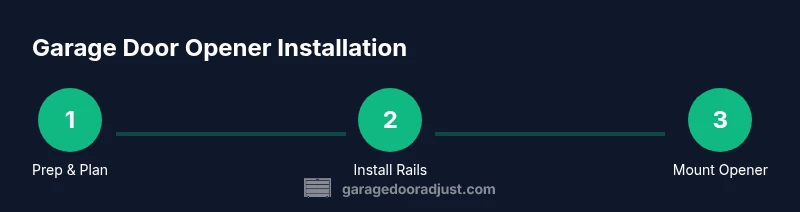
You will install a garage door opener by mounting the header bracket, installing the rails, attaching the opener to the ceiling, wiring the power and safety sensors, programming remotes, and testing balance and travel limits. Before you begin, gather tools, disconnect power, and read the instruction manual. This guide shows a safe, code-compliant approach.
Pre-Install Safety and Planning
Before you begin any installation, shut off power at the circuit breaker and unplug the existing opener or ceiling rail. Clear the workspace so you can move around the door and ceiling without obstruction. Put on safety glasses, use a sturdy ladder, and keep pets and children away from the work area. According to GarageDoorAdjust, a thorough safety check and planning phase reduces mistakes and speeds up the process. Read the manufacturer’s instructions for your specific model and note any model-specific quirks (for example, different bracket placements for various rail lengths). If your door uses torsion springs, recognize that spring work can be dangerous and may require professional assistance. Plan your layout, identify joists for anchoring, and confirm that there is a nearby power outlet or an appropriate circuit for the opener. A well-thought-out plan minimizes surprises and helps you avoid costly mistakes down the line.
Choosing the Right Opener Type
There are several common types of openers: chain-drive, belt-drive, and screw-drive. Chain-drive models are typically the most affordable but louder, belt-drive units run more quietly and are often preferred for living spaces above the garage, and screw-drive models balance price and performance with straightforward maintenance. To ensure long-term reliability, select a unit with a motor horsepower rating appropriate for your door weight (usually 1/2 hp or 3/4 hp is sufficient for standard residential doors). Consider smart features like Wi‑Fi connectivity, battery backup, and compatibility with your preferred home assistant ecosystem. GarageDoorAdjust analysis shows that choosing the right opener type reduces future maintenance and improves user experience. Also verify that the rail length and mounting height fit your ceiling depth and door height. If your ceiling has obstructions or limited headroom, you may need a short-rail kit or a jackshaft opener, which can save ceiling space while delivering similar performance.
Site Prep and Rail/Bracket Installation Overview
Plan the mounting location so the header bracket aligns with the center of the door when fully closed. Locate sturdy ceiling joists using a stud finder, then transplant the brackets to those joists with properly sized lag screws. Unpack the rail sections and lay them out on the floor, keeping the sections oriented to avoid forcing connections. Assemble the rail sections on a flat surface, then slide the assembled rail up toward the ceiling to engage the header bracket. Ensure all rail joints are fully seated and that the track remains straight and free of kinks. With the door closed, square the track to the door opening by measuring equal distances at several points along the track and adjusting as needed. A level and a helper can prevent misalignment, which is a common cause of mis-tracking and early wear.
Wiring, Safety Sensors, and Programming Overview
Disconnect electrical power from the circuit before handling any wiring. Feed the power cord through the ceiling or wall as required by the unit and connect to a grounded outlet or hardwire per local code. Mount safety reversing sensors at the recommended height on both sides of the door, typically about 6 inches above the door track, and align them so the beam is uninterrupted. Route sensor wires neatly and secure with clips to prevent snagging on moving parts. Program remotes and, if provided, a keypad or smartphone app according to the manufacturer’s instructions. If your unit supports smart features, connect to Wi‑Fi and complete the app setup. Finally, test the safety sensors by placing a small object in the door’s path to confirm immediate reversal.
Final Checks and Maintenance After Installation
With the opener mounted and wired, perform several cycles to check smooth operation. Open and close the door fully and observe any unusual noises, binding, or off-track movement. Adjust travel limits and force settings in small increments to prevent over-travel or ceiling strikes. Tighten all fasteners to the manufacturer’s torque specs and lubricate moving parts such as the chain/belt, trolley, and hinge points as recommended. Recheck the alignment of the door to ensure it travels true and stays parallel to the jambs. Save the remote codes and app credentials in a safe location. For ongoing safety, schedule periodic inspections and lubrication every 6–12 months, especially in climates with temperature extremes. Authority sources and best practices from industry guidelines should guide your maintenance plan, and keeping a simple installation log will help future service visits go smoothly.
Authority sources
- OSHA: https://www.osha.gov
- Energy.gov safety guidelines: https://www.energy.gov
- NFPA safety and electrical standards: https://www.nfpa.org
Tools & Materials
- Measuring tape(At least 25 ft; helps plan spacing)
- Stud finder(Locate ceiling joists for bracket anchors)
- Cordless drill(Drill pilot holes and drive screws)
- Screwdrivers (Phillips and flathead)(Fit screws for brackets and faceplates)
- Wrench set(Torque bolts to spec)
- Level(Ensure tracks are perfectly vertical)
- Ladder(Stable step ladder with clean feet)
- Safety glasses(Protect eyes from debris)
- Pencil(Mark mounting points)
- Wire cutters/strippers(Only if wiring requires adaptation)
- Grommets/clips(Secure wire paths)
- Lubricant (silicone or lithium grease)(Misc moving parts lubrication)
Steps
Estimated time: 2-4 hours
- 1
Power down and prep workspace
Turn off power at the breaker and unplug the existing opener. Clear the area under and around the door, and lay out all tools within reach. Verify you have the correct manual for your model and read safety warnings. This reduces the risk of electric shock and accidental door movement.
Tip: Label and photograph existing wiring before disconnecting anything for future reference. - 2
Secure the header bracket location
Mark the centerline above the door and locate a solid ceiling joist to anchor the header bracket. Pre-drill pilot holes, then fasten the bracket with lag screws sized per the manufacturer's instructions. Use a level to ensure the bracket is perfectly plumb.
Tip: Double-check alignment with the door bottom edge while the door is in the closed position. - 3
Assemble and install the rail sections
Layout rail pieces on the floor, align joints, and connect them per the manual. Keep the rail straight and free of twists and kinks. Raise the rail assembly toward the header bracket and secure the end to the bracket, ensuring full engagement.
Tip: If rails split, avoid forcing connections; loosen and re-align to seat properly. - 4
Mount the opener to the ceiling
Lift the opener and attach it to the ceiling bracket with the appropriate mounting hardware. Ensure the unit is centered over the door and supported by the bracket or a reinforced framing member. Confirm the unit weight is balanced and not bearing on rails prematurely.
Tip: Ask a helper to steady the unit as you bolt it in; don’t pinch fingers during lifting. - 5
Attach the trolley and door linkage
Connect the trolley to the lifting mechanism and attach the door arm to the trolley or carriage as directed by your model. Verify the arm length matches the door height and that the door is properly aligned with the track.
Tip: Test manually that the trolley slides smoothly before power-up. - 6
Install safety sensors and route wires
Mount safety reversing sensors on each side of the door, typically about 6 inches off the floor. Route sensor wires neatly to avoid snagging on moving parts, using clips as needed. Connect to the opener as per the wiring diagram.
Tip: Secure wires away from heat sources and ensure the sensor beams are unobstructed. - 7
Connect power and complete basic programing
Plug in the opener or connect to the circuit as required by local code. Initiate the basic programming sequence to set limits and enable the safety features. Program the remote controls and keypad if included with your unit.
Tip: Keep remotes and programming steps in a labeled location for future use. - 8
Set travel limits and pressure
Adjust travel limits so the door stops at the floor and reverses when meeting resistance. Set the force setting to an appropriate level to prevent door damage but ensure reliable closing. Test with light contact and adjust gradually.
Tip: Make small changes and test after each adjustment to avoid overcompensation. - 9
Test operation with remote and safety features
Open and close using the remote, keypad, and wall switch. Check auto-reverse by placing a container or obstacle in the door path. Confirm safety disarms when the manual release is engaged.
Tip: Always supervise the first several cycles and keep hands clear of the door path. - 10
Final checks and setup notes
Inspect all fasteners for tightness, lubricate moving parts, and reinstall any covers. If your unit includes a battery backup, test this function. Document the installation steps and model specifics for future maintenance.
Tip: Photograph setup details and save a maintenance log for quick future reference. - 11
Confirm code and safety compliance
Verify that all safety standards are met per local codes and the manufacturer’s instructions. If any part of the installation feels unsafe, pause and reconsider or contact a professional.
Tip: If unsure about electrical work, consult a licensed electrician.
Got Questions?
Do I need a professional to install a garage door opener?
A standard installation is feasible for many homeowners with basic DIY skills, but electrical work and torsion-spring components can be risky. If you encounter wiring complexities or spring systems, hire a professional.
You can often install it yourself if you’re comfortable with basic electrical work, but don’t hesitate to call a pro for complex parts.
What tools are essential for installation?
You’ll need a drill, stud finder, measuring tape, level, wrenches, screwdrivers, ladder, and safety gear. Depending on the model, wire cutters and clamps might be helpful.
Essential tools include a drill, level, and stud finder, plus safety gear.
How long does installation typically take?
Most homeowners plan 2-4 hours for a straightforward install, longer if replacing an older system or dealing with complex wiring.
Most installs take a few hours, longer for older systems.
Can I reuse existing wiring and sensors?
Reusing wiring is possible if it meets current safety standards and is compatible with the new opener’s sensors. Inspect for wear or damage and replace as needed.
You might reuse wiring if it’s in good condition and compatible.
What safety features are mandatory?
Mandatory features typically include safety reversing sensors and an auto-reverse mechanism. Ensure these are calibrated and tested after installation.
Safety sensors and auto-reverse must work correctly.
What maintenance is needed after installation?
Lubricate moving parts per the manual, test balance periodically, and check fasteners. Keep batteries for remotes fresh and test safety features monthly.
Do regular lubrication and safety tests for ongoing reliability.
Watch Video
Quick Summary
- Plan and prep thoroughly before starting.
- Isolate power and follow safety steps precisely.
- Choose the right opener type for your door and space.
- calibrate limits and test safety features after installation.
- Document maintenance steps for future service.